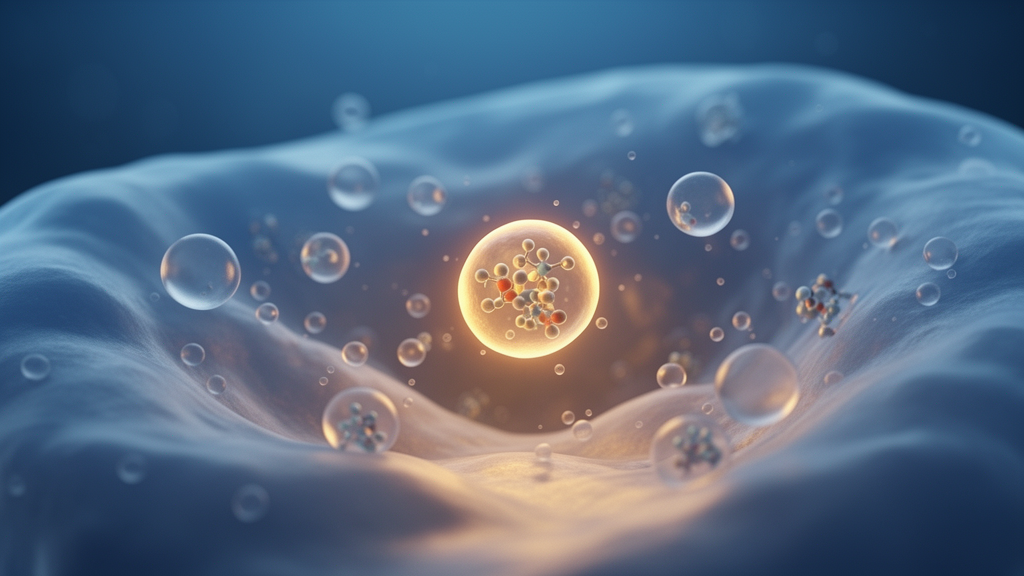
Deep inside every cell, a strange kind of physics is quietly at work. Proteins and RNA molecules, rather than staying dissolved like salt in water, can cluster together into tiny, dynamic droplets that float through the cell’s interior without any membrane to contain them. This process, known as liquid-liquid phase separation, or LLPS, has moved from a biophysical curiosity to one of the most talked-about principles in modern biology. Now a comprehensive review published in the journal Molecular Cancer argues that these cellular droplets may hold some of the keys to understanding why cancer radiotherapy and immunotherapy succeed or fail in different patients, and that manipulating them could open entirely new avenues for treatment.
The review, led by Chenchen Dong, Cong Shang, and Bing Han along with colleagues at Shengjing Hospital of China Medical University and partner institutions in Shenyang, Liaoning Province, synthesizes recent mechanistic and translational advances linking LLPS to cancer radiotherapy and immunotherapy. The authors describe LLPS as a physicochemical process through which biomolecules assemble into membraneless condensates via weak, multivalent interactions. Unlike the membrane-bound organelles that most people learn about in school, such as mitochondria or the nucleus, these condensates form and dissolve spontaneously, driven by the intrinsic chemistry of their components. The result is a kind of self-organizing compartmentalization that allows cells to concentrate specific molecules in specific places at specific times, without the energy costs and structural complexity that membranes would require.
At the heart of LLPS lies a deceptively simple idea. Many proteins contain stretches of amino acids that do not fold into a fixed three-dimensional structure. These intrinsically disordered regions, or IDRs, act like molecular velcro, engaging in numerous weak interactions with other molecules of the same or different kinds. When the concentration of such molecules crosses a threshold, or when conditions like pH, salt levels, or post-translational modifications shift, the weak interactions suddenly become collectively strong enough to drive a phase transition. The molecules demix from the surrounding cellular fluid and coalesce into a distinct liquid-like phase. This is the same physics that makes oil droplets form in vinaigrette, but in cells it produces functional compartments such as stress granules, nucleoli, and signaling clusters. The review emphasizes that dysregulated LLPS contributes to tumor initiation, progression, immune evasion, and treatment resistance, making it a central biological principle that helps explain intracellular spatiotemporal compartmentalization, signal transduction, and stress responses in cancer.
What makes the review particularly striking is its argument that condensates can cut both ways in cancer therapy. Depending on their molecular composition, subcellular localization, cell type, and treatment context, these droplets may either support therapeutic resistance and immune evasion or enhance radiosensitivity and antitumor immunity. In some cases, phase-separated condensates help cancer cells repair radiation-induced DNA damage more efficiently, allowing them to survive what should have been a lethal dose of ionizing radiation. In other contexts, the very same physics of droplet formation can concentrate DNA fragments and activate innate immune signaling pathways, turning radiation damage into a signal that awakens the immune system against the tumor. The review examines how condensate regulation connects radiation-induced DNA damage repair with innate immune activation, a connection that could prove crucial for combining radiotherapy with immunotherapy in ways that maximize benefit for patients.
One of the most technically fascinating aspects of the review involves the interplay between LLPS and the DNA damage response. When ionizing radiation strikes a cell, it creates DNA double-strand breaks that must be repaired for the cell to survive. The review describes how proteins involved in this repair process, including components of the MRN complex and the ataxia telangiectasia mutated kinase, can undergo phase separation at sites of DNA damage. These condensates concentrate repair factors at break sites, accelerating the repair process. In cancer cells, this enhanced repair capacity can translate directly into radioresistance. But the review also highlights how the same phase separation events can concentrate cytosolic DNA fragments that activate the cyclic GMP-AMP synthase-stimulator of interferon genes pathway, a key innate immune sensor. When this pathway fires, it can trigger the production of type I interferons and other immune signaling molecules that recruit and activate antitumor immune cells. The balance between these two outcomes, enhanced DNA repair versus immune activation, may determine whether radiation therapy ultimately helps or hinders the immune system’s fight against the tumor.
The review also delves into how LLPS shapes the tumor microenvironment and immune evasion. Cancer cells do not exist in isolation; they are surrounded by a complex ecosystem of immune cells, fibroblasts, blood vessels, and extracellular matrix. The review describes how phase-separated condensates in tumor-associated macrophages, myeloid-derived suppressor cells, and other immune cell types can modulate their function within the tumor microenvironment. In some cases, condensates help immune cells maintain an activated, antitumor state. In others, they facilitate immune suppression and tolerance, allowing cancer cells to escape immune surveillance. The review examines how condensate regulation in T cells, including the phase separation of signaling molecules downstream of the T-cell receptor, influences T-cell activation and function. This has direct implications for immunotherapy approaches such as immune-checkpoint inhibitors and chimeric antigen receptor T-cell therapy, which depend on the ability of T cells to recognize and kill cancer cells.
Beyond mechanistic insights, the review assesses LLPS-associated abnormal condensates as candidate biomarkers for prognosis and prediction of tumor response to radiotherapy and immunotherapy. The idea is that the presence, composition, or dynamics of specific condensates within tumor cells or immune cells could serve as molecular signatures that indicate how a tumor will respond to treatment. For example, the abundance of particular stress granules or signaling condensates might predict whether a tumor will resist radiation or respond to checkpoint blockade. The review suggests that such biomarkers could eventually help clinicians tailor treatment strategies to individual patients, moving toward personalized cancer management based on the phase separation landscape of each tumor.
The review also evaluates emerging therapeutic strategies that target disease-associated condensates. Rather than trying to eliminate phase separation entirely, which would likely be toxic given its essential roles in normal cell function, researchers are exploring ways to selectively modulate specific condensates. The review discusses approaches ranging from small molecules that disrupt particular protein-protein interactions within condensates to genetic strategies that alter the expression or post-translational modification of condensate components. Some of these strategies aim to dissolve condensates that support tumor survival or immune evasion. Others aim to promote the formation of condensates that enhance radiosensitivity or antitumor immunity. The review notes that rational strategies combining phase-separation modulation with immune-checkpoint inhibitors and radiotherapy require further investigation, but the potential for such combinations is substantial.
Looking toward the future, the review proposes that integrating multi-omics data with artificial intelligence-based algorithms may help construct systematic LLPS-related therapeutic-event maps and predictive models. Such models could prioritize experimentally testable hypotheses for personalized cancer management, identifying which condensates in which cell types are most likely to influence treatment outcomes for a given patient. The review also emphasizes that tissue-specific LLPS regulation across tumor types and dynamic condensate remodeling under therapeutic stress remain incompletely understood. As researchers continue to unravel the complex interplay between phase separation, radiation biology, and antitumor immunity, the selective modulation of disease-associated condensates may ultimately enhance radiosensitivity and strengthen antitumor immunity. With rigorous mechanistic validation and prospective clinical evaluation, what began as a biophysical curiosity about cellular droplets may evolve into a powerful new frontier in the fight against cancer, one where the physics of tiny droplets inside cells becomes as important as the genetics that has dominated cancer research for decades.
Subject of Research: Liquid-liquid phase separation and its emerging roles in cancer radiotherapy and immunotherapy
Article Title: Liquid-liquid phase separation in cancer radiotherapy and immunotherapy: emerging roles and translational opportunities
Article References: Dong, C., Shang, C., Han, B., Liu, Z., Wang, J., Cao, P., Zeng, J., Guo, A., Ren, X., & Cao, S. (2026). Liquid-liquid phase separation in cancer radiotherapy and immunotherapy: emerging roles and translational opportunities. Molecular Cancer. https://doi.org/10.1186/s12943-026-02813-4
Image Credits: AI Generated
DOI: 10.1186/s12943-026-02813-4
Keywords: liquid-liquid phase separation, cancer radiotherapy, cancer immunotherapy, membraneless organelles, radiosensitivity, treatment resistance, tumor microenvironment, biomarkers, Molecular Cancer, Liquid-liquid, phase, separation
News Source: Nathaniel Bowman. (October 17, 2026). Tiny Droplets Inside Cells Could Decide Whether Cancer Therapy Works. Scienmag.