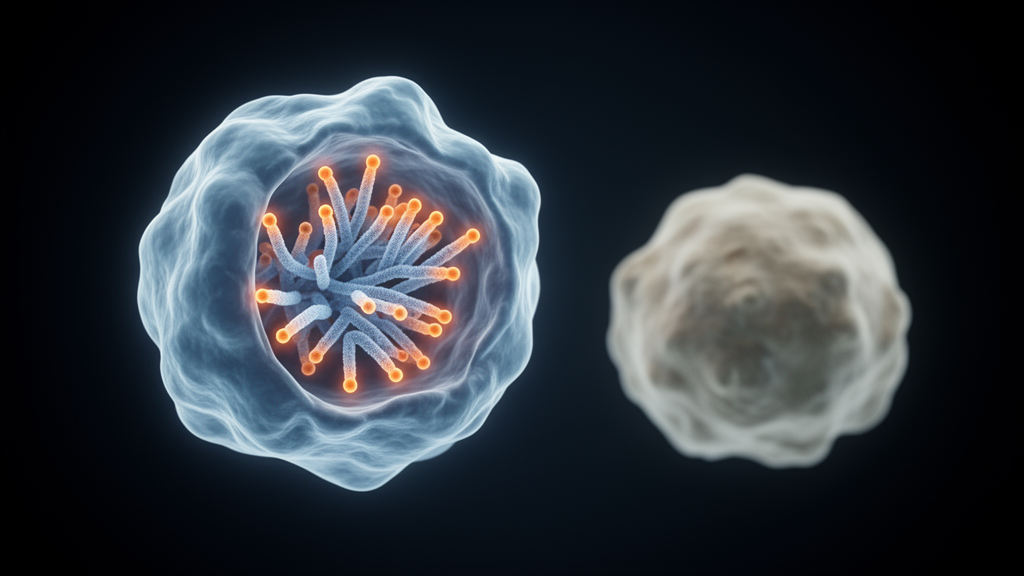
Cervical cancer remains one of the most formidable challenges in women’s health worldwide, ranking as the fourth leading cause of death among gynecological malignancies. Despite advances in vaccination against human papillomavirus and improvements in screening, many patients are diagnosed at stages where treatment options narrow and outcomes deteriorate. A new study published in Reproductive Sciences by Cong Xu, Guangming Wang and colleagues at Dali University and collaborating hospitals in China now adds a fresh dimension to the search for better prognostic tools. The team has built a gene-based risk model centered on telomeres, the protective caps at the ends of chromosomes, and shown that it can stratify cervical cancer patients by survival with striking statistical confidence.
Telomeres are repetitive DNA-protein structures that shield chromosome ends from degradation and from being mistaken for broken DNA. Each time a cell divides, its telomeres shorten a little, and when they become critically short, the cell normally enters senescence, a state of permanent growth arrest. This mechanism, first described in the classic experiments of Hayflick and Moorhead in 1961, acts as a natural brake on uncontrolled proliferation. Cancer cells, however, frequently subvert it, reactivating telomere-maintaining machinery such as telomerase or alternative lengthening of telomeres to divide indefinitely. Understanding how telomere biology goes awry in cervical cancer, where viral oncoproteins from HPV already disable key tumor suppressor pathways like p53, has remained an open and uncertain question.
To address this, the researchers assembled a comprehensive catalog of telomere-associated genes from the TelNet database and cross-referenced it with expression data from The Cancer Genome Atlas, using the TCGA-CESC cervical cancer cohort. Within that dataset they identified 327 telomere-related genes that were differentially expressed between tumor and healthy tissue. They then intersected this list with genes linked to cellular aging, narrowing the field to 31 overlapping genes that sit at the crossroads of telomere maintenance and senescence. Functional enrichment analysis of these genes revealed that they are concentrated in processes central to cancer biology: the cell cycle, DNA replication, and DNA repair.
The enrichment results carry biological weight. Several of the overlapping genes participate in homologous recombination, the high-fidelity pathway cells use to repair double-strand DNA breaks, while others are implicated in cellular senescence programs and even in pathways activated by Human T-cell leukemia virus 1 infection, a hint of shared vulnerabilities between retroviral and papillomaviral oncogenesis. The authors note that dysfunction in these genes could disturb the balance between cellular synthesis and apoptosis, the programmed death of damaged cells, thereby accelerating tumor progression. This fits with earlier findings that telomeric DNA damage is particularly difficult to repair and can lock cells into a persistent DNA damage response, fueling inflammation and genomic instability in the tumor microenvironment.
The methodological core of the study is a classic bioinformatic pipeline executed with care. The team first applied univariate Cox regression to screen the 31 genes for associations with overall survival, then used Lasso regression, a technique that shrinks coefficients to avoid overfitting, to select the most informative subset, and finally refined the model with multivariate Cox regression. The resulting telomere-related gene risk score assigns each patient a numerical value based on the expression pattern of the selected genes. When the TCGA cohort was split by this score, patients in the high-risk group showed significantly poorer outcomes, with the difference reaching a p-value below 0.001, a threshold that indicates the result is very unlikely to have arisen by chance.
Importantly, the risk score held up as an independent prognostic factor, meaning it predicted survival even after accounting for established clinical variables. That independence matters because existing prognostic markers for cervical cancer, such as stage, grade, and lymph node status, leave considerable uncertainty in individual cases. A molecular signature rooted in telomere and senescence biology could complement these measures, helping clinicians identify patients whose tumors behave more aggressively than their clinical profile alone suggests. The authors also suggest that patient subgroups defined by the signature may respond differently to specific therapies, opening the door to more tailored treatment selection.
The study goes beyond prognosis to touch on therapeutic implications. Because telomere maintenance mechanisms are increasingly recognized as actionable targets, with recent reviews in Nature Reviews Cancer cataloging telomere-specific therapies in development, a gene signature that captures telomere dysfunction could help identify which patients are most likely to benefit from such approaches. The researchers also analyzed drug sensitivity patterns associated with the risk score, and point to the tumor immune microenvironment as a relevant axis, given the known roles of macrophages, neutrophils, and regulatory T cells in HPV-related cancers. If validated, the model could assist in selecting suitable drugs for individual patients rather than applying one-size-fits-all regimens.
The scientific context here is rich. HPV oncoproteins E6 and E7, encoded by high-risk viral types 16 and 18, promote the degradation of p53 and disable the retinoblastoma pathway, effectively dismantling the checkpoints that would normally force telomere-shortened cells into senescence. This creates a permissive environment in which telomere biology becomes decisive: cells that escape senescence and maintain their telomeres can achieve the replicative immortality that defines cancer. Prior work has shown that telomere shortening inactivates cell cycle checkpoints in liver carcinogenesis, and that telomere length dynamics shape the evolution of cancer genome architecture. The present study extends this logic to cervical cancer in a systematic, genome-wide fashion.
As with any computational study built on public databases, caveats apply. The model was derived and tested within the TCGA cohort, and independent external validation in additional patient cohorts, ideally with prospective sample collection, will be needed before it can inform clinical decisions. The authors note that the datasets used are publicly available, and the study received ethics approval from the First Affiliated Hospital of Dali University. The work was supported by the Science and Technology Department of Yunnan Province and by key construction disciplines at the First Affiliated Hospital of Dali University. The declared absence of commercial conflicts of interest strengthens the case that the findings reflect genuine scientific inquiry rather than commercial positioning.
Nevertheless, the study represents a meaningful step in translating telomere biology from bench curiosity to bedside tool. It demonstrates that the intersection of telomere maintenance and cellular senescence is not merely a background process in cervical cancer but a measurable, quantifiable axis of tumor behavior with prognostic power. As telomere-targeted therapies mature and immunotherapy reshapes the treatment landscape for gynecologic cancers, gene signatures of this kind could become the compass that guides clinicians through an expanding arsenal of options. For a disease that kills hundreds of thousands of women each year, mostly in settings with limited access to advanced screening, a robust molecular prognostic model offers a path toward smarter, more personalized care.
Subject of Research: Telomere-related senescence gene signatures as prognostic markers in cervical cancer
Article Title: Effects of Telomere Related Senescence-Genes in Cervical Cancer
Article References: Xu, C., Xu, Y., Qingcao, Luo, G., Yu, J., Chen, H., & Wang, G. (2026). Effects of Telomere Related Senescence-Genes in Cervical Cancer. Reproductive Sciences. https://doi.org/10.1007/s43032-026-02217-1
Image Credits: AI Generated
DOI: 10.1007/s43032-026-02217-1
Keywords: cervical cancer, telomeres, cellular senescence, TCGA, prognostic model, Cox regression, gene expression, DNA repair, HPV, bioinformatics, drug sensitivity, tumor microenvironment
News Source: Juliet Wilcox. (October 9, 2026). Telomere-Linked Senescence Genes Predict Survival in Cervical Cancer, Study Finds. Scienmag.