• HOME
  • NEWS
  • EXPLORE
    • CAREER
      • Companies
      • Jobs
    • EVENTS
    • iGEM
      • News
      • Team
    • PHOTOS
    • VIDEO
    • WIKI
  • BLOG
  • COMMUNITY
    • FACEBOOK
    • INSTAGRAM
    • TWITTER
Wednesday, December 17, 2025
BIOENGINEER.ORG
No Result
View All Result
  • Login
  • HOME
  • NEWS
  • EXPLORE
    • CAREER
      • Companies
      • Jobs
        • Lecturer
        • PhD Studentship
        • Postdoc
        • Research Assistant
    • EVENTS
    • iGEM
      • News
      • Team
    • PHOTOS
    • VIDEO
    • WIKI
  • BLOG
  • COMMUNITY
    • FACEBOOK
    • INSTAGRAM
    • TWITTER
  • HOME
  • NEWS
  • EXPLORE
    • CAREER
      • Companies
      • Jobs
        • Lecturer
        • PhD Studentship
        • Postdoc
        • Research Assistant
    • EVENTS
    • iGEM
      • News
      • Team
    • PHOTOS
    • VIDEO
    • WIKI
  • BLOG
  • COMMUNITY
    • FACEBOOK
    • INSTAGRAM
    • TWITTER
No Result
View All Result
Bioengineer.org
No Result
View All Result
Home NEWS Science News

Cloning to fight esophageal cancer

Bioengineer by Bioengineer
October 1, 2019
in Science News
Reading Time: 2 mins read
0
IMAGE
Share on FacebookShare on TwitterShare on LinkedinShare on RedditShare on Telegram

Recreating the steps to malignancy leads to faster drug discovery
IMAGE

Credit: University of Houston

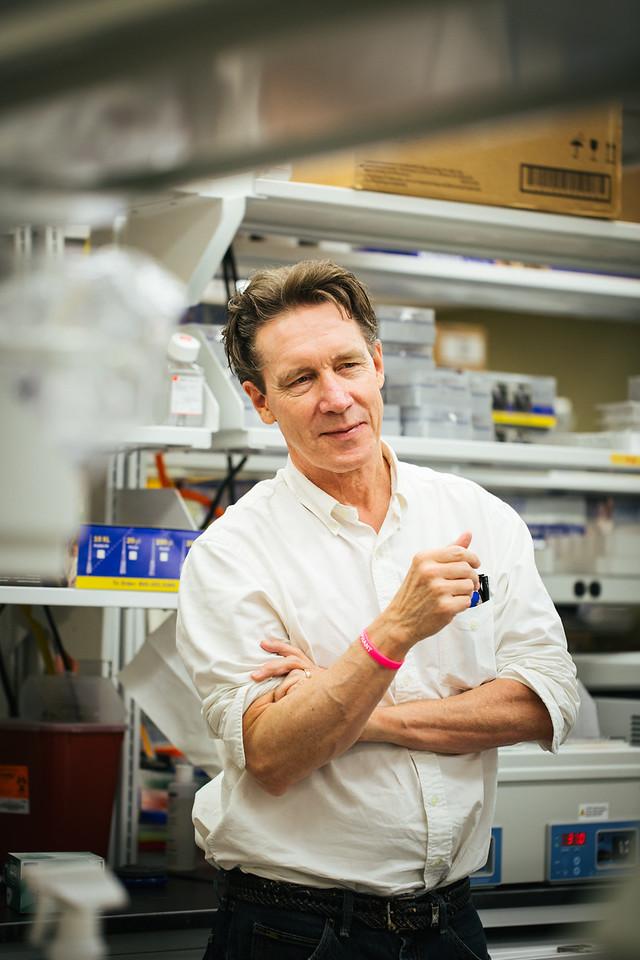
Using cloning technology to aid in the understanding of the evolution of cancers, Frank McKeon, professor of biology and biochemistry and director of the Somatic Stem Cell Center at the University of Houston, is leading a team to recreate the sequence leading to esophageal cancer. The goal is to identify potential targets for therapies before the disease becomes fatal. Esophageal cancer will kill an estimated 16,000 Americans in 2019, according to the National Cancer Institute.

“Our cloning provides unprecedented resolution to genomic changes accompanying this evolution and provides multiple advantages for drug discovery,” said McKeon, whose work is funded by a $2.2 million grant from the National Cancer Institute. McKeon’s research group includes Wa Xian, University of Texas McGovern Medical School in Houston, Jaffer Ajani, M.D., The University of Texas MD Anderson Cancer Center, and Peter Davies, Texas A&M University.

McKeon said his team can develop effective drugs in a fraction of the time it might take Big Pharma.

“We have something that most drug discovery labs do not – the clones commonly hit in chemotherapy – liver and gastrointestinal stem cells – to test at the same time and show they’re not effected. We’re not wasting our time on drugs that are going to lead to toxic surprises downstream. We can be very sure of the ones we focus on,” said McKeon.

The average life expectancy of patients diagnosed with esophageal adenocarcinoma is just one year and considerable efforts are devoted to defining its development in a predictable progression called the “Correa sequence.” It’s a 20-year evolution that starts with a precancerous lesion known as “Barrett’s esophagus,” then progresses to dysplasia before becoming a malignant esophageal adenocarcinoma.

“We are reconstructing a tumor that took 20 years to develop by applying stem cell cloning we originally developed for the human gastrointestinal tract to reconstruct the Correa sequence in patients with early esophageal adenocarcinoma,” said McKeon.

From patient-matched endoscopic biopsies of Barrett’s, dysplasia, and esophageal adenocarcinoma, McKeon’s team has cloned stem cells representing each of these lesions and has used molecular genetics to reconstruct the Correa sequence with clonal precision not possible from the sequencing of biopsies alone.

“The cloned stem cells of Barrett’s, dysplasia, and adenocarcinoma have enabled powerful forms of drug screens as well as in vivo models of the Correa sequence to validate lead combinations that specifically and simultaneously target the entire Correa sequence lineage,” said McKeon, who believes patients deserve better.

“Nobody can really manage esophageal cancer; it is most often linked with bad outcomes. We need to get at it at these earlier stages to see if we can address it in a pre-emptive way,” said McKeon.

###

Media Contact
Laurie Fickman
[email protected]

Original Source

http://www.uh.edu/news-events/stories/2019/october-2019/100119-mckeon-cloning-esophageal-cancer.php

Tags: BiologyBiotechnologyBreast CancercancerCarcinogensCell BiologyMedicine/HealthMicrobiologyMolecular BiologyProstate Cancer
Share13Tweet8Share2ShareShareShare2

Related Posts

LncRNA Genetic Variants Influence Colorectal Cancer Risk

LncRNA Genetic Variants Influence Colorectal Cancer Risk

December 17, 2025

Self-Control Influences Critical Thinking in Nursing Students

December 17, 2025

Dual-Layer AI: Merging Neural Codification and Normative Reasoning

December 17, 2025

X-ray Imaging Reveals Size Effects in Cobalt Oxide

December 17, 2025
Please login to join discussion

POPULAR NEWS

  • Nurses’ Views on Online Learning: Effects on Performance

    Nurses’ Views on Online Learning: Effects on Performance

    70 shares
    Share 28 Tweet 18
  • NSF funds machine-learning research at UNO and UNL to study energy requirements of walking in older adults

    70 shares
    Share 28 Tweet 18
  • MoCK2 Kinase Shapes Mitochondrial Dynamics in Rice Fungal Pathogen

    72 shares
    Share 29 Tweet 18
  • Unraveling Levofloxacin’s Impact on Brain Function

    52 shares
    Share 21 Tweet 13

About

BIOENGINEER.ORG

We bring you the latest biotechnology news from best research centers and universities around the world. Check our website.

Follow us

Recent News

LncRNA Genetic Variants Influence Colorectal Cancer Risk

Self-Control Influences Critical Thinking in Nursing Students

Dual-Layer AI: Merging Neural Codification and Normative Reasoning

Subscribe to Blog via Email

Enter your email address to subscribe to this blog and receive notifications of new posts by email.

Join 70 other subscribers
  • Contact Us

Bioengineer.org © Copyright 2023 All Rights Reserved.

Welcome Back!

Login to your account below

Forgotten Password?

Retrieve your password

Please enter your username or email address to reset your password.

Log In
No Result
View All Result
  • Homepages
    • Home Page 1
    • Home Page 2
  • News
  • National
  • Business
  • Health
  • Lifestyle
  • Science

Bioengineer.org © Copyright 2023 All Rights Reserved.