• HOME
  • NEWS
  • EXPLORE
    • CAREER
      • Companies
      • Jobs
    • EVENTS
    • iGEM
      • News
      • Team
    • PHOTOS
    • VIDEO
    • WIKI
  • BLOG
  • COMMUNITY
    • FACEBOOK
    • INSTAGRAM
    • TWITTER
Friday, October 23, 2026
BIOENGINEER.ORG
No Result
View All Result
  • Login
  • HOME
  • NEWS
  • EXPLORE
    • CAREER
      • Companies
      • Jobs
        • Lecturer
        • PhD Studentship
        • Postdoc
        • Research Assistant
    • EVENTS
    • iGEM
      • News
      • Team
    • PHOTOS
    • VIDEO
    • WIKI
  • BLOG
  • COMMUNITY
    • FACEBOOK
    • INSTAGRAM
    • TWITTER
No Result
View All Result
Bioengineer.org
No Result
View All Result
Home NEWS Science News Health

ZEB1-TEAD1 partnership keeps heart cells fueled and functioning

by
October 23, 2026
in Health
Reading Time: 2 mins read
0
ZEB1-TEAD1 partnership keeps heart cells fueled and functioning

ZEB1-TEAD1 partnership keeps heart cells fueled and functioning

Share on FacebookShare on TwitterShare on LinkedinShare on RedditShare on Telegram

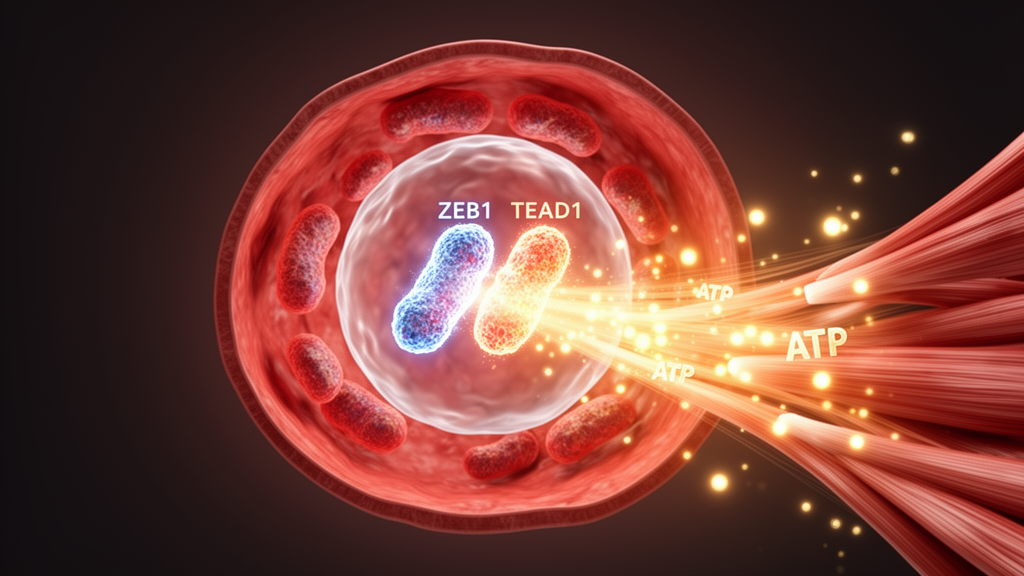
A heart-specific transcription factor called ZEB1 helps keep cardiac muscle cells supplied with energy, and losing it drives the heart into failure, according to a study published in Nature Communications. The researchers report that ZEB1 expression is reduced in failing cardiomyocytes, and that mice lacking Zeb1 specifically in cardiomyocytes develop progressive heart failure accompanied by impaired glycolysis and fatty acid metabolism, the two main fuel-burning pathways that keep the beating heart running.

ZEB1, a zinc finger E-box binding homeobox 1 protein, was originally known as a regulator of epithelial-mesenchymal transition but has recently been implicated in metabolic control. In the new work, the team identified the mechanism behind its cardiac role: ZEB1 physically interacts with TEA domain transcription factor 1 (TEAD1), and together the two proteins activate metabolic genes. Among the key targets are pyruvate kinase muscle isozyme 1, or PKM1, which supports glycolysis, and acetyl-CoA acyltransferase 2, or ACAA2, which is required for fatty acid beta-oxidation.

The functional importance of this axis was tested in several ways. Loss of Acaa2 aggravated stress-induced cardiac hypertrophy and mitochondrial dysfunction, indicating that the fatty-acid burning machinery downstream of ZEB1 is itself protective under cardiac stress. Conversely, supplementing the animals with acetate, a metabolite that can feed into cellular energy production, restored cardiac function in Zeb1-deficient mice, suggesting that the failure caused by ZEB1 loss stems at least partly from an energy supply problem that can be bypassed metabolically.

The findings also point toward potential interventions, though they remain at the preclinical stage in mice. When the researchers overexpressed ZEB1, the animals showed improved outcomes in two distinct models of cardiac injury: pressure overload-induced heart failure, which mimics the strain produced by chronic high blood pressure, and doxorubicin-induced heart failure, a model of chemotherapy-related cardiac toxicity.

Overall, the study identifies the ZEB1-TEAD1 axis as a regulator of cardiac metabolic homeostasis and proposes it as a candidate therapeutic target for heart failure. Because metabolic reprogramming is increasingly recognized as a central feature of the failing heart, a transcriptional switch controlling both sugar and fat utilization in cardiomyocytes offers a single point of leverage over multiple energy pathways. The evidence so far comes from mouse models and cell-level mechanistic work, and further studies would be needed to establish whether the same axis operates in human heart failure and whether acetate supplementation or ZEB1-targeting approaches could be translated safely into treatment.

Subject of Research: The role of the ZEB1-TEAD1 transcriptional axis in cardiac energy metabolism and heart failure

Article Title: ZEB1 maintains energy metabolism to sustain cardiac function through synergistic regulation with TEAD1

Article References: Chen, T., Wu, Z., Liao, F., Shen, Y., Wang, Z., Qian, Y., Luo, G., Xu, W., He, X., Huang, Y., Chen, J., Xu, B., Ding, S., & Pu, J. (2026). ZEB1 maintains energy metabolism to sustain cardiac function through synergistic regulation with TEAD1. Nature Communications. https://doi.org/10.1038/s41467-026-78866-2

Image Credits: AI Generated

DOI: 10.1038/s41467-026-78866-2

Keywords: ZEB1, TEAD1, heart failure, cardiac metabolism, glycolysis, fatty acid oxidation, PKM1, ACAA2, cardiomyocytes, acetate supplementation, mitochondrial dysfunction, Nature Communications

News Source: Ophelia Keating. (October 23, 2026). ZEB1-TEAD1 partnership keeps heart cells fueled and functioning. Scienmag.


Tags: ACAA2acetate supplementationcardiac metabolismcardiomyocytesFatty Acid Oxidationglycolysisheart failureMitochondrial dysfunctionNature CommunicationsPKM1TEAD1ZEB1
Share12Tweet7Share2ShareShareShare1

Related Posts

New Dataset Profiles Microsatellite Instability in Colorectal Cancers That Strike Cancer Survivors

New Dataset Profiles Microsatellite Instability in Colorectal Cancers That Strike Cancer Survivors

October 23, 2026
Sierra Leone caregivers anticipate hepatitis B birth-dose vaccine acceptance

Sierra Leone caregivers anticipate hepatitis B birth-dose vaccine acceptance

October 23, 2026

Brief Behavioral Insomnia Therapy Kept Growing in VA Clinics Even After Support Ended

October 23, 2026

Doctors Report First Case of Hormone Deficiency After 9-Valent HPV Vaccine

October 23, 2026

POPULAR NEWS

  • New Dataset Profiles Microsatellite Instability in Colorectal Cancers That Strike Cancer Survivors

    New Dataset Profiles Microsatellite Instability in Colorectal Cancers That Strike Cancer Survivors

    29 shares
    Share 12 Tweet 7
  • ZEB1-TEAD1 partnership keeps heart cells fueled and functioning

    29 shares
    Share 12 Tweet 7
  • Engineered RepE Variants Tune Plasmid Copy Number in Bacteria

    29 shares
    Share 12 Tweet 7
  • Sierra Leone caregivers anticipate hepatitis B birth-dose vaccine acceptance

    29 shares
    Share 12 Tweet 7

About

We bring you the latest biotechnology news from best research centers and universities around the world. Check our website.

Follow us

Recent News

New Dataset Profiles Microsatellite Instability in Colorectal Cancers That Strike Cancer Survivors

ZEB1-TEAD1 partnership keeps heart cells fueled and functioning

Engineered RepE Variants Tune Plasmid Copy Number in Bacteria

Subscribe to Blog via Email

Enter your email address to subscribe to this blog and receive notifications of new posts by email.

Join 85 other subscribers
  • Contact Us

Bioengineer.org © Copyright 2023 All Rights Reserved.

Welcome Back!

Login to your account below

Forgotten Password?

Retrieve your password

Please enter your username or email address to reset your password.

Log In
No Result
View All Result
  • Homepages
    • Home Page 1
    • Home Page 2
  • News
  • National
  • Business
  • Health
  • Lifestyle
  • Science

Bioengineer.org © Copyright 2023 All Rights Reserved.