• HOME
  • NEWS
  • EXPLORE
    • CAREER
      • Companies
      • Jobs
    • EVENTS
    • iGEM
      • News
      • Team
    • PHOTOS
    • VIDEO
    • WIKI
  • BLOG
  • COMMUNITY
    • FACEBOOK
    • INSTAGRAM
    • TWITTER
Friday, May 15, 2026
BIOENGINEER.ORG
No Result
View All Result
  • Login
  • HOME
  • NEWS
  • EXPLORE
    • CAREER
      • Companies
      • Jobs
        • Lecturer
        • PhD Studentship
        • Postdoc
        • Research Assistant
    • EVENTS
    • iGEM
      • News
      • Team
    • PHOTOS
    • VIDEO
    • WIKI
  • BLOG
  • COMMUNITY
    • FACEBOOK
    • INSTAGRAM
    • TWITTER
  • HOME
  • NEWS
  • EXPLORE
    • CAREER
      • Companies
      • Jobs
        • Lecturer
        • PhD Studentship
        • Postdoc
        • Research Assistant
    • EVENTS
    • iGEM
      • News
      • Team
    • PHOTOS
    • VIDEO
    • WIKI
  • BLOG
  • COMMUNITY
    • FACEBOOK
    • INSTAGRAM
    • TWITTER
No Result
View All Result
Bioengineer.org
No Result
View All Result
Home NEWS Science News Chemistry

Ways to improve petroleum coke combustibility studied with presence of metal catalysts

Bioengineer by Bioengineer
September 21, 2020
in Chemistry
Reading Time: 2 mins read
0
IMAGE
Share on FacebookShare on TwitterShare on LinkedinShare on RedditShare on Telegram

The publication saw light in ACS Omega
IMAGE

Credit: Kazan Federal University

There was a time when mazut was the final stage of oil refining; however, with technology becoming more efficient, the main residue from refining is now petroleum coke. Scientists are looking for ways to use coke in the industry, and it’s no easy task. As of now, it is mostly being stored in landfills.

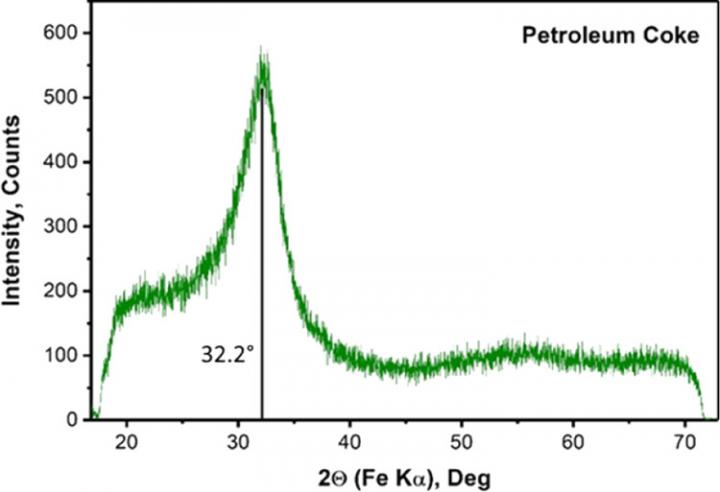
“Petroleum coke is not easily combustible because of its graphite-like structure,” says co-author Emil Sayfullin. “Graphite burns at 700 C, and petroleum coke, depending on its composition, starting from 450 C. It’s difficult and not financially viable to reach some temperatures, so we look for ways to decrease the combustion temperatures with catalysts.”

In this paper, the researchers used the so-called “fixed fluidized bed” to study catalyst activity.

Sayfullin explains, “The gist of the technology is to make every particle levitate in air. For instance, if we pour coal powder into a sieve and then blow air from below the sieve, the powder particles will levitate and disintegrate into myriads of smaller parts. The goal is to provide maximum air contact with the compound to enhance combustion.”

The second problem with coke is that it contains all the metals that are present in petroleum, which also can have unpredictable effects on burning.

The fixed fluidized bed technology is already widely used overseas, but is relatively new for the Russian oil industry. To improve it, the KFU scientists mixed coke particles with quartz sand. This created a sort of a “freeze” in the porous layer and simplified the study of the kinetics of petroleum coke combustion in the presence of catalysts.

###

Media Contact
Yury Nurmeev
[email protected]

Original Source

https://kpfu.ru/eng/news-eng/ways-to-improve-petroleum-coke-combustibility.html

Related Journal Article

http://dx.doi.org/10.1021/acsomega.0c02250

Tags: Chemistry/Physics/Materials SciencesEnergy SourcesIndustrial Engineering/Chemistry
Share12Tweet8Share2ShareShareShare2

Related Posts

Scientists Overcome Longstanding Challenge in Measuring Semiconductor Defects — Chemistry

Scientists Overcome Longstanding Challenge in Measuring Semiconductor Defects

May 14, 2026
Wall Design Highlights Deaf and Hard-of-Hearing Experience at #ASA190 — Chemistry

Wall Design Highlights Deaf and Hard-of-Hearing Experience at #ASA190

May 14, 2026

New Method Finds More Efficient Route Between Earth and Moon Than Ever Before

May 14, 2026

Unveiling the Unseen: Exploring the Boundaries of Two-Photon Vision

May 14, 2026
Please login to join discussion

POPULAR NEWS

  • Research Indicates Potential Connection Between Prenatal Medication Exposure and Elevated Autism Risk

    842 shares
    Share 337 Tweet 211
  • New Study Reveals Plants Can Detect the Sound of Rain

    729 shares
    Share 291 Tweet 182
  • Salmonella Haem Blocks Macrophages, Boosts Infection

    62 shares
    Share 25 Tweet 16
  • Breastmilk Balances E. coli and Beneficial Bacteria in Infant Gut Microbiomes

    58 shares
    Share 23 Tweet 15

About

We bring you the latest biotechnology news from best research centers and universities around the world. Check our website.

Follow us

Recent News

Transitional Urology: Navigating Comprehensive Care Processes

Tracking Frailty Patterns in Elderly Heart Attack Patients

Precision Therapies Offer New Hope Against Drug-Resistant Bacteria

Subscribe to Blog via Email

Enter your email address to subscribe to this blog and receive notifications of new posts by email.

Join 82 other subscribers
  • Contact Us

Bioengineer.org © Copyright 2023 All Rights Reserved.

Welcome Back!

Login to your account below

Forgotten Password?

Retrieve your password

Please enter your username or email address to reset your password.

Log In
No Result
View All Result
  • Homepages
    • Home Page 1
    • Home Page 2
  • News
  • National
  • Business
  • Health
  • Lifestyle
  • Science

Bioengineer.org © Copyright 2023 All Rights Reserved.