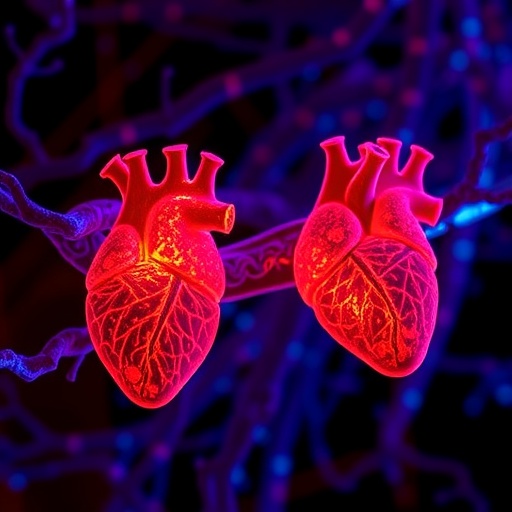
In a groundbreaking discovery poised to reshape our understanding of cardiac fibrosis, researchers have unveiled the critical role played by VAP1 in modulating fibrotic processes within the heart. This study, published in Experimental & Molecular Medicine, unpacks the molecular crosstalk that enables VAP1 to promote cardiac fibrosis by facilitating Platelet-Derived Growth Factor Receptor (PDGFR) signaling specifically in myofibroblasts, the pivotal cellular architects of fibrotic tissue remodeling.
Cardiac fibrosis represents a formidable challenge in cardiovascular medicine, often underpinning heart failure and adverse cardiac remodeling that compromise heart function and patient survival. Despite extensive research, the precise molecular mechanisms driving myofibroblast activation and their persistence in fibrotic scar tissue have remained elusive. This new research identifies VAP1—Vascular Adhesion Protein 1—as a fundamental facilitator that enhances PDGFR-related signaling pathways, thereby promoting the pathological accumulation of extracellular matrix components characteristic of fibrosis.
Delving into the cellular microenvironment, the researchers employed a combination of in vivo and in vitro models to elucidate the role of VAP1 in cardiac tissue. Their findings reveal that VAP1 interacts directly with PDGFR complexes on myofibroblast surfaces, potentiating receptor activation and downstream signaling cascades. This molecular synergy catalyzes the phenotypic transition of fibroblasts to myofibroblasts, cells that secrete collagen and other fibrotic factors, perpetuating tissue stiffening and loss of elasticity in the myocardium.
The study further characterizes the signaling axis downstream of PDGFR engagement, highlighting critical intracellular pathways influenced by VAP1. Activation of MAPK/ERK and PI3K/AKT pathways was shown to be significantly upregulated in presence of VAP1, fostering myofibroblast survival, proliferation, and enhanced fibrogenic gene expression. These pathways’ regulation through VAP1 suggests new potential therapeutic intervention points aimed at decoupling the pro-fibrotic cellular machinery.
This research also underscores the temporal dynamics of VAP1 expression during cardiac injury and repair. Data indicate that VAP1 levels surge during the early phase of fibrotic response, suggesting it acts as a molecular switch that orchestrates the initiation and amplification of tissue remodeling. Such timing details are crucial for devising precise therapeutic windows to attenuate fibrosis without disrupting necessary tissue healing responses.
Innovatively, the team demonstrated that genetic ablation or pharmacological inhibition of VAP1 dramatically reduces fibrosis in murine models of cardiac injury. By specifically targeting the interplay between VAP1 and PDGFR, they achieved marked reductions in collagen deposition and improved cardiac function, affirming VAP1’s candidacy as a molecular target for antifibrotic therapies.
The implications of this work extend beyond cardiac tissue alone. Given that myofibroblasts and PDGFR signaling mechanisms are conserved across multiple organ systems, these insights may influence a broad spectrum of fibrotic diseases, including pulmonary, renal, and hepatic fibrosis. Targeted modulation of VAP1 could represent a versatile strategy to combat these debilitating conditions, which collectively account for significant morbidity worldwide.
Moreover, this study provides a compelling model of how adhesion molecules such as VAP1 can act as molecular hubs integrating extracellular signals with intracellular signaling networks. This integrative viewpoint enhances our conceptual understanding of fibrosis as a complex, multifactorial process governed by finely tuned molecular interactions rather than single linear pathways.
For clinicians and researchers alike, these findings highlight the therapeutic promise of interventions aimed at the extracellular matrix remodeling machinery. By intercepting the molecular conversation between VAP1 and PDGFR, future treatments may halt or even reverse the progression of stiffening cardiac tissue, potentially restoring normal cardiac mechanics and improving patient outcomes.
This work also poses important questions regarding the broader physiological roles of VAP1. Beyond its adhesive capabilities, might VAP1 influence other receptor-mediated signaling pathways in diverse cell types? The elucidation of such roles will require further investigation, potentially unlocking new pathways relevant to tissue homeostasis and repair.
Technologically, the study exemplifies the power of multidisciplinary approaches combining molecular biology, genetic engineering, and sophisticated imaging techniques. This integrative methodology allowed the team to quantify dynamic protein-protein interactions and downstream effects in real time within living tissues, offering unprecedented resolution of the molecular events driving fibrosis.
In summation, the revelation that VAP1 serves as a pivotal enabler of PDGFR signaling in cardiac myofibroblasts propels the field of fibrosis research into new terrain. It opens avenues for precision-targeted therapies that can disrupt pathological fibrosis while preserving essential regenerative processes. As cardiovascular diseases remain a leading global health burden, such innovations hold the potential to markedly reduce suffering and improve longevity.
Future research following these insights will likely explore the development of selective VAP1 inhibitors, the detailed mapping of its interacting partners, and the feasibility of translating these findings into clinical regimens. The pursuit of such avenues promises a paradigm shift in managing fibrotic diseases.
As this new chapter in cardiovascular molecular medicine unfolds, the role of VAP1 as a linchpin in fibrotic signaling underscores the continuing need to study complex protein networks that govern health and disease. The nuanced interplay between cellular adhesion and growth factor signaling elucidated here redefines our therapeutic targets and encourages a holistic view of tissue pathology.
This landmark study not only illuminates the molecular choreography of cardiac fibrosis but also exemplifies the ingenuity that drives scientific progress. It paves the way for a future where cardiac fibrosis is no longer an inexorable consequence of heart disease but a manageable condition amenable to targeted molecular therapy.
Subject of Research: The role of VAP1 in promoting cardiac fibrosis through enabling PDGFR signaling in myofibroblasts.
Article Title: VAP1 promotes cardiac fibrosis by enabling PDGFR signaling in myofibroblasts.
Article References: Huang, S., Zhao, Q., Shao, T. et al. VAP1 promotes cardiac fibrosis by enabling PDGFR signaling in myofibroblasts. Exp Mol Med (2026). https://doi.org/10.1038/s12276-026-01690-7
Image Credits: AI Generated
DOI: 10.1038/s12276-026-01690-7
Keywords: Cardiac fibrosis, VAP1, PDGFR signaling, myofibroblasts, extracellular matrix, MAPK/ERK pathway, PI3K/AKT pathway, tissue remodeling, antifibrotic therapy.
Tags: cardiac fibroblast to myofibroblast transitioncardiac fibrosis and heart failureexperimental molecular medicine cardiac researchextracellular matrix accumulation in heartfibrotic tissue remodeling pathwaysmolecular crosstalk in fibrosismolecular mechanisms of cardiac fibrosismyofibroblast activation in heart diseasePDGFR signaling in myofibroblastsplatelet-derived growth factor receptor signalingVAP1 role in cardiac fibrosisVascular Adhesion Protein 1 function