• HOME
  • NEWS
  • EXPLORE
    • CAREER
      • Companies
      • Jobs
    • EVENTS
    • iGEM
      • News
      • Team
    • PHOTOS
    • VIDEO
    • WIKI
  • BLOG
  • COMMUNITY
    • FACEBOOK
    • INSTAGRAM
    • TWITTER
Wednesday, May 13, 2026
BIOENGINEER.ORG
No Result
View All Result
  • Login
  • HOME
  • NEWS
  • EXPLORE
    • CAREER
      • Companies
      • Jobs
        • Lecturer
        • PhD Studentship
        • Postdoc
        • Research Assistant
    • EVENTS
    • iGEM
      • News
      • Team
    • PHOTOS
    • VIDEO
    • WIKI
  • BLOG
  • COMMUNITY
    • FACEBOOK
    • INSTAGRAM
    • TWITTER
  • HOME
  • NEWS
  • EXPLORE
    • CAREER
      • Companies
      • Jobs
        • Lecturer
        • PhD Studentship
        • Postdoc
        • Research Assistant
    • EVENTS
    • iGEM
      • News
      • Team
    • PHOTOS
    • VIDEO
    • WIKI
  • BLOG
  • COMMUNITY
    • FACEBOOK
    • INSTAGRAM
    • TWITTER
No Result
View All Result
Bioengineer.org
No Result
View All Result
Home NEWS Science News Biology

Vampire bat venom could hold key to new medical treatments

Bioengineer by Bioengineer
January 16, 2019
in Biology
Reading Time: 2 mins read
0
IMAGE
Share on FacebookShare on TwitterShare on LinkedinShare on RedditShare on Telegram

IMAGE

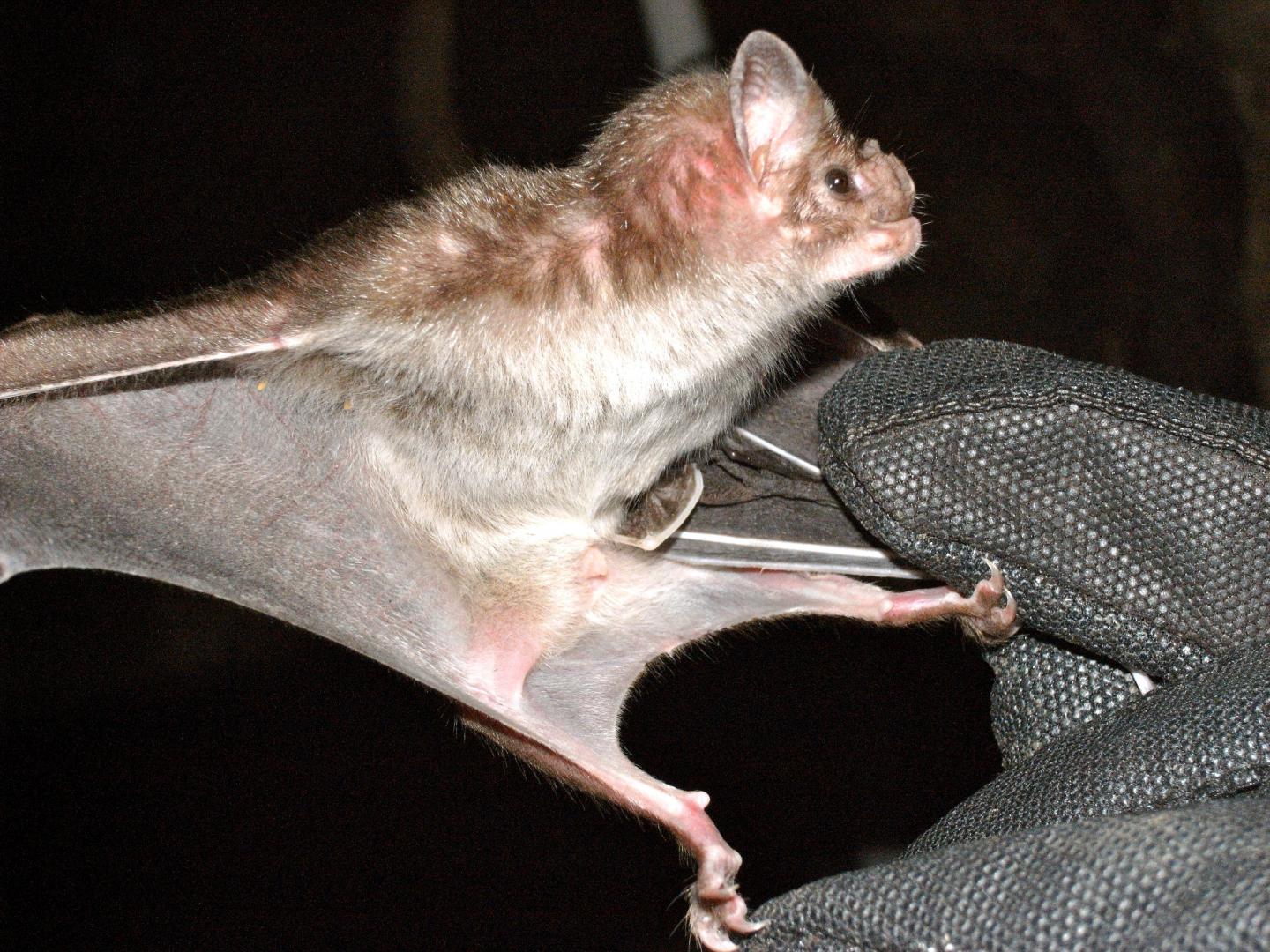
Credit: Bryan Fry


Vampire bats could hold the key to new treatments for a range of serious medical problems, but researchers have hit a snag accessing the specimens needed to advance their work.

An international team led by The University of Queensland has found a new class of blood pressure-regulating peptides in the venom of the common vampire bat (Diphylla ecaudata).

UQ School of Biological Sciences researcher Associate Professor Bryan Fry said the peptides could help revolutionise treatments for a wide range of conditions, including hypertension, heart failure, kidney diseases and burns, but the research had been hampered by criminal activity at a Mexican field site.

“The peptides are mutated forms of the Calcitonin Gene Related Peptide (CGRP), used by our bodies to relax blood vessels,” he said.

“The peptides from the bats are unusually selective in their mode of action, making them even more therapeutically useful than the CGRP, as they have fewer side-effects.

“This could potentially help doctors in the treatment of a range of disorders featuring heightened pressure in small blood vessels, or may be able to improve blood flow to damaged or transplanted tissue such as skin grafts.”

Associate Professor Fry said there was much more to be learned than feared from the unique but much maligned vampire bats.

“This discovery is another example of why it’s so important to broadly protect nature, since we can’t predict where the next great biologically sourced drug discovery is going to come from,” he said.

“Venomous animals around the world are under threat, even more so than most other threatened or endangered species, due to deliberate persecution driven by fear or misunderstanding.”

Associate Professor Fry said his team was facing challenges accessing vampire bat specimens.

“We can’t access our original field site in Mexico anymore, because we’re told that region has been taken over by drug traffickers,” he said.

“It’s now too dangerous for even my Mexican colleagues to go there, let alone a gringo like me.

“We’ll have to find new field sites that are safe to work in, but once we do that we’ll be on track to find new peptide variations and potential wonder drugs, helping improve and save lives.”

###

The study is published in the journal Toxins (DOI: 10.3390/toxins11010026).

Associate Professor Fry said Monash University PhD student Rahini Kakumanu had used complex pharmacological analyses to tease out the unique characteristic of the vampire bat venom.

Media Contact
Associate Professor Bryan Fry
[email protected]
61-400-193-182

Original Source

https://www.uq.edu.au/news/article/2019/01/human-hazards-hamper-vampire-bat-venom-research

Related Journal Article

http://dx.doi.org/10.3390/toxins11010026

Tags: BiochemistryBiologyCardiologyEcology/EnvironmentMedicine/HealthToxicologyZoology/Veterinary Science
Share12Tweet8Share2ShareShareShare2

Related Posts

Cutting-Edge Genomic Techniques Reveal Unexpected Cellular Changes in the Aging Brain — Biology

Cutting-Edge Genomic Techniques Reveal Unexpected Cellular Changes in the Aging Brain

May 12, 2026
USC Researchers Initiate Study on the Most Advanced Lab-Grown Kidney Structures — Biology

USC Researchers Initiate Study on the Most Advanced Lab-Grown Kidney Structures

May 12, 2026

Childbirth in Humans Is Not Uniquely Challenging Among Mammals, New Research Shows

May 12, 2026

From Complexity to Clarity: Unraveling the “Topological Laws” Governing Cell Death

May 11, 2026
Please login to join discussion

POPULAR NEWS

  • Research Indicates Potential Connection Between Prenatal Medication Exposure and Elevated Autism Risk

    842 shares
    Share 337 Tweet 211
  • New Study Reveals Plants Can Detect the Sound of Rain

    728 shares
    Share 290 Tweet 182
  • Salmonella Haem Blocks Macrophages, Boosts Infection

    62 shares
    Share 25 Tweet 16
  • Breastmilk Balances E. coli and Beneficial Bacteria in Infant Gut Microbiomes

    57 shares
    Share 23 Tweet 14

About

We bring you the latest biotechnology news from best research centers and universities around the world. Check our website.

Follow us

Recent News

Older Adults’ Views on Medication After Hospital Discharge

Flexible Carbon Nanotube Transistors Surpass 100 GHz

Glycocalyx Exchange Powers Liquid Biopsies of Endothelium

Subscribe to Blog via Email

Enter your email address to subscribe to this blog and receive notifications of new posts by email.

Join 82 other subscribers
  • Contact Us

Bioengineer.org © Copyright 2023 All Rights Reserved.

Welcome Back!

Login to your account below

Forgotten Password?

Retrieve your password

Please enter your username or email address to reset your password.

Log In
No Result
View All Result
  • Homepages
    • Home Page 1
    • Home Page 2
  • News
  • National
  • Business
  • Health
  • Lifestyle
  • Science

Bioengineer.org © Copyright 2023 All Rights Reserved.