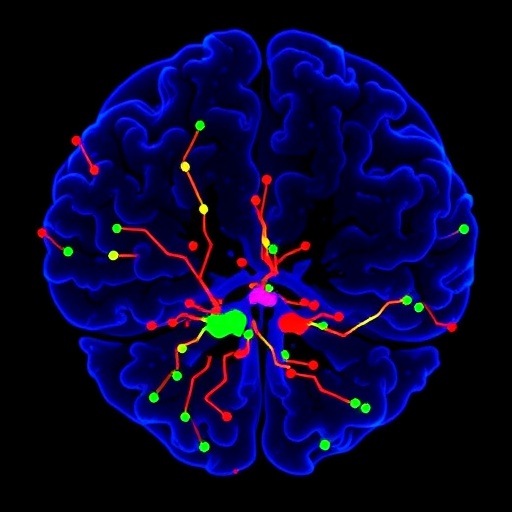
In a groundbreaking study published recently, researchers unveiled a meticulous validation of the positron emission tomography (PET) tracer ^18F-THK5351, a compound designed to illuminate the complex landscape of reactive astrogliosis within neurodegenerative disorders, notably Alzheimer’s disease. This innovative work breaks new ground in neuroimaging, emphasizing the tracer’s ability to selectively bind to monoamine oxidase-B (MAO-B), an enzyme linked to the activation and proliferation of astrocytes in response to neuroinflammation. As neurodegenerative diseases continue to overwhelm global healthcare systems, this development introduces a promising biomarker capable of delivering deeper insights into disease progression and therapeutic response.
The study leverages an integrative approach combining multimodal imaging techniques with histopathological validation to confirm the specificity and sensitivity of ^18F-THK5351 in detecting MAO-B-mediated astrogliosis. This validation is crucial given the historical ambiguity surrounding the tracer’s binding profile, which initially limited its application due to off-target interactions. By deploying sophisticated imaging protocols alongside ex vivo brain tissue analyses from patients and animal models representing Alzheimer’s and other neurodegenerative pathologies, the authors delineated the tracer’s selective affinity for reactive astrocytes.
Astrocytes, star-shaped glial cells, perform vital functions ranging from neurotransmitter regulation to maintenance of the blood-brain barrier, but they undergo profound changes under pathological conditions. Reactive astrogliosis, characterized by hypertrophy and proliferation, is a hallmark response to brain injury and neurodegeneration. Understanding and visualizing this cellular transformation in vivo holds immense potential for bridging the gap between molecular pathology and clinical symptomatology. Here, ^18F-THK5351 emerges as a powerful molecular probe, able to map pathological astrocyte activity across spatial and temporal scales.
Prior research efforts primarily associated ^18F-THK5351 with tau protein accumulation, a defining characteristic of Alzheimer’s disease. However, emerging evidence revealed that its PET signal predominantly reflected MAO-B enzyme activity rather than tau aggregates. This realization necessitated a re-evaluation of the tracer’s utility, as MAO-B expression escalates in reactive astrocytes, linking it directly to neuroinflammation processes rather than solely protein aggregation. The current work capitalizes on this insight, reinterpreting the tracer’s role with an emphasis on inflammatory astrocyte biology.
Methodologically, the researchers employed longitudinal PET imaging on cohorts diagnosed with Alzheimer’s disease and other neurodegenerative conditions, complemented by post-mortem immunohistochemical analyses targeting MAO-B and astrocytic markers such as GFAP (glial fibrillary acidic protein). This multimodal strategy validated the PET findings, demonstrating spatial concordance between ^18F-THK5351 retention and astrocyte-dense regions, thus underscoring the tracer’s physiological relevance. The fusion of in vivo and ex vivo data sets presents a robust framework for future clinical applications.
The implications of this study extend into therapeutic domains, where monitoring reactive astrogliosis could inform intervention timing and efficacy. Current treatment strategies for Alzheimer’s disease and related disorders face challenges due to the heterogeneity of neuroinflammatory responses. Being able to visualize the extent and dynamics of astrocyte reactivity offers clinicians and researchers a noninvasive window into disease mechanisms. This could precipitate a paradigm shift in clinical trial design and patient stratification based on neuroinflammatory status.
On a molecular level, the enzymatic activity of MAO-B influences oxidative stress and neurotransmitter metabolism, factors intricately tied to neurodegeneration. By targeting MAO-B, researchers are examining pathways beyond classical amyloid and tau-centric frameworks. ^18F-THK5351 enables this exploration by providing a direct readout of enzymatic activity related to astroglial responses, thereby enhancing our understanding of the cellular interplay underpinning neuronal loss.
Moreover, this study addresses critical technical concerns about PET tracer specificity, reinforcing the necessity of multimodal validation when interpreting imaging biomarkers. The contrast between initial assumptions of tau binding and the revelation of MAO-B targeting exemplifies the complexities inherent in molecular imaging development. The researchers’ comprehensive approach sets a new standard for scrutinizing tracer behaviors to avoid misinterpretation that could compromise diagnostic accuracy.
From a translational perspective, ^18F-THK5351 stands as a candidate for expanding the repertoire of neuroimaging tools capable of detecting glial pathology. This capability is particularly relevant for conditions where neuroinflammation supersedes or precedes classical amyloid and tau pathology, such as Parkinson’s disease, frontotemporal dementia, and multiple sclerosis. The versatile application of this tracer could accelerate biomarker discovery and enable earlier diagnoses.
Technological advancements in PET imaging resolution and quantification software were pivotal to the success of this study. Enhanced imaging protocols allowed precise localization of tracer uptake in anatomically and functionally distinct brain regions, facilitating correlation with clinical parameters such as cognitive decline and functional impairment. This precision underscores the potential of ^18F-THK5351 to serve in longitudinal patient monitoring.
The research also delves into the biological heterogeneity of reactive astrocytes, revealing that not all astrocytic responses are uniform. The heterogeneity observed raises questions about the differential roles astrocytes play at various disease stages or in response to distinct neuropathological stimuli. ^18F-THK5351’s ability to selectively highlight MAO-B-rich astrocyte subsets introduces a new dimension to astrocyte biology and its clinical implications.
Importantly, the study’s findings challenge the existing dogma that places amyloid plaques and tau neurofibrillary tangles at the epicenter of neurodegenerative imaging diagnostics. By shedding light on astrocytic markers of disease progression, the research prompts a more holistic understanding of neurodegeneration that encompasses gliopathy alongside neuronal pathology, potentially guiding future therapeutic target discovery.
The researchers underscore the necessity for large-scale validation studies across diverse patient groups to ascertain the generalizability of ^18F-THK5351 PET imaging. Variations in MAO-B expression and astrocyte activation across populations and disease subtypes demand comprehensive evaluation before this tracer can be routinely deployed in clinical practice. Such endeavors will refine imaging protocols and interpretative frameworks.
Finally, this in-depth validation positions ^18F-THK5351 as a transformative tool in the realm of neurodegenerative research, broadening the horizon beyond traditional biomarkers tied exclusively to proteinopathy. Its ability to capture the nuanced landscape of reactive astrogliosis, a critical yet under-explored facet of neurodegeneration, is poised to catalyze advancements in diagnosis, prognosis, and therapeutic innovation, setting a benchmark for the future of neuroimaging.
Subject of Research: Validation of ^18F-THK5351 PET tracer for imaging MAO-B-mediated reactive astrogliosis in Alzheimer’s disease and related neurodegenerative disorders.
Article Title: In-depth multimodal validation of ^18F-THK5351 for imaging monoamine oxidase-B-mediated reactive astrogliosis in Alzheimer’s and related neurodegenerative diseases.
Article References: Chun, H., Youn, W., Lim, H. et al. In-depth multimodal validation of ^18F-THK5351 for imaging monoamine oxidase-B-mediated reactive astrogliosis in Alzheimer’s and related neurodegenerative diseases. Exp Mol Med (2026). https://doi.org/10.1038/s12276-026-01757-5
Image Credits: AI Generated
DOI: 01 July 2026
Tags: 18F-THK5351 PET tracer validationastrocyte activation in Alzheimer’s diseaseastrocyte role in neurodegenerationdetecting astroglial proliferation in brain disordershistopathological validation of PET tracersimaging reactive astrogliosis in neurodegenerationMAO-B selective binding in astrocytesmultimodal neuroimaging techniquesneuroinflammation biomarkers in PET imagingoff-target binding issues in PET tracersPET imaging for neurodegenerative disease progression