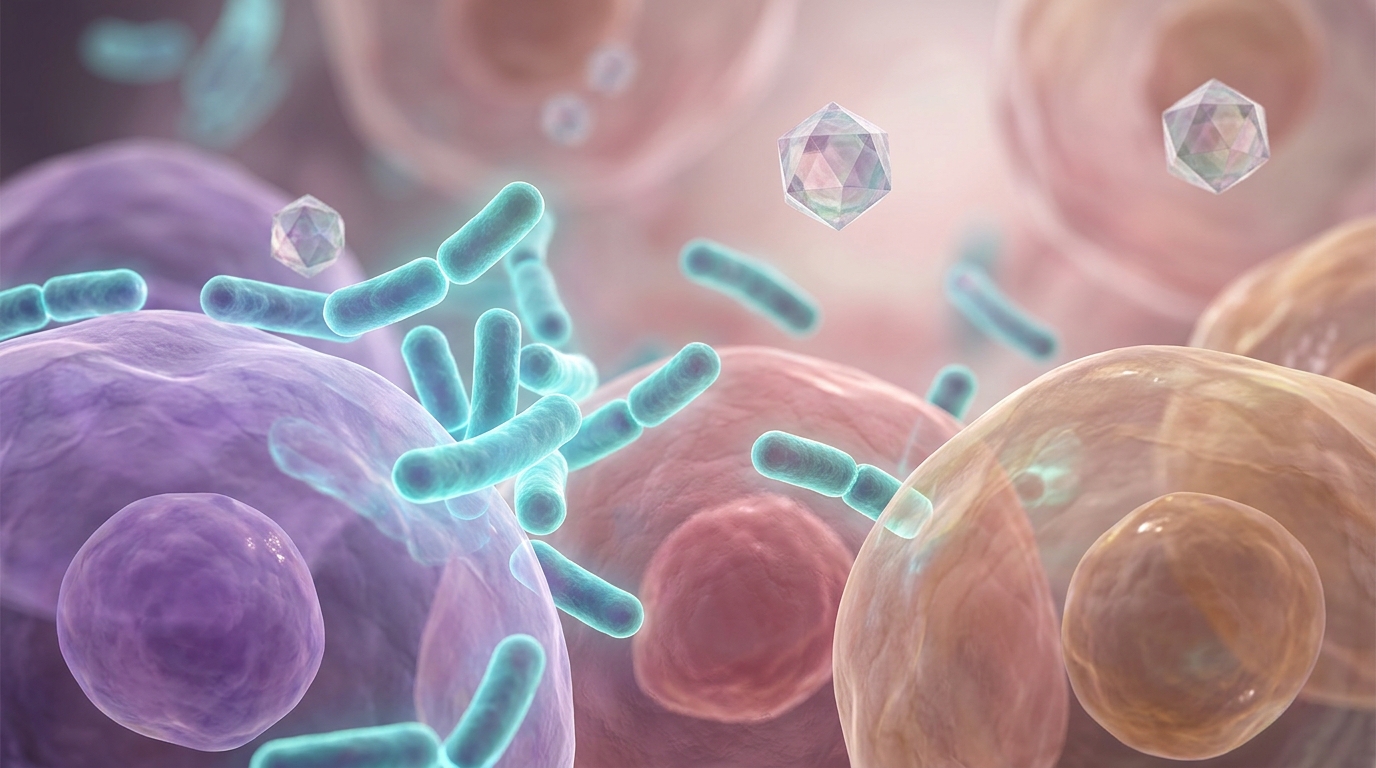
Human papillomavirus has long been recognised as a tumour-inducing virus, and persistent infection with high-risk types remains the primary risk factor for nearly all cervical cancers as well as a substantial proportion of malignant tumours of the vagina and vulva. A new review published in Virology Journal examines how the bacterial communities inhabiting the female reproductive tract may tip the balance between viral clearance and cancer development, focusing on the immunoregulatory role of these microbes during HPV-associated cervical carcinogenesis and the oncogenic effects of microbial dysbiosis.
The review, authored by Dongfang Fu, Tengge Yu and Yinghong Zheng, argues that the vaginal microbiota is not a passive bystander in HPV infection. According to the authors, the presence and abundance of certain bacterial species may confer protective effects against HPV infection and facilitate viral clearance, thereby reducing the risk of precancerous lesions in the cervix, vagina and vulva. Conversely, other bacterial taxa may contribute to the promotion of pathological conditions, creating a microbial environment that favours viral persistence and lesion progression.
This dual role places the microbiome at the centre of one of the most important unresolved questions in HPV biology: why some infections resolve spontaneously while others progress toward malignancy. The authors note that genetic and environmental factors underlying these differential outcomes remain an active area of investigation, with the microbiome emerging as a critical element that may modulate this balance by either promoting or inhibiting viral infection.
Elucidating the composition of the vaginal microbiota and its dysbiotic alterations in relation to HPV infection and persistence may therefore enhance the predictive accuracy regarding infection outcomes.
The precise identification of bacterial components associated with HPV-induced pathology also holds potential clinical relevance and may inform alternative therapeutic strategies.
Technological capability underpins this growing field. The authors highlight that current advancements enable rapid, high-throughput analysis of the vaginal microbiome, which can be applied in longitudinal studies to delineate the roles of specific bacterial species in the initiation, prevention, progression or regression of HPV-related cervical, vaginal and vulvar lesions.
As a review, the article synthesises existing research progress rather than presenting new experimental data, and its conclusions describe associations and hypotheses that require testing in longitudinal and interventional studies. The authors position the microbiome as a critical element that may modulate the balance between viral clearance and cancer development, a balance whose genetic and environmental determinants are still being mapped.
The composition of the vaginal microbiota, its dysbiotic shifts and the specific bacterial species involved may all influence whether high-risk HPV infection ends in clearance, persists silently or advances along the pathway toward cervical, vaginal or vulvar cancer, making microbiome characterisation an increasingly relevant tool in understanding and potentially predicting the course of HPV-associated disease.
Subject of Research: The immunoregulatory role of the female reproductive tract microbiota in HPV-associated cervical carcinogenesis and the oncogenic effects of microbial dysbiosis.
Article Title: Research progress on the immunoregulatory role of the female reproductive tract microbiota in HPV-associated cervical carcinogenesis and the oncogenic effects of microbial dysbiosis
Article References: Fu, D., Yu, T., & Zheng, Y. (2026). Research progress on the immunoregulatory role of the female reproductive tract microbiota in HPV-associated cervical carcinogenesis and the oncogenic effects of microbial dysbiosis. Virology Journal. https://doi.org/10.1186/s12985-026-03348-2
Image Credits: AI Generated
DOI: 10.1186/s12985-026-03348-2
Keywords: HPV, cervical cancer, vaginal microbiota, microbial dysbiosis, viral clearance, high-risk HPV, cervical carcinogenesis, immunoregulation, vaginal microbiome, precancerous lesions, Virology Journal, review
News Source: Morgan Morrow. (November 4, 2026). Vaginal microbiota may shape HPV outcomes in cervical cancer. Scienmag.