Ultraviolet light can break down per- and polyfluoroalkyl substances, commonly known as PFAS, through a complex network of reactions that researchers at the University of California, Riverside have now mapped in greater detail. The peer-reviewed experimental study, published in Nature Water on September 2, 2026, identifies the reactive species and intermediate pathways involved in shortening PFAS molecular chains, releasing fluorine as fluoride ions and producing formate as a key carbon-containing product. The findings offer engineers a more evidence-based basis for optimizing ultraviolet treatment conditions and may also inform the design of fluorinated compounds that are easier to destroy after use.
PFAS became widely used beginning in the 1940s because they resist heat, moisture, grease and stains. They have since been incorporated into thousands of products, including nonstick cookware, grease-resistant food packaging, stain-resistant carpets, cleaning products, paints, varnishes, sealants and fire suppressants. Over decades, these persistent compounds have entered groundwater and contaminated drinking water and food. Certain PFAS exposures have been associated with increased cholesterol, weakened immune responses, liver effects, pregnancy complications and increased risks of kidney and testicular cancers. In 2024, the U.S. Environmental Protection Agency established the first enforceable federal drinking-water limits for several PFAS and later reconsidered portions of the regulations while retaining 4-parts-per-trillion limits for two of the best-known compounds.
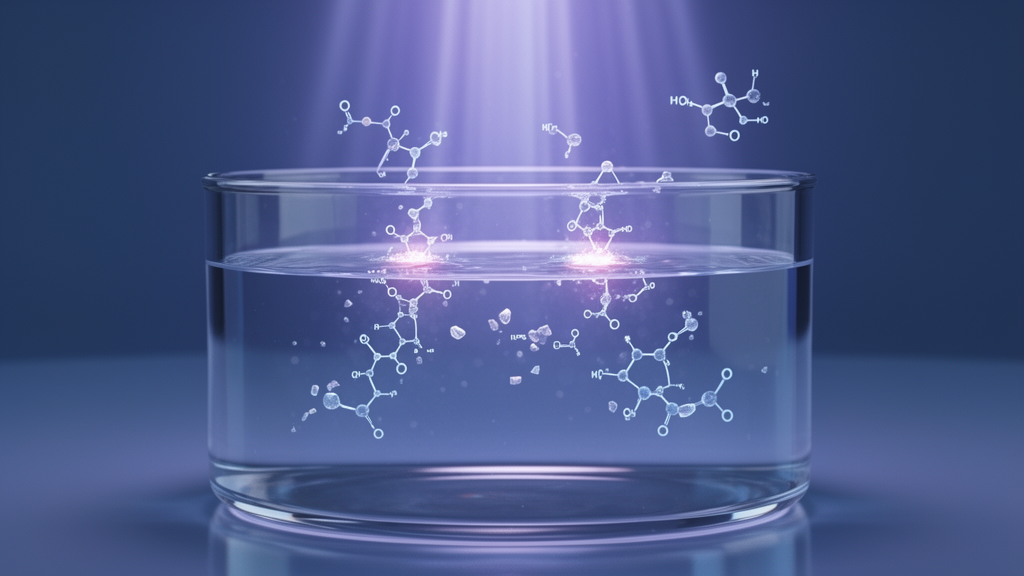
At the center of the new study is the unusually strong carbon-fluorine bond that makes PFAS exceptionally difficult to degrade. Under ultraviolet irradiation with sulfite, highly reactive electrons are generated and attack PFAS molecules, initiating cleavage of those bonds. As the molecules fragment, fluorine atoms are removed and released into the water as fluoride ions. Hydroxyl radicals and hydroxide ions also contribute to reactions that break carbon-carbon bonds, dividing the remaining molecular structures into shorter chains. Those shorter-chain compounds can then undergo additional defluorination, progressively dismantling the original PFAS molecules. The researchers found that formate, a simple compound containing carbon, hydrogen and oxygen, is the principal carbon-containing product formed through an important chain-shortening pathway; earlier studies had instead proposed carbon dioxide, carbon monoxide or other products.
The team also revises a simplified account of PFAS photodegradation that emphasized hydrated electrons as the primary agents responsible for destruction. Their kinetic studies and extensive analysis of transformation products indicate that hydrated electrons, hydroxyl radicals and hydroxide ions can each play important roles in reactions that cleave carbon-fluorine and carbon-carbon bonds. Lead author Jinyu Gao began investigating the mechanisms in 2022 as a doctoral student and continued the work as a postdoctoral researcher, alongside Dandan Rao and corresponding author Jinyong Liu. By reconstructing reactions at different stages of degradation, the researchers identified previously unrecognized pathways and corrected mechanisms in earlier literature that had relied largely on assumptions rather than experimental evidence. The results describe laboratory chemistry under the tested conditions; they do not yet establish the performance of a full-scale cleanup system or demonstrate that ultraviolet treatment alone can completely remove PFAS from contaminated water.
Subject of Research: Experimental identification of chemical pathways for PFAS degradation under ultraviolet irradiation
Article Title: Study unveils chemistry of destroying ‘forever chemicals’
Article References: Study unveils chemistry of destroying ‘forever chemicals’. Original publication (Bibliographic details unavailable.)
Image Credits: AI Generated
DOI: Not provided
Keywords: PFAS, forever chemicals, UV treatment, water contamination, defluorination, hydrated electrons, sulfite, formate, Nature Water, unveils, chemistry, destroying
News Source: Bethany Barker. (October 26, 2026). UV Treatment Reveals New Pathways for Breaking Down PFAS. Scienmag.