• HOME
  • NEWS
  • EXPLORE
    • CAREER
      • Companies
      • Jobs
    • EVENTS
    • iGEM
      • News
      • Team
    • PHOTOS
    • VIDEO
    • WIKI
  • BLOG
  • COMMUNITY
    • FACEBOOK
    • INSTAGRAM
    • TWITTER
Sunday, June 28, 2026
BIOENGINEER.ORG
No Result
View All Result
  • Login
  • HOME
  • NEWS
  • EXPLORE
    • CAREER
      • Companies
      • Jobs
        • Lecturer
        • PhD Studentship
        • Postdoc
        • Research Assistant
    • EVENTS
    • iGEM
      • News
      • Team
    • PHOTOS
    • VIDEO
    • WIKI
  • BLOG
  • COMMUNITY
    • FACEBOOK
    • INSTAGRAM
    • TWITTER
  • HOME
  • NEWS
  • EXPLORE
    • CAREER
      • Companies
      • Jobs
        • Lecturer
        • PhD Studentship
        • Postdoc
        • Research Assistant
    • EVENTS
    • iGEM
      • News
      • Team
    • PHOTOS
    • VIDEO
    • WIKI
  • BLOG
  • COMMUNITY
    • FACEBOOK
    • INSTAGRAM
    • TWITTER
No Result
View All Result
Bioengineer.org
No Result
View All Result
Home NEWS Science News Chemistry

UTEP researchers help bring biofriendly materials to drug design for neuro disorders

Bioengineer by Bioengineer
June 5, 2020
in Chemistry
Reading Time: 2 mins read
0
IMAGE
Share on FacebookShare on TwitterShare on LinkedinShare on RedditShare on Telegram

IMAGE

Credit: Mahesh Narayan

EL PASO, Texas – The contributions of researchers from The University of Texas at El Paso (UTEP) have yielded the first indication that carbon quantum dots, a class of nanoparticles, can be utilized to combat neurological disorders, according to a paper published in the journal Processes as part its special issue on protein biosynthesis and drug design and delivery.

The study, titled “Untangling the Potential of Carbon Quantum Dots in Neurodegenerative Disease,” was co-authored by Sreeprasad T. Sreenivasan, Ph.D., and Mahesh Narayan, Ph.D., assistant professor and professor, respectively, in UTEP’s Department of Chemistry and Biochemistry. The pair contributed to work by Prakash Narayan, Ph.D., vice president of preclinical research for Angion Biomedica Corp. in Uniondale, New York; and Lindsey Jung, a student at Tenafly High School in New Jersey, who works under Prakash Narayan’s supervision.

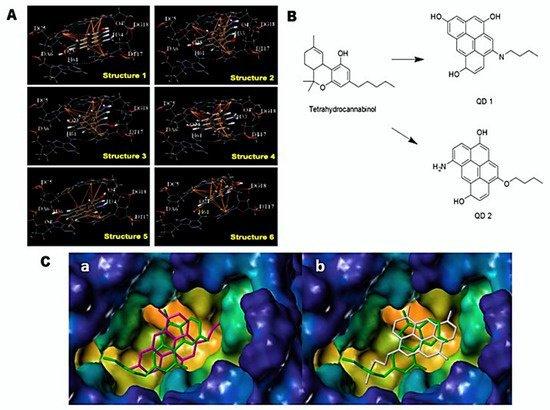
The study focuses on carbon quantum dots (CQDs), biofriendly materials synthesized from waste materials such as wood, fruit peel, algae and even salmon. A road map laid out by the research team addresses, for the first time, key requirements for the transitioning of their use from environmental-sensing applications into the neurodegenerative domain; a crossing-over that requires their separation and total characterization, including aspects related to safety and their ability to target specific receptors in the brain.

“The carbonaceous quanta are finally making their way from physics into chemistry and now, biology,” Prakash Narayan said. “This work lays the foundation for harnessing the enormous potential of carbon quantum dots for therapeutic intervention in neuro disease.”

The CQDs are made by “pressure-cooking” waste biomaterials such as fruit peel, amino acids, algae and even fish. As an outcome of the procedure, they are synthesized as a mixture of carbon dots and non-carbon dots. Some of the compounds in the mixture can be toxic. This aspect would negate their use in biomedical applications.

To facilitate the crossing-over of CQDs into preclinical and eventually clinical use, the research team provides a path for their safe use while demonstrating their potential to both prevent and treat neurodegenerative disorders, Mahesh Narayan said.

The research was conducted at Angion Biomedica, and at UTEP’s Functional Quantum Materials Laboratory and the Laboratory for Neurodegenerative Research.

The transitioning of CQD applications from electrochemistry, catalysis and environmental sensing to biomedicine represents an important milestone in its 15-year history; a bellwether for its yet-unrealized potential in interventional biology, imaging, diagnostics, prophylaxis and therapy.

“This will allow pharmaceutical companies to tailor carbon quantum dots for specific uses,” Mahesh Narayan said. “Individuals with Parkinson’s and Alzheimer’s could benefit greatly from this kind of therapy.”

###

To read the full paper, visit https://www.mdpi.com/2227-9717/8/5/599.

Media Contact
Victor H. Arreola
[email protected]

Original Source

http://www.utep.edu/newsfeed/campus/utep-researchers-help-pave-path-for-biofriendly-materials-to-aid-drug-design-delivery-for-neurodegenerative-disorders.html

Related Journal Article

http://dx.doi.org/10.3390/pr8050599

Tags: AlzheimerBiochemistryBiologyBiotechnologyneurobiology
Share12Tweet8Share2ShareShareShare2

Related Posts

AI and Physics Collaborate to Design Advanced Hydrogen Storage Materials

June 25, 2026

International Team Including Dresden Scientists Develops Novel Designer Proteins for Advanced Study of Living Tissue

June 25, 2026

New Study Uncovers Key Factors Driving Water Chemistry in Nanoscale Environments

June 25, 2026

Plasma Technology Extends Catalyst Lifespan in Hydrogen Production

June 24, 2026
Please login to join discussion

POPULAR NEWS

  • Saying Goodbye to PGY-6: Pediatric Fellowship Realities

    103 shares
    Share 41 Tweet 26
  • Multi-Hospital Study Reveals Long Covid Burden Is Twice as High as Current Estimates

    92 shares
    Share 36 Tweet 23
  • Detection of EDCs in Breast Milk and Infant Urine Up to Six Months Highlights Early Exposure Risks

    77 shares
    Share 31 Tweet 19
  • New Drug Candidate Developed at McMaster Shows Potential for Treating Brain Cancer

    58 shares
    Share 23 Tweet 15

About

We bring you the latest biotechnology news from best research centers and universities around the world. Check our website.

Follow us

Recent News

Tracking Lanthanide-Labeled Microplastics in Plants

POSTECH Researchers Slash Cost of Reconstituted Cell-Free Systems by 95%

AI and Physics Collaborate to Design Advanced Hydrogen Storage Materials

Subscribe to Blog via Email

Success! An email was just sent to confirm your subscription. Please find the email now and click 'Confirm' to start subscribing.

Join 82 other subscribers
  • Contact Us

Bioengineer.org © Copyright 2023 All Rights Reserved.

Welcome Back!

Login to your account below

Forgotten Password?

Retrieve your password

Please enter your username or email address to reset your password.

Log In
No Result
View All Result
  • Homepages
    • Home Page 1
    • Home Page 2
  • News
  • National
  • Business
  • Health
  • Lifestyle
  • Science

Bioengineer.org © Copyright 2023 All Rights Reserved.