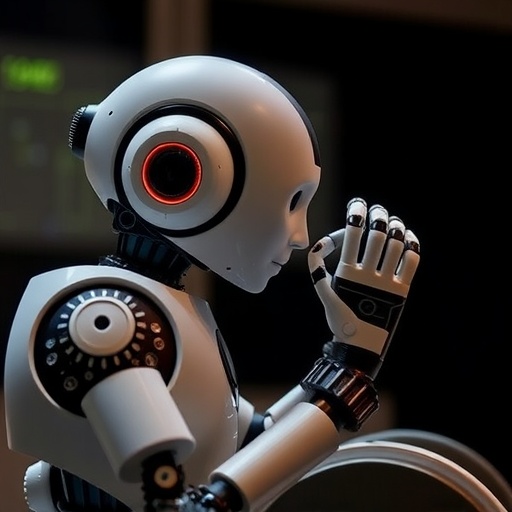
In a groundbreaking development at the intersection of robotics and music, researchers from the USC Viterbi School of Engineering have unveiled a robotic hand capable of learning to play a melody after a mere two minutes of self-guided practice. Unlike traditional robots that require painstakingly long training periods or vast datasets, this ‘Musician Hand’ learns in a remarkably human-like fashion—through exploration and adaptation rather than preprogrammed instructions or sheet music. This achievement marks a significant stride in the field of robotic dexterity and perceptual learning systems.
The core innovation stems from mimicking the natural way infants develop motor skills, a process researchers term “motor babbling.” During this phase, the Musician Hand randomly presses piano keys for two minutes, simultaneously recording the sounds it produces and the finger movements involved. This experimental interaction creates a foundational understanding of the keyboard’s mechanics and sound space. Once this brief exploratory phase concludes, the robot is able to listen to an unheard melody and reproduce it flawlessly in a single attempt—demonstrating an uncanny blend of auditory perception and motor control.
Mechanically, the system relies on four tendon-driven fingers, each actuated by small electric motors crafted to emulate the sophisticated mechanics of the human hand. These actuators provide the dexterity needed to navigate the piano’s keys with the necessary nuance and power. Crucially, advanced neural networks analyze the auditory input, transforming the melody’s sound profile into precise motor commands that guide the fingers’ subsequent actions. This seamless integration of mechanical design and artificial intelligence enables the Musician Hand not only to hear music but creatively replicate it.
The significance of this breakthrough lies in the departure from traditional robotic design paradigms. Most robots operate based on assumptions of perfect information and rigid programming, requiring extensive training to handle specific tasks. According to Francisco Valero-Cuevas, the lead researcher and professor at USC, animals—and by extension, humans—rarely operate on such certainty. Instead, they perceive their environment intermittently, make informed guesses, and adapt dynamically. This robotic hand embodies this biological principle, proving that robots can similarly navigate imperfect information and learn autonomously.
Beyond its musical capabilities, the implications for this research extend far into realms like healthcare and human–machine collaboration. The experimental success of the Musician Hand serves as a prototype for what researchers term “perceptual robotics,” systems that can perceive, experiment, and self-correct without requiring elaborate prior datasets or instruction. This paradigm holds promise for developing assistive technologies that adapt to their users rather than expecting the user to adapt to the machine.
Consider chronic movement disorders such as Parkinson’s disease, where patient mobility progressively deteriorates. Current assistive devices struggle to keep pace with such fluid changes. The principles demonstrated by the Musician Hand suggest a future where wearable robotic exoskeletons could learn an individual’s unique movement style over a short period and continue to adapt as their condition evolves—helping restore a personal sense of motion and independence without exhaustive reprogramming.
The applications in rehabilitation medicine are equally compelling. Robots could potentially learn the specialized techniques of physical therapists and then guide patients through personalized exercises in home settings. This would provide tailored support that adjusts in real-time to an individual’s recovery progress, offering a more effective and responsive alternative to current, often static, therapeutic interventions.
Technically, the robotic system’s ability to transform auditory signals into spatial and temporal motor commands relies on a sophisticated computational framework. Neural networks interpret the frequency, rhythm, and dynamics of the music to calibrate finger movements precisely. This approach transcends simple sound-to-action mapping—incorporating feedback loops where the robot continuously refines its motor outputs based on the auditory consequence of each key strike, similar to how humans learn through sensory feedback.
When evaluated, the Musician Hand’s performance was not merely technical—it exhibited artistic expression. Blind auditions, in which expert judges compared the robotic performance to that of four human pianists, sometimes left the judges unable to distinguish between human and machine. This blurring of the boundaries between biology and technology underscores a new era where machines not only mimic human dexterity but also the subtle nuances of artistic endeavor.
This research, supported by the National Science Foundation and the Defense Advanced Research Projects Agency, charts a course for robotic systems that embody more naturalistic learning processes. The project team, led by doctoral candidate Hesam Azadjou and Professor Valero-Cuevas, emphasizes that with further development, the foundational concepts demonstrated by the Musician Hand could lead to robots capable of assisting stroke patients, collaborating seamlessly with workers in dynamic environments, and supporting the elderly in maintaining autonomy at home.
In sum, the Musician Hand represents a promising fusion of robotics, neuroscience, and artificial intelligence, showcasing how machines can be imbued with the capacity for rapid, context-sensitive learning. The capacity to convert perceived sounds into nuanced motion after mere minutes of exploration challenges traditional robotics assumptions and paves the way for a new class of adaptable, perceptual robots, not just in music but in countless domains where complex, dynamic movement is essential.
The Musician Hand project sets a powerful precedent, highlighting that with minimal training and basic computational resources, robotic systems can attain abilities previously thought to be the exclusive domain of human creativity and dexterity. This marks a vital shift toward machines capable of independent learning through interaction with their environments, echoing the fundamental processes that drive biological skill acquisition.
As this technology evolves, it is poised to redefine the relationship between humans and robots, fostering partnerships where machines learn and grow alongside their users, adapting in real time to the complexities of life’s ever-changing demands. Such developments hold profound potential to transform industries, care paradigms, and artistic expression, situating robotics not as cold, deterministic automatons but as dynamic, perceptual collaborators.
—
Subject of Research: Not applicable
Article Title: Perception in action: a robotic system that can teach itself to melodiously play music by ear
News Publication Date: 27-May-2026
Web References:
USC Viterbi News – https://universityofsoutherncalifornia.cmail19.com/t/j-l-ydkljyg-diilhkjllh-e/
YouTube video – https://universityofsoutherncalifornia.cmail19.com/t/j-l-ydkljyg-diilhkjllh-jr/
References:
Journal of The Royal Society Interface, DOI: 10.1098/rsif.2025.0909
Image Credits:
USC Viterbi School of Engineering
Keywords
Robots, Computer processing, Human robot interaction, Robot control, Robot kinematics, Robotic designs, Robotic exoskeletons, Robotic locomotion, Robots and society, Prosthetics, Engineering, Musical instruments
Tags: adaptive robot motor skillsauditory perception in robotshuman-like robot learningmotor babbling in roboticsmusic-based robotic therapyperceptual learning systems in robotsrobotic dexterity advancementsrobotic hand playing musicrobotics in medicine and therapyself-learning robotstendon-driven robotic fingersUSC Viterbi School engineering