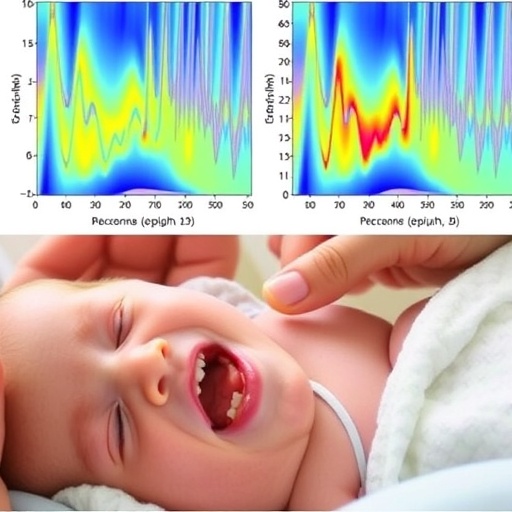
Oral feeding problems are a frequent, often hidden challenge in infants born preterm who develop bronchopulmonary dysplasia (BPD). These difficulties can prolong hospital stays by delaying safe, efficient feeding and complicating swallowing–breathing coordination. Now, a new study reports a bedside approach that aims to measure oral feeding skills without touch or invasive sensors, using acoustic signals collected in real time.
Researchers Bozkurt, Ecevit, and Gunlemez focused on oral feeding skills (OFS) and the timing relationship between swallowing and respiration. In BPD, respiratory vulnerability makes coordination especially critical: aspiration risk rises when airflow and swallowing rhythms become poorly synchronized.
The team employed a noninvasive, signal-based device designed for bedside monitoring. Rather than relying on labor-intensive assessments or imaging, the system captures sound patterns associated with feeding-related events. From these acoustic traces, the researchers derived quantitative features intended to reflect how effectively infants transition between sucking, swallowing, and breathing.
A key technical goal was to evaluate swallow–respiration coordination. The device identifies temporal relationships between feeding-generated acoustics and respiratory cues, then summarizes these relationships into metrics linked to coordination quality. The study therefore goes beyond “can the infant feed?” to ask “how well are feeding and breathing coupled?”
To support clinical relevance, the measurements were conducted in an infant-friendly setting. This matters because conventional evaluations can be disruptive, require specialized equipment, or involve additional procedures that are difficult to repeat frequently in preterm populations.
The results indicate that acoustic monitoring can detect differences in OFS and coordination among infants with BPD. Such signal-derived markers could help clinicians adjust feeding strategies earlier, potentially reducing delays in achieving oral feeding readiness and improving discharge timelines.
Importantly, the method offers a scalable workflow: a noncontact sensor setup, rapid analysis, and outputs intended to be interpretable at the bedside. If validated in larger cohorts, the approach could become a practical screening tool in neonatal intensive care units.
Overall, the work highlights how computational acoustic analysis can translate physiologic complexity into measurable signals, enabling earlier identification of infants at risk for poor feeding coordination. For parents and clinicians alike, that could mean fewer setbacks between feeding trials and safer, faster progression to discharge.
Researchers Bozkurt, Ecevit, and Gunlemez report their findings in Pediatric Research (2026). The study is accessible through DOI: 10.1038/s41390-026-05297-6.
Subject of Research: Oral feeding skills and swallow–respiration coordination in preterm infants with bronchopulmonary dysplasia (BPD)
Article Title: Noninvasive acoustic evaluation of oral feeding skills in preterm infants with bronchopulmonary dysplasia.
Article References: Bozkurt, O., Ecevit, A. & Gunlemez, A. Noninvasive acoustic evaluation of oral feeding skills in preterm infants with bronchopulmonary dysplasia. Pediatr Res (2026). https://doi.org/10.1038/s41390-026-05297-6
Image Credits: AI Generated
DOI: 10.1038/s41390-026-05297-6
Keywords:
Tags: acoustic signal analysis in neonatologybedside infant diagnosticsbronchopulmonary dysplasiafeeding skill assessmentinfant feeding challengesneonatal respiratory managementnoninvasive acoustic monitoringnoninvasive feeding evaluationpreterm infantsreal-time acoustic data collectionrespiratory-swallow synchronizationswallow-respiration coordination