• HOME
  • NEWS
  • EXPLORE
    • CAREER
      • Companies
      • Jobs
    • EVENTS
    • iGEM
      • News
      • Team
    • PHOTOS
    • VIDEO
    • WIKI
  • BLOG
  • COMMUNITY
    • FACEBOOK
    • INSTAGRAM
    • TWITTER
Sunday, May 10, 2026
BIOENGINEER.ORG
No Result
View All Result
  • Login
  • HOME
  • NEWS
  • EXPLORE
    • CAREER
      • Companies
      • Jobs
        • Lecturer
        • PhD Studentship
        • Postdoc
        • Research Assistant
    • EVENTS
    • iGEM
      • News
      • Team
    • PHOTOS
    • VIDEO
    • WIKI
  • BLOG
  • COMMUNITY
    • FACEBOOK
    • INSTAGRAM
    • TWITTER
  • HOME
  • NEWS
  • EXPLORE
    • CAREER
      • Companies
      • Jobs
        • Lecturer
        • PhD Studentship
        • Postdoc
        • Research Assistant
    • EVENTS
    • iGEM
      • News
      • Team
    • PHOTOS
    • VIDEO
    • WIKI
  • BLOG
  • COMMUNITY
    • FACEBOOK
    • INSTAGRAM
    • TWITTER
No Result
View All Result
Bioengineer.org
No Result
View All Result
Home NEWS Science News Chemistry

University of Luxembourg cooperates with ArianeGroup on rocket engine technology

Bioengineer by Bioengineer
March 19, 2019
in Chemistry
Reading Time: 2 mins read
0
IMAGE
Share on FacebookShare on TwitterShare on LinkedinShare on RedditShare on Telegram

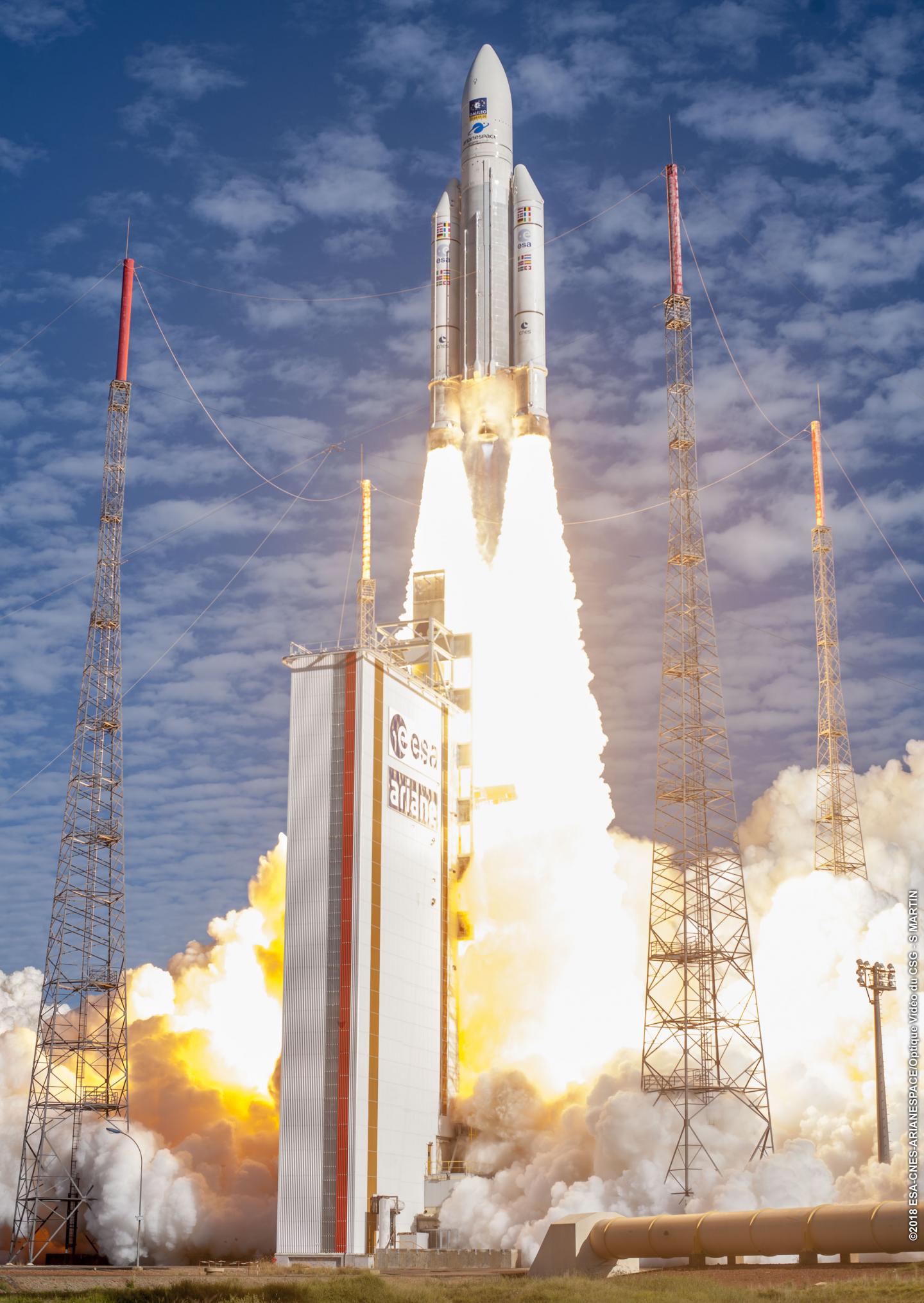
IMAGE

Credit: Arianespace

The University of Luxembourg and the European rocket manufacturer ArianeGroup have signed a collaboration agreement to advance research in the area of rocket propulsion. The two-year project aims to achieve a cost reduction of rocket launches. The research is funded by ArianeGroup and the Luxembourg National Research Fund (FNR).

Cryogenic propellants such as liquid oxygen and liquid hydrogen are widely used in space propulsion systems because they are more efficient and less toxic than other propellants. These fuels need to be stored at extremely low temperatures in order to maintain their liquid state. The rocket engine, its valves and feeding lines must however be able to operate properly when in direct contact with the extremely cold fuels. In order to ensure proper engine function, multiple engine components have to be cooled down to the temperature of the cryogenic fluids before the launch.

A complex process of heat transfer, the so-called chill-down, is initiated prior to the launch to ensure that propellants and the technical system operates at the same temperature. Before ignition, propellants are introduced into the main feed valve of the rocket engine. After the valve has completely cooled down, it can be safely opened and the propellants are supplied to the engine for ignition.

The complex process is challenging for space engineers and aerospace companies, because it is difficult to precisely determine the time required for the chill-down of the engine and its components. “There are currently no accurate models to predict this cryogenic heat transfer process. This forces us to conduct long components tests and use engineering estimations with high margins of safety. This results in expensive tests and long development times. Additionally, this implies increased use of propellants or substitute cryogenics during flight preparation, which increases launch costs,” says Dr. Sebastian Soller from ArianeGroup.

The University of Luxembourg and ArianeGroup have joined forces in a public-private-partnership to investigate, experimentally and by means of computational simulation, the heat transfer process between the cryogen propellant and the valve. “Our team is composed of experts in thermal analysis and Computational Fluid Dynamics. We will first study the process in depth to obtain data for the valve cooling. Then, we will develop reliable and accurate models to estimate the heat transfer process leading to the chill-down used on the Ariane 6 rocket engines,” explains Prof. Stephan Leyer, Head of the Research Unit in Engineering Sciences (RUES). Prof. Stephan Leyer initiated the project together with Post-Doctoral researcher Dr. Edder Jose Rabadan Santana.

The objective of the project is to integrate the obtained heat transfer models into ArianeGroup’s engineering workflow to optimise the design of cryogenic valves and reduce testing costs and development times.

This new collaboration is in line with an increasing number of space-related activities at the University of Luxembourg, such as the upcoming Interdisciplinary Space Master (ISM) starting in September 2019. “With this new project, the University of Luxembourg demonstrates its high-level expertise in space technology by working with the European leader in access to space and also contributes to the recognition of Luxembourg as a space leader,” comments Stéphane Pallage, Rector of the University of Luxembourg.

###

Media Contact
Thomas Klein
[email protected]

Tags: Energy/Fuel (non-petroleum)Experiments in SpaceIndustrial Engineering/ChemistryMaterialsMechanical EngineeringSatellite Missions/ShuttlesSpace/Planetary Science
Share13Tweet8Share2ShareShareShare2

Related Posts

Miniature Sensor Uses Light to Detect Touch — Chemistry

Miniature Sensor Uses Light to Detect Touch

May 8, 2026
Iron Minerals Determine Whether Dissolved Organic Matter Fuels Microbes or Becomes Long-Term Carbon Storage — Chemistry

Iron Minerals Determine Whether Dissolved Organic Matter Fuels Microbes or Becomes Long-Term Carbon Storage

May 8, 2026

Kate Evans Appointed Associate Lab Director for Biological and Environmental Systems Science at ORNL

May 8, 2026

Advancing Multiscale Modeling and Overcoming Operational Challenges in Autothermal CO₂-to-Methanol Reactors

May 8, 2026
Please login to join discussion

POPULAR NEWS

  • Research Indicates Potential Connection Between Prenatal Medication Exposure and Elevated Autism Risk

    840 shares
    Share 336 Tweet 210
  • New Study Reveals Plants Can Detect the Sound of Rain

    727 shares
    Share 290 Tweet 181
  • Scientists Investigate Possible Connection Between COVID-19 and Increased Lung Cancer Risk

    68 shares
    Share 27 Tweet 17
  • Salmonella Haem Blocks Macrophages, Boosts Infection

    61 shares
    Share 24 Tweet 15

About

We bring you the latest biotechnology news from best research centers and universities around the world. Check our website.

Follow us

Recent News

Evaluating Digoxin Use in Patients with Symptomatic Rheumatic Heart Disease

Evaluating the Effectiveness and Safety of Digitalis Glycosides in Treating Heart Failure

Urdu Fall Risk Questionnaire Adapted for Elderly

Subscribe to Blog via Email

Enter your email address to subscribe to this blog and receive notifications of new posts by email.

Join 82 other subscribers
  • Contact Us

Bioengineer.org © Copyright 2023 All Rights Reserved.

Welcome Back!

Login to your account below

Forgotten Password?

Retrieve your password

Please enter your username or email address to reset your password.

Log In
No Result
View All Result
  • Homepages
    • Home Page 1
    • Home Page 2
  • News
  • National
  • Business
  • Health
  • Lifestyle
  • Science

Bioengineer.org © Copyright 2023 All Rights Reserved.