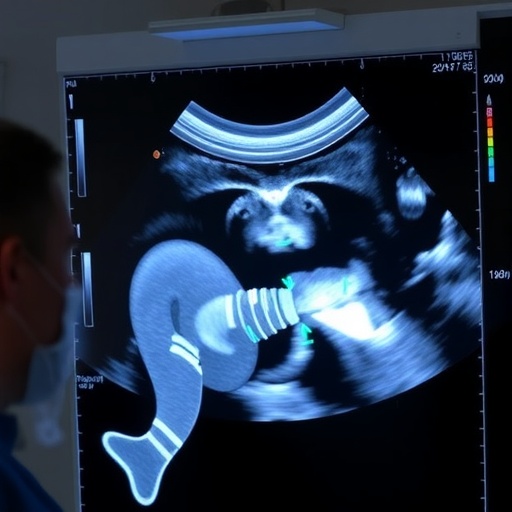
In a groundbreaking study published in Pediatric Radiology, researchers have shed light on a significant advancement in the treatment of pediatric intussusception—a condition where a part of the intestine folds into another section, leading to potential obstruction and severe complications. The study focuses on the use of ultrasound-guided hydrostatic reduction, emphasizing its effectiveness and associated factors affecting treatment outcomes, particularly in resource-limited settings.
Intussusception is one of the leading causes of intestinal obstructions in children, often presenting with nonspecific symptoms, which can complicate timely diagnosis. Traditional interventions typically involve surgical procedures, which can carry risks and lead to longer recovery times. However, the innovative approach of hydrostatic reduction, specifically when facilitated by ultrasound guidance, offers a minimally invasive alternative that could transform pediatric care practices.
The study conducted by Ayana, Feleke, and Bazezew et al. highlights a subset of pediatric patients receiving treatment for intussusception through non-surgical means. By employing hydrostatic reduction under ultrasound guidance, practitioners can accurately locate and resolve the intussusception, restoring normal intestinal function without the need for invasive surgery. This approach not only minimizes recovery time but also significantly reduces hospital stays, which is particularly crucial in resource-limited environments where healthcare resources are strained.
.adsslot_q8hIHaG7db{ width:728px !important; height:90px !important; }
@media (max-width:1199px) { .adsslot_q8hIHaG7db{ width:468px !important; height:60px !important; } }
@media (max-width:767px) { .adsslot_q8hIHaG7db{ width:320px !important; height:50px !important; } }
ADVERTISEMENT
What distinguishes this research is its focus on the environmental context in which it is applied. Many healthcare facilities in low-resource settings often grapple with limited access to advanced medical technologies and surgical options. Hence, leveraging ultrasound-guided interventions could offer a pragmatic solution that aligns with the available healthcare infrastructure. The researchers meticulously documented patient outcomes, highlighting the substantial success rates associated with this technique.
Importantly, the authors delved into various factors influencing treatment outcomes among pediatric patients undergoing hydrostatic reduction. Variables such as age, duration of symptoms prior to treatment, and overall health status were analyzed, revealing valuable insights that can aid in better predicting outcomes and improving protocols for future interventions. Understanding these factors is crucial for clinicians aiming to optimize treatment strategies and ensure the highest chances of recovery.
The findings from this research are particularly timely, considering the rising incidence of intussusception reported in various regions, potentially linked to dietary changes and variations in pediatric health. Conducting large-scale studies across different demographics and geographical locations could further validate the efficacy of ultrasound-guided hydrostatic reduction and solidify its status as a preferred treatment method.
Beyond clinical implications, the study advocates for increased training and resource allocation towards ultrasound-guided techniques in pediatric care, especially in underserved areas. As the researchers indicated, training local healthcare providers in using ultrasound for such critical interventions could empower communities and enhance healthcare delivery, directly impacting child morbidity and mortality rates associated with intestinal obstructions.
Furthermore, it is imperative for the medical community to disseminate these findings widely, encouraging healthcare policymakers to consider integrating non-surgical treatment options into standard pediatric care protocols. By adopting ultrasound-guided hydrostatic reduction as a frontline approach in managing intussusception, healthcare systems may not only elevate clinical outcomes but also optimize resource utilization, ultimately improving patient care in a sustainable manner.
The significance of this research extends to the potential for developing standardized guidelines that can assist clinicians globally in treating intussusception effectively, irrespective of their direct access to cutting-edge surgical facilities. By providing a detailed framework based on empirical evidence drawn from the study, healthcare professionals can make informed clinical decisions that enhance patient safety and improve recovery outcomes.
As the medical field moves towards embracing innovative, evidence-based practices, the emphasis on non-invasive techniques such as ultrasound-guided hydrostatic reduction is vital. This research serves as a clarion call to re-evaluate traditional management practices concerning pediatric intussusception, steering the conversation towards more accessible and efficient interventions that prioritize the well-being of young patients.
In conclusion, the compelling findings of Ayana et al. mark a pivotal moment in pediatric gastroenterology, suggesting that ultrasound-guided hydrostatic reduction could revolutionize the management of intussusception in children. By embracing this approach, we can better address the challenges faced in resource-limited settings, ultimately improving health outcomes for generations to come. The fusion of clinical research and practical application fosters a proactive attitude towards evolving pediatric treatments, signifying hope in the ever-growing landscape of healthcare innovation.
Subject of Research: Treatment outcome of ultrasound-guided hydrostatic reduction of intussusception in pediatric patients.
Article Title: Treatment outcome of ultrasound-guided hydrostatic reduction of intussusception and its associated factors among pediatric patients in a resource-limited setting.
Article References:
Ayana, C., Feleke, T., Bazezew, A. et al. Treatment outcome of ultrasound-guided hydrostatic reduction of intussusception and its associated factors among pediatric patients in a resource-limited setting.
Pediatr Radiol (2025). https://doi.org/10.1007/s00247-025-06305-3
Image Credits: AI Generated
DOI: https://doi.org/10.1007/s00247-025-06305-3
Keywords: Intussusception, ultrasound-guided hydrostatic reduction, pediatric patients, treatment outcomes, resource-limited settings, healthcare innovation.
Tags: complications of intestinal obstructioneffectiveness of hydrostatic reductioninnovative treatment for intussusceptionintestinal obstruction in childrenminimizing recovery time in pediatric carenon-invasive pediatric healthcare practicesnon-surgical interventions for childrenpediatric intussusception treatmentpediatric radiology advancementsresource-limited healthcare solutionsultrasound in pediatric medicineultrasound-guided hydrostatic reduction