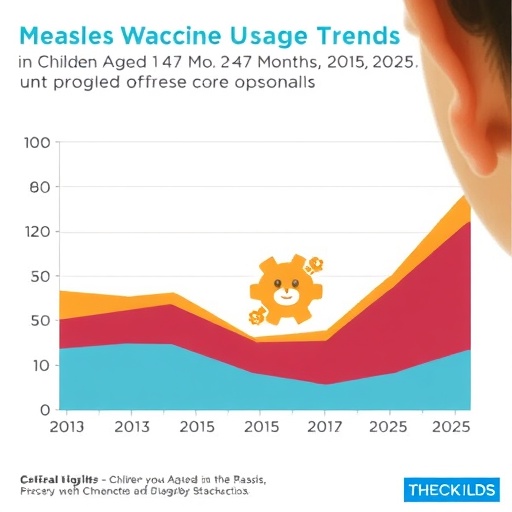
A new study conducted in King County, Washington, provides insightful data on the administration patterns of the measles, mumps, rubella, and varicella (MMRV) vaccine among children. Approximately 15% of children in the region received the combined MMRV vaccine as their initial dose for both measles-containing and varicella-containing vaccines. This proportion has maintained stability over time, highlighting consistent vaccination trends within this population.
The investigation reveals that children who received the MMRV vaccine were disproportionately represented among minoritized racial and ethnic groups. This demographic characteristic is crucial for understanding health equity challenges, as it highlights populations potentially facing unique barriers or preferences in vaccine access and delivery.
Furthermore, the study identifies that these children were more likely to receive a catch-up dose, indicating instances where vaccination schedules may have been delayed or interrupted. Catch-up vaccination is essential for ensuring immunity in children who miss early doses, underscoring the importance of flexible immunization strategies in public health.
An additional factor distinguishing the MMRV recipients was their eligibility for the Vaccines for Children (VFC) program, a federal initiative aimed at providing free vaccines to children who might otherwise not afford them. This association suggests that socioeconomic factors play a significant role in the administration of the MMRV vaccine, emphasizing the need for continued support and funding of such safety-net programs.
Moreover, the data indicate that vaccination at safety-net clinics, often serving under-resourced and vulnerable populations, is more common among those receiving the MMRV vaccine. This pattern further underscores the reliance of specific demographic groups on public health infrastructures for preventive care.
These findings raise important considerations about potential risks if vaccine options become restricted. Limitations in available vaccine formulations could impact minority and vulnerable populations disproportionately, potentially hindering their access to timely and effective immunization.
The implications of this research extend beyond local policy, informing broader discussions on vaccine equity, access, and public health preparedness. As vaccination strategies evolve, maintaining multiple vaccine options may be essential to accommodate diverse population needs and preferences.
This study contributes valuable epidemiological data to the field of infectious diseases and vaccine research, particularly in understanding how social determinants intersect with immunization practices among infants and children.
For more detailed information, the study’s corresponding author, Dr. Eric J. Chow, can be contacted via email at [email protected].
Subject of Research: Vaccine administration patterns among children for measles, mumps, rubella, and varicella (MMRV)
Article Title: Not provided
Keywords: Measles, Mumps, Vaccination, Vaccine Research, Viral Infections, Children, Ethnicity, Racial differences, Risk factors
Tags: catch-up vaccination practicescombined MMRV vaccine usagehealth equity in childhood immunizationsimmunization schedule adherenceimpact of Vaccines for Children (VFC) programMeasles vaccine usage trends in children aged 12-47 monthsMMRV vaccine administration patternspublic health strategies for measles preventionracial and ethnic disparities in vaccine uptakesocioeconomic factors influencing vaccinationvaccination coverage disparitiesvaccination trends in King County Washington