• HOME
  • NEWS
  • EXPLORE
    • CAREER
      • Companies
      • Jobs
    • EVENTS
    • iGEM
      • News
      • Team
    • PHOTOS
    • VIDEO
    • WIKI
  • BLOG
  • COMMUNITY
    • FACEBOOK
    • INSTAGRAM
    • TWITTER
Sunday, May 10, 2026
BIOENGINEER.ORG
No Result
View All Result
  • Login
  • HOME
  • NEWS
  • EXPLORE
    • CAREER
      • Companies
      • Jobs
        • Lecturer
        • PhD Studentship
        • Postdoc
        • Research Assistant
    • EVENTS
    • iGEM
      • News
      • Team
    • PHOTOS
    • VIDEO
    • WIKI
  • BLOG
  • COMMUNITY
    • FACEBOOK
    • INSTAGRAM
    • TWITTER
  • HOME
  • NEWS
  • EXPLORE
    • CAREER
      • Companies
      • Jobs
        • Lecturer
        • PhD Studentship
        • Postdoc
        • Research Assistant
    • EVENTS
    • iGEM
      • News
      • Team
    • PHOTOS
    • VIDEO
    • WIKI
  • BLOG
  • COMMUNITY
    • FACEBOOK
    • INSTAGRAM
    • TWITTER
No Result
View All Result
Bioengineer.org
No Result
View All Result
Home NEWS Science News Chemistry

UH geologists search for remains of lost ocean beneath earth’s surface

Bioengineer by Bioengineer
February 24, 2021
in Chemistry
Reading Time: 2 mins read
0
IMAGE
Share on FacebookShare on TwitterShare on LinkedinShare on RedditShare on Telegram

Team awarded 2.5 million CPU hours on NSF-funded supercomputer to conduct research
IMAGE

Credit: University of Houston College of Natural Sciences and Mathematics Department of Earth and Atmospheric Sciences

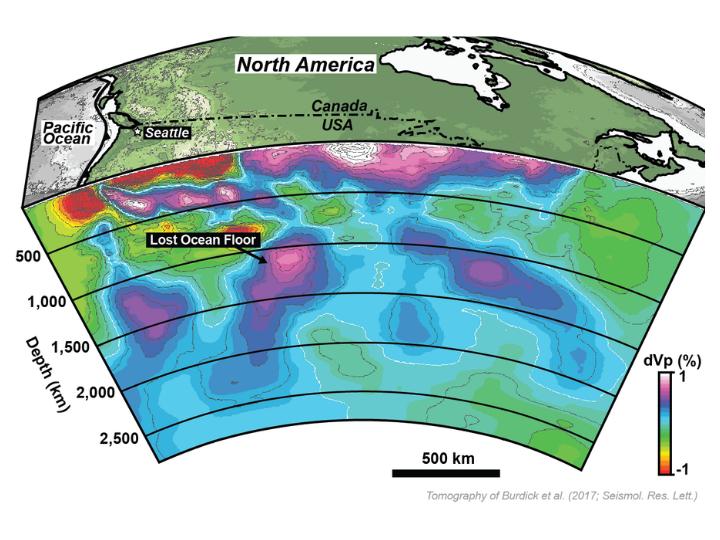
Over 621 miles below the western United States lies what geologists believe are the remains of a lost ocean, sinking toward the center of the Earth. These fragments of the Earth’s crust formed the westernmost portion of North America during the Mesozoic Era, but researchers don’t have a clear explanation of their origin.

A team of geoscientists at the University of Houston led by Lorenzo Colli, assistant professor in the UH College of Natural Sciences and Mathematics, has been awarded 2.5 million Central Processing Unit (CPU) hours by the National Science Foundation for use of its high-end computing system, Stampede2, to investigate this “geologic conundrum.”

Stampede2, the flagship supercomputer at the Texas Advanced Computing Center (TACC) at the University of Texas at Austin, is considered one of the most powerful in the world. It provides scientists computing resources vital to achieving research goals. The monetary value of these awarded resources is more than $2 million. That amounts to one year of continuous research – priceless for Colli and collaborators Jonny Wu, assistant professor, and doctoral student Spencer Fuston in the Department of Earth and Atmospheric Sciences.

The UH researchers will ¬use Stampede2 to simulate mantle convection, or the churning of hot ductile rocks in the Earth’s deep interior, through geologic time, which will take them back 230 million years ago to the Triassic period.

“We can build a plate reconstruction that we think fits where this ‘lost ocean’ is positioned, and how long the remains have been there,” Fuston explained. “Then the supercomputer will simulate our plate reconstruction all the way to the present day and will allow us to compare against what the Earth’s mantle looks like in present day.”

This information could help address heated debates related to the configuration of lost ocean basins that were present offshore in western North America during the time of dinosaurs. These topics are key to mineral and hydrocarbon exploration.

“The research will also allow us to improve our models and better understand how the Earth’s interior behaves,” said Colli. “In the long term, the data will help us in dealing with earthquake forecasts and assessing the risk of earthquakes.”

###

Media Contact
S. Sara Tubbs
[email protected]

Original Source

https://uh.edu/news-events/stories/2021/february-2021/02242021-geologists-awarded-cpu-time-for-search-of-lost-ocean.php

Tags: Atmospheric ScienceClimate ChangeClimate ScienceEarth ScienceGeophysicsMultimedia/Networking/Interface DesignPlate TectonicsTechnology/Engineering/Computer ScienceTemperature-Dependent Phenomena
Share12Tweet8Share2ShareShareShare2

Related Posts

Miniature Sensor Uses Light to Detect Touch — Chemistry

Miniature Sensor Uses Light to Detect Touch

May 8, 2026
Iron Minerals Determine Whether Dissolved Organic Matter Fuels Microbes or Becomes Long-Term Carbon Storage — Chemistry

Iron Minerals Determine Whether Dissolved Organic Matter Fuels Microbes or Becomes Long-Term Carbon Storage

May 8, 2026

Kate Evans Appointed Associate Lab Director for Biological and Environmental Systems Science at ORNL

May 8, 2026

Advancing Multiscale Modeling and Overcoming Operational Challenges in Autothermal CO₂-to-Methanol Reactors

May 8, 2026
Please login to join discussion

POPULAR NEWS

  • Research Indicates Potential Connection Between Prenatal Medication Exposure and Elevated Autism Risk

    840 shares
    Share 336 Tweet 210
  • New Study Reveals Plants Can Detect the Sound of Rain

    727 shares
    Share 290 Tweet 181
  • Scientists Investigate Possible Connection Between COVID-19 and Increased Lung Cancer Risk

    68 shares
    Share 27 Tweet 17
  • Salmonella Haem Blocks Macrophages, Boosts Infection

    61 shares
    Share 24 Tweet 15

About

We bring you the latest biotechnology news from best research centers and universities around the world. Check our website.

Follow us

Recent News

Evaluating Digoxin Use in Patients with Symptomatic Rheumatic Heart Disease

Evaluating the Effectiveness and Safety of Digitalis Glycosides in Treating Heart Failure

Urdu Fall Risk Questionnaire Adapted for Elderly

Subscribe to Blog via Email

Enter your email address to subscribe to this blog and receive notifications of new posts by email.

Join 82 other subscribers
  • Contact Us

Bioengineer.org © Copyright 2023 All Rights Reserved.

Welcome Back!

Login to your account below

Forgotten Password?

Retrieve your password

Please enter your username or email address to reset your password.

Log In
No Result
View All Result
  • Homepages
    • Home Page 1
    • Home Page 2
  • News
  • National
  • Business
  • Health
  • Lifestyle
  • Science

Bioengineer.org © Copyright 2023 All Rights Reserved.