Findings will help better identify Earth-like planets that could sustain life
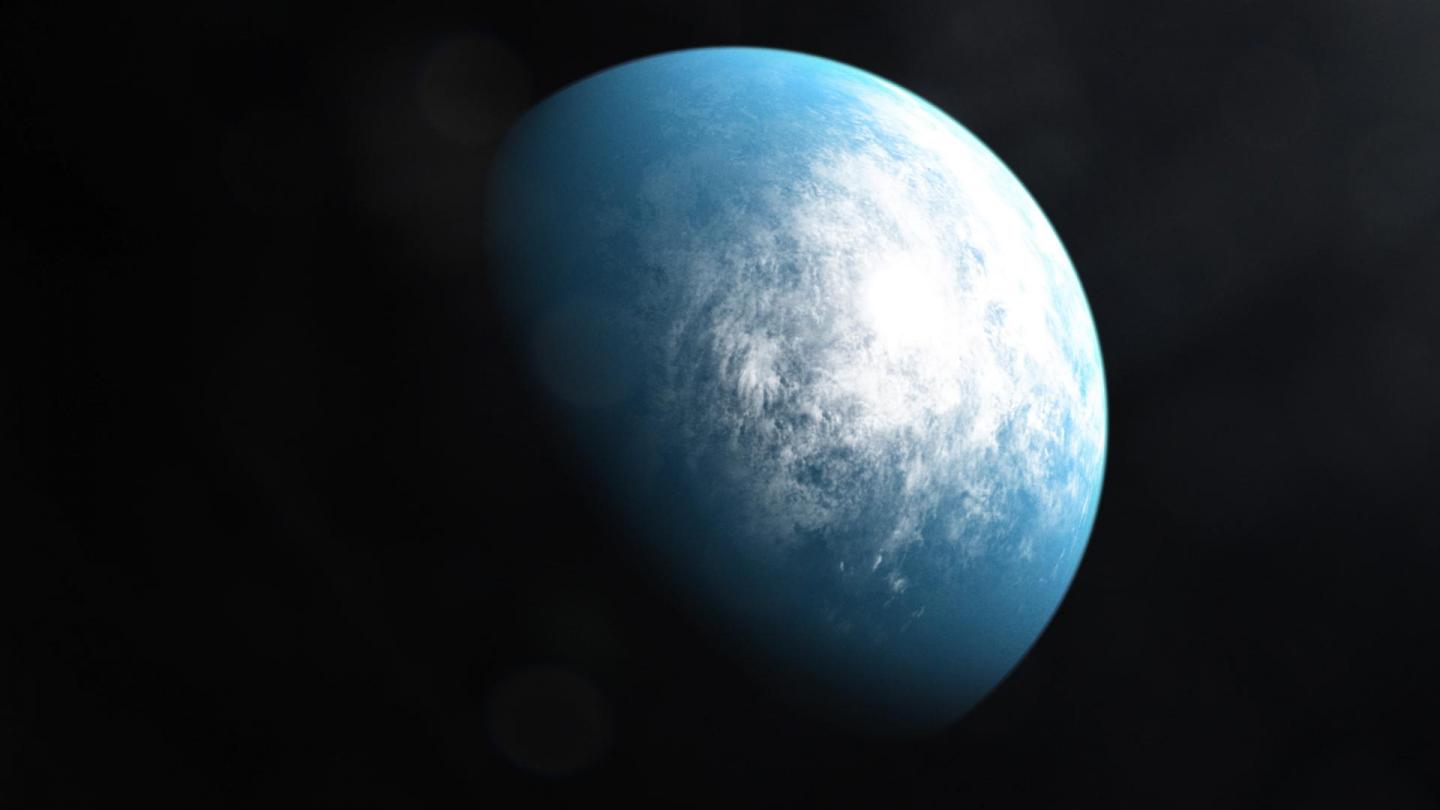
Credit: Image Credit: NASA/Goddard Space Flight Center.
Astronomers have identified more than 4,000, and counting, confirmed exoplanets — planets orbiting stars other than the sun — but only a fraction have the potential to sustain life.
Now, new research from UBC’s Okanagan campus is using the geology of early planet formation to help identify those that may be capable of supporting life.
“The discovery of any planet is pretty exciting, but almost everyone wants to know if there are smaller Earth-like planets with iron cores,” says Dr. Brendan Dyck, assistant professor of geology in the Irving K. Barber Faculty of Science and lead author on the study.
“We typically hope to find these planets in the so-called ‘goldilocks’ or habitable zone, where they are the right distance from their stars to support liquid water on their surfaces.”
Dr. Dyck says that while locating planets in the habitable zone is a great way to sort through the thousands of candidate planets, it’s not quite enough to say whether that planet is truly habitable.
“Just because a rocky planet can have liquid water doesn’t mean it does,” he explains. “Take a look right in our own solar system. Mars is also within the habitable zone and although it once supported liquid water, it has long since dried up.”
That, according to Dr. Dyck, is where geology and the formation of these rocky planets may play a key role in narrowing down the search. His research was recently published in the Astrophysical Journal Letters.
“Our findings show that if we know the amount of iron present in a planet’s mantle, we can predict how thick its crust will be and, in turn, whether liquid water and an atmosphere may be present,” he says. “It’s a more precise way of identifying potential new Earth-like worlds than relying on their position in the habitable zone alone.”
Dr. Dyck explains that within any given planetary system, the smaller rocky planets all have one thing in common — they all have the same proportion of iron as the star they orbit. What differentiates them, he says, is how much of that iron is contained in the mantle versus the core.
“As the planet forms, those with a larger core will form thinner crusts, whereas those with smaller cores form thicker iron-rich crusts like Mars.”
The thickness of the planetary crust will then dictate whether the planet can support plate tectonics and how much water and atmosphere may be present, key ingredients for life as we know it.
“While a planet’s orbit may lie within the habitable zone, its early formation history might ultimately render it inhabitable,” says Dr. Dyck. “The good news is that with a foundation in geology, we can work out whether a planet will support surface water before planning future space missions.”
Later this year, in a joint project with NASA, the Canadian Space Agency and the European Space Agency, the James Webb Space Telescope (JWST) will launch. Dr. Dyck describes this as the golden opportunity to put his findings to good use.
“One of the goals of the JWST is to investigate the chemical properties of extra-solar planetary systems,” says Dr. Dyck. “It will be able to measure the amount of iron present in these alien worlds and give us a good idea of what their surfaces may look like and may even offer a hint as to whether they’re home to life.”
“We’re on the brink of making huge strides in better understanding the countless planets around us and in discovering how unique the Earth may or may not be. It may still be some time before we know whether any of these strange new worlds contain new life or even new civilizations, but it’s an exciting time to be part of that exploration.”
###
Media Contact
Nathan Skolski
[email protected]