Misfolded SOD1 protein accumulating into intracellular aggregates in the spinal cord and brainstem is a hallmark of amyotrophic lateral sclerosis caused by mutations in the SOD1 gene. Two distinct aggregate conformations, designated strain A and strain B, were previously identified in the central nervous systems of SOD1G85R and SOD1D90A transgenic ALS mouse models, respectively. Both strains can transmit templated SOD1 aggregation and ALS-like disease when inoculated directly into the spinal cord of transgenic mice, whereas muscle or intraperitoneal inoculations, even with up to 300 times more inoculate, did not.
A new study in Acta Neuropathologica Communications asked whether these two SOD1 aggregate strains could also transmit templated aggregation to the central nervous system via a peripheral nerve, and whether the strains differ in how efficiently they do so. The researchers prepared strain A and strain B aggregate seeds from the spinal cords of the transgenic mice and used them to investigate strain-specific differences in transmission through the sciatic nerve.
The key finding is that both strains transmitted templated SOD1 aggregation to the central nervous system when inoculated into the sciatic nerve of SOD1G85R transgenic mice.
The strains were not equivalent. Inoculation with strain A resulted in a shorter time to disease onset and earlier end-stage disease compared with strain B. Notably, these strain-specific differences were accentuated in the sciatic nerve inoculation model compared with direct spinal cord inoculations, meaning the peripheral route revealed the differences between the two conformations more clearly.
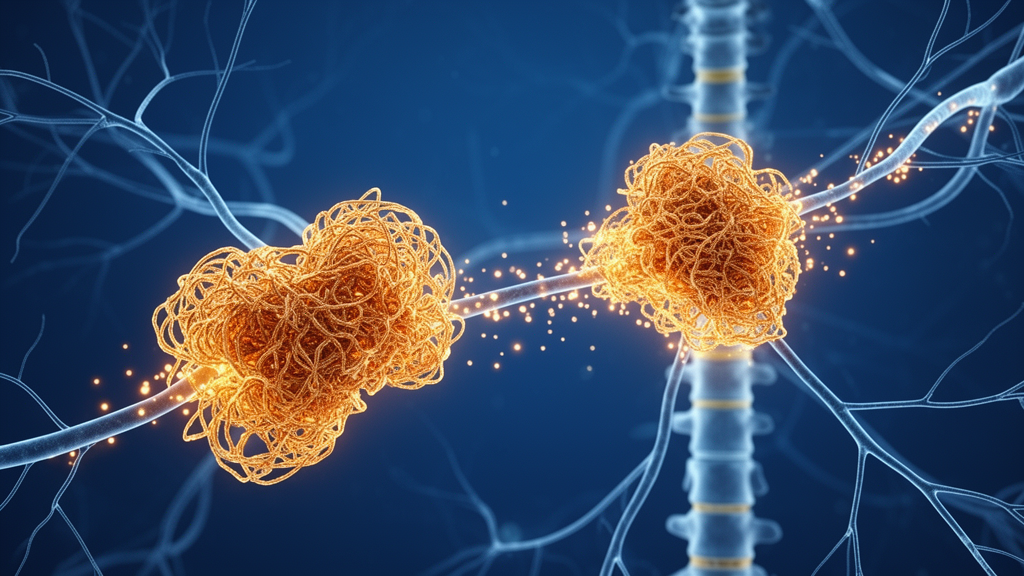
To characterise the strains further, the team developed an immunohistochemical method that distinguishes the two SOD1 aggregate strains in tissue sections. Applying this method showed that strain B adopts an elongated, skein-like morphology, whereas strain A aggregates appear as accumulations of rounded, bead-like structures. This provides a practical tool for identifying which conformation is present in a given tissue sample and confirms that the two strains differ visibly in the aggregates they form.
The authors suggest that SOD1 aggregates forming in a peripheral nerve might transmit disease to the central nervous system, and that different SOD1 aggregate strains can influence disease onset and progression. They emphasise that their results warrant further exploratory studies of SOD1 aggregate conformations and their potential role in the manifestation of SOD1 mutant-specific disease phenotypes.
Several caveats frame these findings. The work was carried out in transgenic mouse models carrying mutant SOD1, specifically the SOD1G85R model for the nerve inoculation experiments, and the aggregate seeds were prepared from the spinal cords of these animals. The results therefore concern experimental transmission of templated aggregation in mice, not spontaneous disease in humans. The study is also published as an early, peer-reviewed accepted version that is subject to further edits before the final version of record.
Within those limits, the study adds a specific piece to the picture of how misfolded SOD1 behaves. It shows that the route of exposure matters, since a peripheral nerve can carry templated aggregation into the central nervous system where direct spinal cord injection had already been shown to work. It also shows that conformation matters, because two structurally distinct SOD1 aggregate strains produced different timings of disease onset and end-stage disease in the same host model, with the differences becoming more pronounced through the nerve route.
For researchers studying SOD1-linked ALS, the new immunohistochemical distinction between skein-like strain B aggregates and bead-like strain A aggregates offers a way to map which conformation appears where in the nervous system. The authors position the work as a basis for further exploratory studies into how aggregate conformations might contribute to the differing disease phenotypes seen with different SOD1 mutations, rather than as a demonstration of a mechanism operating in human disease.
Subject of Research: Strain-specific transmission of templated SOD1 aggregation from peripheral nerve to the central nervous system in ALS mouse models
Article Title: Strain-specific morphology and CNS propagation of template-directed SOD1 aggregation following peripheral nerve inoculation
Article References: Keskin, I., Sigfridsson, I., Skagerberg Ekhtiari, E., Marklund, M., Mattson, S., Brännström, T., Marklund, S. L., Nordström, U., & Andersen, P. M. (2026). Strain-specific morphology and CNS propagation of template-directed SOD1 aggregation following peripheral nerve inoculation. Acta Neuropathologica Communications. https://doi.org/10.1186/s40478-026-02455-z
Image Credits: AI Generated
DOI: 10.1186/s40478-026-02455-z
Keywords: SOD1, ALS, aggregate strains, sciatic nerve, templated aggregation, spinal cord, brainstem, transgenic mice, immunohistochemistry, disease onset, motor neuron disease, protein misfolding
News Source: Diana Fleming. (October 28, 2026). Two SOD1 Aggregate Strains Differ in How Fast ALS-Like Disease Spreads to the CNS. Scienmag.