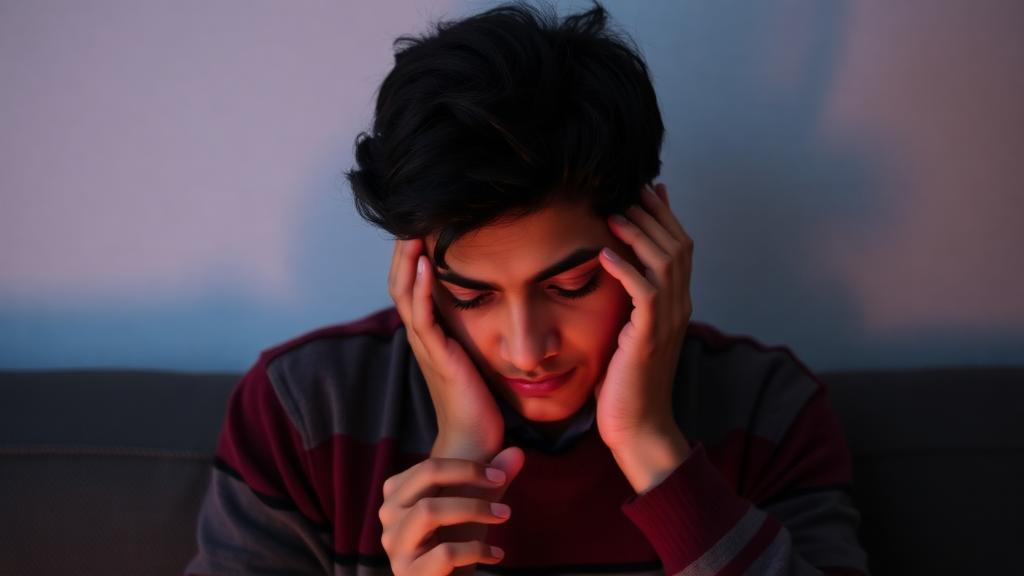
Adolescents in Dhaka with more severe depressive symptoms were markedly more likely to take medicines without a prescription, according to a cross-sectional study of 450 college students published in Discover Public Health. Overall, 170 of the 450 participants, or 37.8 percent, reported self-medication during the preceding two months.
The study was conducted between October 2025 and March 2026 among students aged 16 to 19 years enrolled in grades 11 and 12 at one public and one private college in Dhaka, Bangladesh. Participants were recruited through non-probability convenience sampling, because a complete sampling frame of eligible students was not available and institutional cooperation was required for supervised in-class data collection. Of 470 students initially approached, 20 incomplete responses were excluded, leaving a final analytical sample of 450 and a response rate of 95.7 percent. Students with chronic medical conditions requiring long-term physician-prescribed treatment were excluded to reduce confounding from medically supervised medication use.
Depression severity was measured with the Bangla-validated Patient Health Questionnaire-9, a nine-item self-report instrument covering depressive symptoms over the preceding two weeks. Scores of 0 to 4 were classified as no depression, 5 to 9 as mild, 10 to 14 as moderate, 15 to 19 as moderately severe, and 20 to 27 as severe. Internal consistency in this sample was acceptable, with a Cronbach’s alpha of 0.82. Self-medication was defined as the use of any medication without a prescription from a licensed healthcare professional for self-recognized illnesses over the preceding two months, and specific unsafe behaviors—self-prescription, reuse of previous prescriptions, dose escalation, and medication sharing—were assessed with an adapted eight-item behavior scale whose four unsafe-behavior items showed acceptable internal consistency (alpha = 0.79).
In univariate logistic regression, compared with adolescents without depression, the crude odds of self-medication were higher across all depression categories: 1.94 (95 percent confidence interval 1.08–3.47) for mild, 2.54 (1.43–4.53) for moderate, 4.30 (2.21–8.34) for moderately severe, and 3.69 (1.80–7.58) for severe depression. Female sex, non-smoking, and absence of recent illness were associated with lower crude odds, while screen time above six hours per day was associated with higher crude odds. Age, education group, family income, and parental education were not significantly associated with self-medication in the univariate analysis.
These depression associations persisted after multivariable adjustment for sex, age, smoking status, screen time, recent illness, sleep duration, family income, and education group. Adjusted odds ratios were 1.97 (95 percent CI 1.05–3.71) for mild, 2.04 (1.08–3.86) for moderate, 4.14 (1.95–8.81) for moderately severe, and 3.03 (1.36–6.74) for severe depression, corresponding to roughly two-, two-, four-, and three-fold higher odds relative to adolescents without depression. Female adolescents had about 51 percent lower odds of self-medication than males (adjusted odds ratio 0.49, 95 percent CI 0.31–0.79), and the absence of recent illness was associated with lower odds (adjusted odds ratio 0.38, 95 percent CI 0.25–0.58). The authors note the gradient was not strictly monotonic, since the estimate for severe depression was similar to that for moderately severe depression.
The picture was more complicated for specific unsafe medication behaviors. In unadjusted analyses among the 170 students who reported self-medication, higher depression severity was associated with self-prescription (p = 0.043), reuse of previous prescriptions (p = 0.006), dose escalation (p = 0.039), and medication sharing (p = 0.048). After adjustment for sex, age, and recent illness in ordinal logistic regression, however, these associations attenuated and were no longer statistically significant, suggesting the crude links were partly explained by confounding. In exploratory sensitivity analyses modeling each behavior as a binary high-frequency outcome, depression severity remained associated with reuse of previous prescriptions (likelihood-ratio chi-square = 19.12, p = 0.001) and self-prescription (chi-square = 12.52, p = 0.014), but not with dose escalation or medication sharing, hinting that any residual association is concentrated at the most frequent end of the behavior spectrum. Given the small number of users, the authors treat these behavior-level findings as exploratory and hypothesis-generating.
The authors are explicit that the main finding should not be over-interpreted. Self-medication was measured as a general medication-use behavior: the questionnaire did not record which medicines were used, whether they were over-the-counter or prescription-only products, or the indication for their use. It therefore cannot be determined whether adolescents with more severe depressive symptoms were taking medicines to relieve psychological distress or simply managing common complaints such as fever, headache, pain, or respiratory and gastrointestinal illnesses. The self-medication hypothesis—the idea that people use substances or medicines to relieve psychological distress rather than for pleasure—is discussed as one of several possible explanations, not as a mechanism demonstrated by these measurements.
Several further limitations shape how the results should be read. The cross-sectional design precludes causal inference, and reverse causation and residual confounding cannot be excluded; unmeasured factors such as household violence, academic pressure, and family relationships may play a role. Convenience sampling may introduce selection bias, self-reported data are vulnerable to recall and social-desirability bias, and the behavior scale was adapted rather than formally validated. The findings come from urban college students and may not generalize to rural adolescents or out-of-school populations. The authors also note that depression severity itself was associated with gender, shorter sleep, and higher screen time in the sample, with males more represented in the more severe categories.
Context matters for interpreting the 37.8 percent prevalence. Previous Bangladeshi studies have reported self-medication rates ranging from 16 percent to over 81 percent depending on population and design, and a meta-analysis estimated a pooled prevalence of roughly 70 percent among university students. In Bangladesh, where prescription medicines are widely available without regulation and mental-health services remain severely under-resourced, the conditions favor unsupervised medication use. Prior research has also documented substantial adolescent depression in the country, including 26.5 percent moderate-to-severe depression in a Dhaka study and 37.3 percent in a nationwide survey of school-going adolescents.
The authors suggest that the associations, while not causal, point to practical integration opportunities: school- and college-based mental-health screening and referral, pharmacist-led counseling, stricter enforcement of prescription-only dispensing at community pharmacies, and health-education initiatives promoting safe medication practices. They emphasize that the observed link indicates only that adolescents with more severe depressive symptoms were more likely to use medicines without a prescription, and that longitudinal studies are needed to clarify the direction of the relationship and the mechanisms behind it.
Subject of Research: The association between depression severity and self-medication practices among urban college-going adolescents in Bangladesh
Article Title: Association between depression severity and self-medication practices among urban college-going adolescents in Bangladesh
Article References: Muktarul, M., Tamanna, N., Abiaz, M. N., & Boitchi, A. B. (2026). Association between depression severity and self-medication practices among urban college-going adolescents in Bangladesh. Discover Public Health, 23(1), Article 1711. https://doi.org/10.1186/s12982-026-03023-5
Image Credits: AI Generated
DOI: 10.1186/s12982-026-03023-5
Keywords: self-medication, adolescent depression, Bangladesh, PHQ-9, cross-sectional study, Dhaka, college students, mental health, medication safety, public health, Association, between
News Source: Glenn Wilkins. (October 29, 2026). Depression Severity Tied to Higher Odds of Self-Medication in Dhaka College Teens. Scienmag.