A novel bispecific antibody that simultaneously targets two different T cell receptors has shown the ability to reshape the tumor microenvironment and strengthen antitumor immunity in preclinical animal models, according to a study published in Science Translational Medicine. The therapy, described by Baomei Wang and colleagues as a CCR8×CD3 T cell–engaging bispecific antibody (TCB), was tested in mice and nonhuman primates and is reported to be a promising strategy for enhancing the immune system’s fight against cancer.
Cancer immunotherapy has advanced considerably, but its effectiveness is often undermined by the tumor microenvironment, a milieu filled with molecular pathways and cells that suppress immune responses. Among the most important of these suppressive players are regulatory T cells, which normally keep immune activity in check but can be co-opted by tumors to shield them from attack. Researchers have pursued antibodies against proteins such as CCR8, which is present on the surface of regulatory T cells, with the aim of depleting these cells and unleashing the rest of the immune system. However, most existing approaches target only a single protein on regulatory T cells.
Wang and colleagues took a different route by generating a bispecific antibody that engages two T cell receptors at once. In addition to binding CCR8 on regulatory T cells, the antibody also activates CD3, a receptor component found on a broad range of other T cell types. This dual design is intended to suppress regulatory T cells while simultaneously potentiating other T cell classes, effectively attacking the immunosuppressive barrier from two directions.
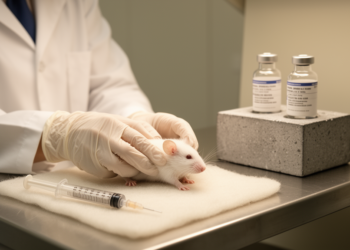
In preclinical testing, the antibody depleted CCR8-bearing regulatory T cells in human tumor samples. In mouse models, it restrained the growth of breast, lung, and colon tumors.
Safety was also assessed in nonhuman primates. The antibody was well tolerated in macaques and depleted circulating CCR8-bearing regulatory T cells in the blood, providing early evidence that the molecule can engage its targets in a species closely related to humans without overt toxicity in these preclinical studies.
“Collectively, these findings establish CCR8×CD3 TCB as a promising therapeutic strategy to remodel the [tumor microenvironment] and enhance antitumor immunity,” Wang et al. write in the study, which was published on 28 October 2026.
The findings remain preclinical. The tumor results were obtained in mouse models, and the primate work evaluated tolerability and target-cell depletion rather than cancer treatment outcomes. Whether the antibody can deliver comparable benefits in human patients, and what its safety profile will look like in clinical trials, remains to be established. Nevertheless, the dual-targeting design illustrates how next-generation antibody engineering is attempting to overcome one of the central barriers in cancer immunotherapy: the suppressive forces within tumors that blunt the response to existing treatments.
Subject of Research: A CCR8xCD3 bispecific antibody that depletes intratumoral regulatory T cells and enhances antitumor immunity in preclinical models
Article Title: A two-pronged antibody design hits multiple T cells at once to revitalize anti-tumor immunity in animals
Article References: A two-pronged antibody design hits multiple T cells at once to revitalize anti-tumor immunity in animals. Original publication (Bibliographic details unavailable.)
Image Credits: AI Generated
DOI: Not provided
Keywords: immunotherapy, bispecific antibody, CCR8, regulatory T cells, tumor microenvironment, checkpoint blockade, Science Translational Medicine, preclinical, macaques, T cell engager, two-pronged, antibody
News Source: Nathaniel Bowman. (October 29, 2026). Two-pronged antibody depletes suppressive T cells and boosts antitumor immunity in mice. Scienmag.