Cancer cells are masters of survival, and one of their most powerful survival tools is a transcription factor called NRF2, the nuclear factor erythroid 2-related factor 2. Under normal conditions, NRF2 acts as the cell’s antioxidant guardian, switching on hundreds of genes that neutralize reactive oxygen species and maintain redox balance. But in many tumors, this protective machinery is hijacked. A new review published in Molecular Biology Reports by Ozge Cemiloglu Ulker of Ankara University and colleagues at Sapienza University of Rome, Gazi University, and the Italian National Institute of Health synthesizes the latest evidence on how NRF2 signaling governs ferroptosis, an iron-dependent form of regulated cell death, and how manipulating this axis could finally crack one of oncology’s hardest problems: drug resistance.
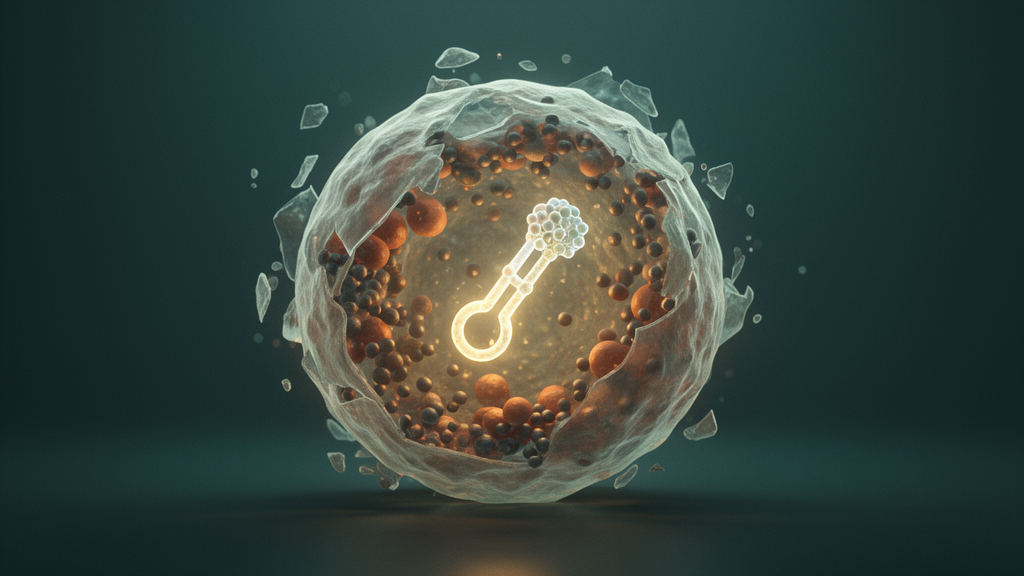
Ferroptosis, first described by Scott Dixon and colleagues in 2012, is unlike apoptosis or any other classical cell death pathway. It occurs when iron-catalyzed oxidation destroys the polyunsaturated fatty acids embedded in cellular membranes, causing lipid peroxides to accumulate until the membrane ruptures. Because it depends on iron, lipid chemistry, and the failure of antioxidant defenses, ferroptosis sits at the intersection of metabolism and redox biology. Cancer cells, which already live under high oxidative stress, are exquisitely sensitive to this form of death, which is precisely why they invest so heavily in suppressing it.
This is where NRF2 enters the picture. Under baseline conditions, the protein KEAP1 binds NRF2 and tags it for destruction. Oxidative stress modifies KEAP1’s reactive cysteines, releasing NRF2 to travel to the nucleus and activate antioxidant response elements. In many cancers, however, somatic mutations in KEAP1 or NRF2 itself lock the pathway permanently on, a phenomenon researchers have called NRF2 addiction. The review catalogs how this constitutive activation arms tumor cells with a multi-layered anti-ferroptotic shield, allowing them to survive chemotherapy, radiotherapy, and even immunotherapy.
The mechanistic details are striking. NRF2 directly upregulates the cystine transporter SLC7A11, keeping the cell supplied with cysteine for glutathione synthesis, and induces GPX4, the glutathione peroxidase that detoxifies lipid hydroperoxides and is widely regarded as the central gatekeeper of ferroptosis. It also regulates glutathione metabolism more broadly, controls iron homeostasis through genes such as ferritin and the iron exporter ferroportin encoded by SLC40A1, and induces heme oxygenase-1, which recent studies show can either promote or inhibit ferroptotic death depending on context. Beyond the canonical pathway, NRF2 supports parallel defenses such as the FSP1 coenzyme Q10 reductase system, giving resistant tumors redundant ways to block lipid peroxidation.
The clinical consequence is that NRF2-active tumors are often ferroptosis-resistant and drug-resistant. In non-small cell lung cancer, concurrent KEAP1 and STK11 mutations create tumors that depend on the lipid desaturase SCD1 and resist ferroptosis induction. In esophageal squamous cell carcinoma, NRF2-driven SLC7A11 expression reduces radiosensitivity. In leukemia, pancreatic cancer, and ovarian cancer models, high NRF2 activity correlates with resistance to doxorubicin, cisplatin, and other standard agents. The review highlights work showing that the Nrf2-HMOX1 axis mediates cisplatin resistance in lung cancer, and that an RNF217-KEAP1-NRF2 feedback loop confers therapeutic resistance in esophageal cancer by suppressing ferroptosis.
The therapeutic strategy that emerges is elegant in its logic: inhibit NRF2 to strip away the tumor’s antioxidant armor, then deliver a ferroptosis inducer to exploit the vulnerability. The review surveys a growing arsenal of natural and synthetic NRF2 modulators. Brusatol, a quassinoid from Brucea javanica, enhances chemotherapy efficacy by depleting NRF2 and has shown activity in pancreatic and bladder cancer models. Triptolide suppresses NRF2 to overcome doxorubicin resistance in leukemia. Wogonin induces ferroptosis in pancreatic cancer by inhibiting the Nrf2/GPX4 axis, while curcumin triggers ferroptosis in colorectal cancer through p53 and SLC7A11/GPX4 signaling. Procyanidin B1 promotes NRF2 ubiquitination in glioblastoma, cepharanthine blocks NRF2 to trigger endoplasmic reticulum stress in lung cancer, and ginkgetin from Ginkgo biloba disrupts the Nrf2/HO-1 axis to sensitize lung tumors to cisplatin.
Synthetic compounds are advancing in parallel. Halofuginone, delivered in micelle nanoparticles, eradicated NRF2-activated lung adenocarcinoma in preclinical models without systemic toxicity, and the drug has prior human trial experience in Kaposi sarcoma. Pyrimethamine, a repurposed antimalarial, inhibits NRF2 by suppressing one-carbon metabolism. A covalent allosteric molecular glue reported in Cancer Discovery in 2026 suppresses NRF2-dependent cancer growth, representing a new chemical modality. Combination approaches are particularly promising: NRF2 inhibitors paired with GPX4 inhibitors showed synergistic suppression of ovarian cancer in vitro and in vivo, and targeting both NRF2 and FSP1 overcame ferroptosis resistance in TSC2-deficient cells. Disulfiram plus copper, trabectedin, and the GPX4-degrading compound Fin56 all exploit NRF2-related vulnerabilities in different tumor types.
Notably, several ferroptosis-oriented strategies are already in clinical testing. The glutaminase inhibitor telaglenastat, which starves glutathione synthesis, has been evaluated in phase I and II trials combined with the mTOR inhibitor sapanisertib in non-small cell lung cancer and with nivolumab in metastatic melanoma, renal cell carcinoma, and lung cancer. Sulfasalazine, a system Xc- inhibitor, is being tested with stereotactic radiosurgery in recurrent glioblastoma. Artesunate, the antimalarial whose derivatives induce ferroptosis, has been studied in phase I trials in advanced solid tumors and metastatic breast cancer. Natural products with NRF2 activity, including sulforaphane in former smokers at high lung cancer risk and curcuminoids in gastric cancer chemoprevention, have completed randomized trials, while dimethyl fumarate has been tested in cutaneous T-cell lymphoma. These trials collectively demonstrate that the redox machinery of tumors is a druggable target in patients, not merely a laboratory concept.
The review also looks toward precision oncology. Biomarker discovery, increasingly powered by multi-omics and artificial intelligence, aims to identify which patients carry KEAP1 or NRF2 alterations and would benefit from ferroptosis-inducing regimens. Ferroptosis-related gene signatures are being developed as prognostic tools in colorectal cancer. Nanomedicine offers a route to deliver ferroptosis inducers selectively to tumors, and the interplay with immunity adds another dimension: CD8-positive T cells can promote tumor ferroptosis during immunotherapy, and combining low-dose radiotherapy with immune checkpoint inhibitors induces ferroptosis through the Nrf2/HO-1/GPX4 axis in lung cancer. Epigenetic suppression of the Nrf2-Slc40a1 axis has been shown to enhance immunotherapy in pancreatic cancer models, suggesting that ferroptosis modulation could amplify the success of checkpoint blockade.
Yet the authors are candid about the obstacles. Tumor heterogeneity means NRF2 activity varies within and between patients, complicating patient selection. Treatment selectivity is a fundamental concern, because NRF2 protects normal tissues from oxidative damage, and systemic NRF2 inhibition could cause toxicity in the liver, kidney, and other organs. Biomarker validation remains incomplete, and the dual, context-dependent roles of NRF2, protective in some settings and oncogenic in others, mean that activating it for chemoprevention while inhibiting it for therapy requires careful stratification. The review’s overall message is nonetheless one of cautious optimism: by mapping the NRF2-ferroptosis circuitry in molecular detail and assembling a pharmacopeia of natural and synthetic modulators, the field has laid the groundwork for clinical application. If the selectivity and biomarker challenges can be solved, disarming the NRF2 shield and igniting ferroptosis could become a genuine strategy for overcoming drug resistance in cancers that currently have few options left.
Subject of Research: NRF2-regulated ferroptosis modulation as a therapeutic strategy for overcoming drug resistance in cancer
Article Title: Recent advancements in NRF2-regulated ferroptosis modulation for targeted cancer therapy
Article References: Ulker, O. C., Capozzi, A., Sari-Goktas, N. N., Sorice, M., Saso, L., & Buttari, B. (2026). Recent advancements in NRF2-regulated ferroptosis modulation for targeted cancer therapy. Molecular Biology Reports, 53(1), Article 1528. https://doi.org/10.1007/s11033-026-12705-x
Image Credits: AI Generated
DOI: 10.1007/s11033-026-12705-x
Keywords: NRF2, ferroptosis, KEAP1, cancer therapy, drug resistance, GPX4, SLC7A11, lipid peroxidation, precision oncology, oxidative stress, ferroptosis inducers, tumor metabolism
News Source: Nathaniel Bowman. (October 19, 2026). Turning Off a Cancer Cell’s Survival Switch: How NRF2 Controls Ferroptosis in Targeted Therapy. Scienmag.