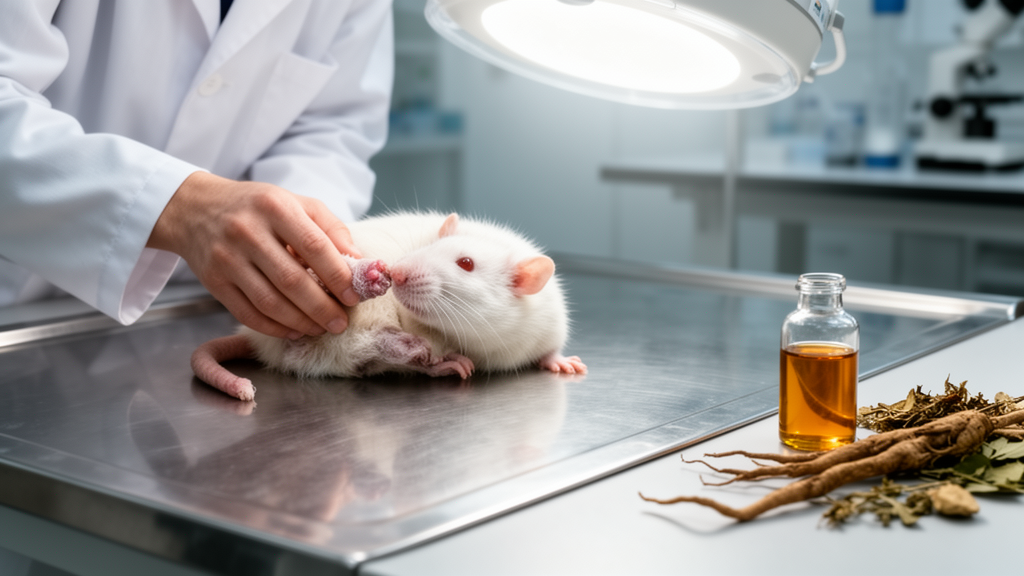
A traditional Chinese medicinal formula known as Huoxi Qufeng (HXQF) has shown the ability to reduce joint inflammation and tissue damage in a rat model of rheumatoid arthritis, according to a new study that combined computational prediction with animal experiments. The research, which integrated network pharmacology, molecular docking, molecular dynamics simulations and in vivo pharmacological testing, also singled out isoimperatorin, a natural compound from the formula, as a promising standalone anti-arthritic candidate whose therapeutic potential in rheumatoid arthritis had not previously been reported.
Rheumatoid arthritis is a chronic, systemic autoimmune disease characterized by aggressive and symmetrical polyarthritis. The dysregulated immune system attacks synovial tissues, triggering sustained chronic inflammation in which activated leukocytes release pro-inflammatory cytokines such as TNF-α and IL-6. This leads to inflammation of the synovial membrane and the formation of a hyperplastic pannus, a fibroinflammatory tissue that invades and erodes articular cartilage and subchondral bone. Untreated progression results in joint space narrowing, ankylosis and irreversible loss of mobility. There is currently no curative therapy; existing strategies, including NSAIDs, glucocorticoids, conventional and biologic disease-modifying anti-rheumatic drugs, aim to relieve symptoms, attenuate inflammation and retard joint damage.
HXQF is a clinically used formula composed of the herbs Bajitian, Qianghuo, Duhuo, Duzhong and Danggui, with reported stable efficacy and favorable patient tolerance, but its pharmacological mechanisms have remained poorly understood. In a previous study, the researchers identified five key bioactive constituents as quality control markers: isoimperatorin (ISO), notopterol (NOT), phenethyl ferulate (PF), osthole (OST) and columbianadin (CBN). Prior evidence has delineated individual roles for four of these in inflammatory and arthritis-related processes: NOT inhibits the JAK-STAT pathway in inflammatory cells; PF suppresses LPS-induced inflammatory responses through ROS generation and oxidative protein modification; OST attenuates NF-κB signaling and inhibits the proliferation, migration and invasion of fibroblast-like synoviocytes; and CBN represses TNF-α-induced proliferation and migration of MH7A cells. ISO, by contrast, had only been shown in a recent study to suppress angiogenesis by targeting the VEGFR2 signaling pathway.
To probe the formula’s mechanisms, the team first standardized the HXQF preparation using high-performance liquid chromatography, confirming fingerprint similarity of at least 0.95 across three batches. They then screened potential active ingredients from public databases using oral bioavailability and drug-likeness criteria, predicting 816 ingredient-related targets across the constituent herbs. Rheumatoid arthritis targets were gathered from the OMIM, GeneCards and NCBI Gene databases, yielding 1,837 distinct disease targets after deduplication. The intersection of the two sets contained 279 shared targets, and a drug-ingredient-target-disease network of 362 nodes and 1,753 edges was constructed to map the relationships among herbs, compounds, targets and disease.
Protein-protein interaction analysis of the shared targets, performed with the STRING database and visualized in Cytoscape, produced a subnetwork of 48 nodes and 978 edges. Gene ontology and KEGG pathway enrichment analyses pointed to biological processes including inflammatory response, angiogenesis and regulation of smooth muscle cell proliferation, and highlighted the TNF, JAK-STAT and PI3K-Akt signaling pathways as the most relevant routes. Molecular docking of the five quality-control constituents and other predicted active compounds against hub target proteins revealed that receptors with the lowest average binding energies corresponded to the genes FOS, PPARG, EGFR and JUN. Notably, the binding energy of the EGFR structure (PDB ID 1xkk) with all tested ligands was below −7.7 kcal/mol, leading the researchers to propose EGFR as a crucial node in the formula’s apparent therapeutic action.
The computational focus then narrowed to isoimperatorin. Docking showed that ISO formed stable bindings with all key receptors, with its optimal affinity at EGFR, at a binding energy of −8.3 kcal/mol. Molecular dynamics simulations of the ISO-EGFR complex over 100 nanoseconds indicated that the system maintained good stability from 25 nanoseconds onward, with up to three hydrogen bonds forming throughout the simulation at two specific interaction sites. The authors interpret these sustained hydrogen bonding networks and low structural fluctuation as a structural basis for ISO to occupy the EGFR active site and potentially suppress downstream JAK-STAT and PI3K-Akt cascades, though they emphasize that this downstream regulatory effect still requires confirmation through direct biochemical experiments.
The in vivo validation used 25 male Sprague-Dawley rats divided into five groups: a healthy control, an arthritis model group, an ibuprofen group at 5 mg/kg, an HXQF group receiving 2 mL of a 2 g/mL crude drug decoction, and an ISO group receiving 50 mg/kg. Arthritis was induced by subcutaneous injection of complete Freund’s adjuvant into the left hind paw, and treatments were given by gavage once daily for seven consecutive days starting seven days after modeling. Body weight and a 0-to-4 arthritis index were recorded over 14 days. All three treatment groups showed reduced arthritis index scores, with ibuprofen producing the most prominent effect, closely followed by HXQF, and ISO also showing favorable outcomes. The adjuvant-induced groups also exhibited decreased weight gain relative to controls, reflecting the disease’s impact on food intake.
Histopathological examination of ankle joints corroborated these clinical observations. The model group displayed severe cartilage erosion, moderate synovial connective tissue hyperplasia, extensive capillary proliferation and massive lymphocyte infiltration, with semi-quantitative scores of roughly 2.8 for synovial hyperplasia, inflammatory cell infiltration and cartilage erosion. Treatment reduced these scores significantly: ibuprofen lowered them to around 0.75 to 0.80, HXQF to between 1.29 and 1.48, and ISO to between 1.62 and 1.89. Enzyme-linked immunosorbent assays of serum likewise showed that the model group had markedly elevated TNF-α (142.61 pg/mL versus 86.04 in controls), IL-6 (16.84 versus 5.94 pg/mL), IL-1β (136.30 versus 98.80 pg/mL) and antithrombin III (116,012.78 versus 57,275.49 pg/mL). All three interventions significantly reduced these markers, with HXQF bringing IL-6 levels close to the healthy baseline and ISO showing statistically significant reductions across all four indicators, suggesting possible anti-inflammatory and anticoagulant-related activity.
The authors frame their findings as a working hypothesis: HXQF may bind EGFR through active components such as ISO, inhibiting EGFR activation and its downstream signaling, thereby reducing abnormal synovial cell proliferation and inflammatory responses. They note that EGFR is known to play a regulatory role in rheumatoid arthritis pathology, driving fibroblast-like synoviocyte proliferation and cytokine secretion through JAK-STAT and PI3K-Akt pathways. Proposed follow-up experiments include measuring phosphorylated EGFR, STAT3 and Akt in cultured synovial fibroblasts after treatment, rescue assays with EGFR inhibitors such as gefitinib, and site-directed mutagenesis of the binding site to confirm its functional importance.
Several limitations temper the conclusions. The EGFR-centered signaling axes derive purely from computational prediction, without phosphorylated protein data from synovial tissues. Only male rats were used, despite documented sex differences in arthritis susceptibility, and only one dosage level was tested for HXQF and ISO, precluding dose-effect conclusions. Ibuprofen served as the comparator for short-term inflammatory relief rather than methotrexate or other disease-modifying drugs targeting long-term progression, and the independent effects and synergistic relationships of NOT, PF, OST and CBN were not characterized. Within those constraints, the study provides preliminary phenotypic and computational evidence that HXQF and isoimperatorin can alleviate acute inflammatory lesions and joint pathological changes in adjuvant-induced arthritis rats, positioning ISO as a candidate worthy of further, protein-level verification.
Subject of Research: Network pharmacology and in vivo evaluation of Huoxi Qufeng medicinal liquor and isoimperatorin in a rat model of rheumatoid arthritis
Article Title: Huoxi Qufeng medicinal liquor alleviates rheumatoid arthritis lesions: Bioinformatic prediction of EGFR-related JAK-STAT/PI3K-Akt pathways and in vivo pharmacological validation
Article References: Wang, X., Li, L., Zhong, J., Lou, G., Li, Y., Feng, J., Li, X., & Peng, D. (2026). Huoxi Qufeng medicinal liquor alleviates rheumatoid arthritis lesions: Bioinformatic prediction of EGFR-related JAK-STAT/PI3K-Akt pathways and in vivo pharmacological validation. Results in Chemistry, 31, Article 104016. https://doi.org/10.1016/j.rechem.2026.104016
Image Credits: AI Generated
DOI: 10.1016/j.rechem.2026.104016
Keywords: rheumatoid arthritis, Huoxi Qufeng, isoimperatorin, network pharmacology, EGFR, JAK-STAT, PI3K-Akt, molecular docking, traditional Chinese medicine, rat model, CFA-induced arthritis, ELISA
News Source: Louis Brooks. (October 25, 2026). Traditional Medicinal Liquor Eases Rheumatoid Arthritis in Rats, With Isoimperatorin Flagged as Key Active Compound. Scienmag.