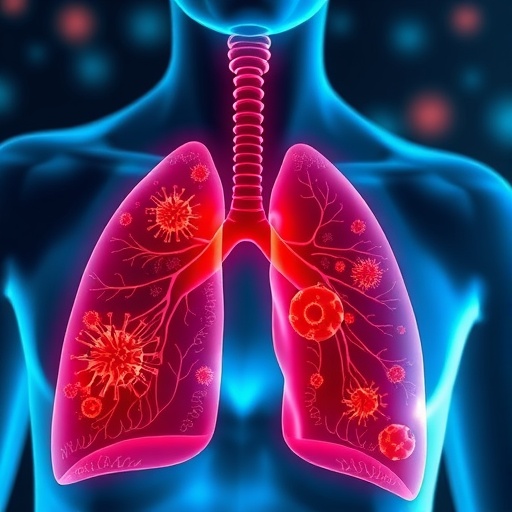
A new Nature Immunology study reveals that the human lungs harbor a long-lived “reservoir” of tissue-resident memory T cells (T_RM), poised to react immediately to infection. Led by Pandurangan Vijayanand and collaborators at La Jolla Institute for Immunology, the work offers a first comprehensive map of how these elusive immune cells defend the airways and surrounding tissue.
Unlike circulating T cells, T_RM cells do not readily appear in blood. Their compartmentalization helps explain why their protective potential remained largely hidden despite decades of immunology research. The study also underscores a key limitation of many animal models: in mice, comparable lung T_RM populations show rapid attrition, while human T_RM cells can persist for months to years.
To characterize this lung-based immune archive, researchers analyzed more than 87,000 T_RM cells from 40 participants in a Target Lung study. Participants were aged 61 to 83, enabling the team to examine how lifetime exposure and prior immunization shape the composition and readiness of lung-resident immunity.
The results show that many individuals carried T_RM cells specific for multiple common respiratory viruses. These included influenza A, SARS-CoV-2, parainfluenza viruses, respiratory syncytial virus (RSV), and metapneumovirus. Importantly, the lung reservoir was not limited to viruses; several participants also displayed T_RM specificities for herpesviruses such as cytomegalovirus (CMV) and Epstein–Barr virus (EBV).
Bacterial and fungal threats were also represented. The researchers detected lung T_RM cells reactive to Bordetella pertussis, the cause of whooping cough, and to Aspergillus fumigatus, a fungus that can become life-threatening in immunocompromised patients.
Together, these findings support a model in which the lungs maintain a broad, tissue-tuned adaptive defense. Rather than requiring every pathogen-specific response to be freshly generated, the tissue appears to preserve immunological memory in place—ready for rapid recall upon exposure.
The study carries clear implications for vaccine design. If vaccine-elicited protection depends on building T_RM cells within respiratory tissue, then evaluating only blood immune signatures may miss the most relevant forms of immunity.
The team’s next goal is to determine how vaccination reshapes the lung T_RM landscape in humans, particularly using samples from donors who received recent immunizations. Such insights could guide next-generation respiratory vaccines aimed at stronger, longer-lasting protection against severe disease.
It also highlights an urgency for translational studies to prioritize human lung tissue directly, given the biological differences between species. As respiratory pathogens continue to evolve, understanding the resident immune architecture of the lung may become central to designing durable defenses.
Subject of Research: Cells (tissue-resident memory T cells in human lung tissue)
Article Title: Human lungs maintain tissue-resident memory T cells against a broad spectrum of pathogens
News Publication Date: 28-Jul-2026
Web References: https://doi.org/10.1038/s41590-026-02592-6
References: 10.1038/s41590-026-02592-6
Image Credits: La Jolla Institute for Immunology
Keywords: tissue-resident memory T cells; lung immunity; respiratory pathogens; vaccine design; SARS-CoV-2; TRM cells; adaptive immunity; immune memory; translational immunology; host-pathogen interactions
Tags: airways immune protectioncomparison of human and animal lung immunityhuman lung immune defenseimmune cell compartmentalizationimpact of prior immunizationlong-term immune memory in lungslung immune response mappinglung tissue-resident memory T cellsrespiratory infection resistancerespiratory virus immunityT_RM cell longevityviral-specific T_RM cells