• HOME
  • NEWS
  • EXPLORE
    • CAREER
      • Companies
      • Jobs
    • EVENTS
    • iGEM
      • News
      • Team
    • PHOTOS
    • VIDEO
    • WIKI
  • BLOG
  • COMMUNITY
    • FACEBOOK
    • INSTAGRAM
    • TWITTER
Friday, May 15, 2026
BIOENGINEER.ORG
No Result
View All Result
  • Login
  • HOME
  • NEWS
  • EXPLORE
    • CAREER
      • Companies
      • Jobs
        • Lecturer
        • PhD Studentship
        • Postdoc
        • Research Assistant
    • EVENTS
    • iGEM
      • News
      • Team
    • PHOTOS
    • VIDEO
    • WIKI
  • BLOG
  • COMMUNITY
    • FACEBOOK
    • INSTAGRAM
    • TWITTER
  • HOME
  • NEWS
  • EXPLORE
    • CAREER
      • Companies
      • Jobs
        • Lecturer
        • PhD Studentship
        • Postdoc
        • Research Assistant
    • EVENTS
    • iGEM
      • News
      • Team
    • PHOTOS
    • VIDEO
    • WIKI
  • BLOG
  • COMMUNITY
    • FACEBOOK
    • INSTAGRAM
    • TWITTER
No Result
View All Result
Bioengineer.org
No Result
View All Result
Home NEWS Science News Chemistry

Through the eyes of animals

Bioengineer by Bioengineer
December 3, 2019
in Chemistry
Reading Time: 2 mins read
0
IMAGE
Share on FacebookShare on TwitterShare on LinkedinShare on RedditShare on Telegram

IMAGE

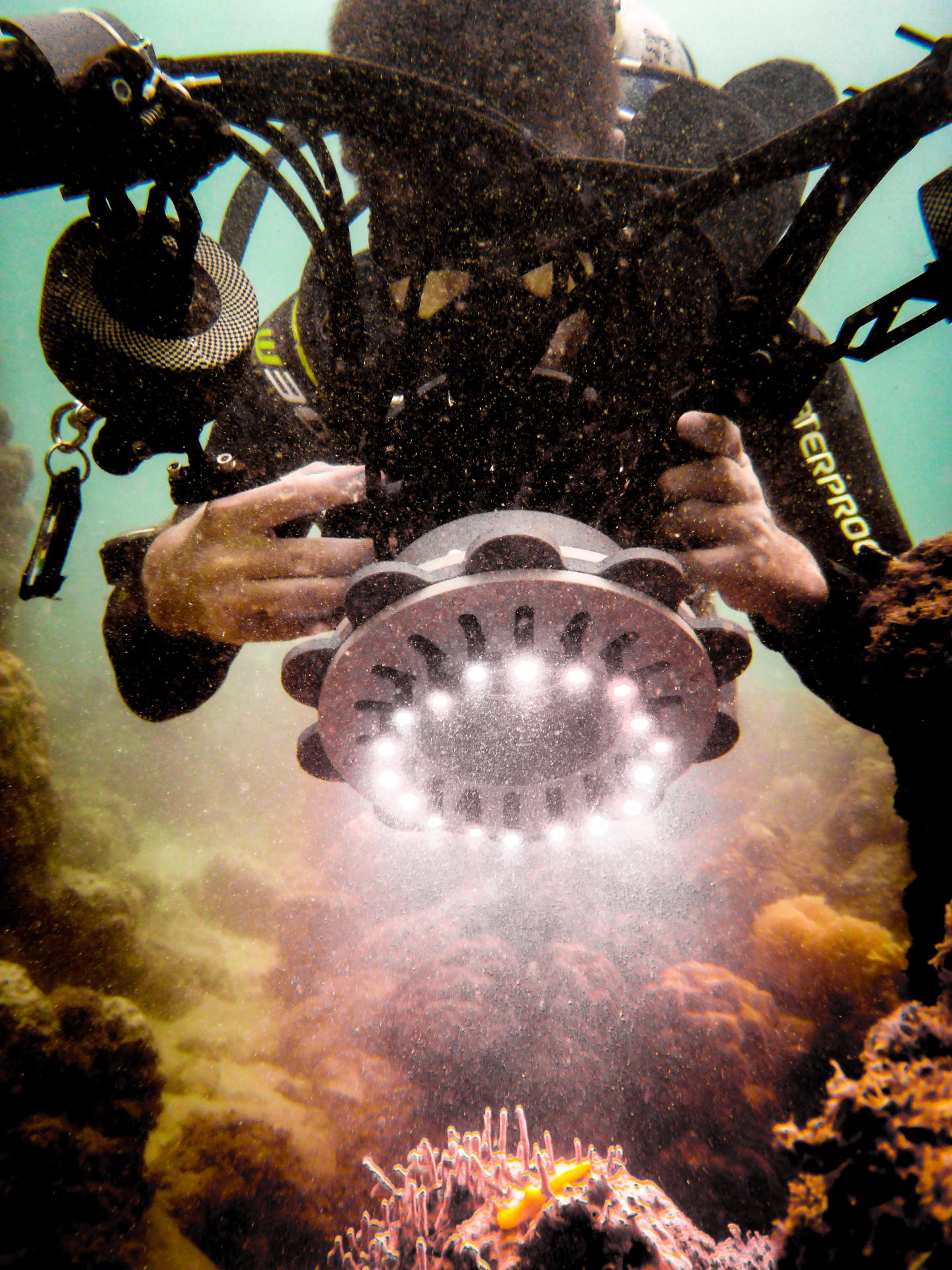
Credit: Emily Guevara and Cedric van den Berg


Humans are now closer to seeing through the eyes of animals, thanks to an innovative software framework developed by researchers from the University of Queensland and the University of Exeter.

PhD candidate Cedric van den Berg from UQ’s School of Biological Sciences said that, until now, it has been difficult to understand how animals really saw the world.

“Most animals have completely different visual systems to humans, so – for many species – it is unclear how they see complex visual information or colour patterns in nature, and how this drives their behaviour,” he said.

“The Quantitative Colour Pattern Analysis (QCPA) framework is a collection of innovative digital image processing techniques and analytical tools designed to solve this problem.

“Collectively, these tools greatly improve our ability to analyse complex visual information through the eyes of animals.”

Dr Jolyon Troscianko the study’s co-leader from the University of Exeter said colour patterns have been key to understanding many fundamental evolutionary problems, such as how animals signal to each other or hide from predators.

“We have known for many years that understanding animal vision and signalling depends on combining colour and pattern information, but the available techniques were near impossible to implement without some key advances we developed for this framework.”

The framework’s use of digital photos means it can be used in almost any habitat – even underwater – using anything from off-the-shelf cameras to sophsiticated full-spectrum imaging systems.

“You can even access most of its capabilities by using a cheap (~ $110 AUD, £60 GBP, $80 USD) smartphone to capture photos,” Dr Troscianko said.

It took four years to develop and test the technology, which included the development of an extensive interactive online platform to provide researchers, teachers and students with user-guides, tutorials and worked examples of how to use the tools.

UQ’s Dr Karen Cheney said the framework can be applied to a wide range of environmental conditions and visual systems.

“The flexibility of the framework allows researchers to investigate the colour patterns and natural surroundings of a wide range of organisms, such as insects, birds, fish and flowering plants,” she said.

“For example, we can now truly understand the impacts of coral bleaching for camouflaged reef creatures in a new and informative way.”

“We’re helping people – wherever they are – to cross the boundaries between human and animal visual perception.”

“It’s really a platform that anyone can build on, so we’re keen to see what future breakthroughs are ahead.”

###

It is published in Methods in Ecology and Evolution (DOI: 10.1111/2041-210X.13328).

Media Contact
Cedric van den Berg
[email protected]
61-421-722-613

Related Journal Article

http://dx.doi.org/10.1111/2041-210X.13328

Tags: BioinformaticsBiologyBiomechanics/BiophysicsBiotechnologyEcology/EnvironmentEvolutionOpticsZoology/Veterinary Science
Share12Tweet8Share2ShareShareShare2

Related Posts

New Drexel Study Reveals Key to Keeping Students on Track in Physics Learning — Chemistry

New Drexel Study Reveals Key to Keeping Students on Track in Physics Learning

May 15, 2026
Reversible Glue Technology Powers Up with Electric Activation — Chemistry

Reversible Glue Technology Powers Up with Electric Activation

May 15, 2026

Sweet as Honey: Unveiling a New Heat Transport Regime in Ultrathin Semiconductors

May 15, 2026

High-Precision Boltzmann Luminescent Nanothermometry Achieved Through Predictive Rules

May 15, 2026
Please login to join discussion

POPULAR NEWS

  • Research Indicates Potential Connection Between Prenatal Medication Exposure and Elevated Autism Risk

    843 shares
    Share 337 Tweet 211
  • New Study Reveals Plants Can Detect the Sound of Rain

    730 shares
    Share 291 Tweet 182
  • Salmonella Haem Blocks Macrophages, Boosts Infection

    62 shares
    Share 25 Tweet 16
  • Breastmilk Balances E. coli and Beneficial Bacteria in Infant Gut Microbiomes

    58 shares
    Share 23 Tweet 15

About

We bring you the latest biotechnology news from best research centers and universities around the world. Check our website.

Follow us

Recent News

Nurse Care Reduces Hospital Use in Multimorbid Patients

Epinephrine vs. Saline in Neonatal Resuscitation Study

Hepatitis C Elimination via Risk-Based Screening, Decentralized Care

Subscribe to Blog via Email

Enter your email address to subscribe to this blog and receive notifications of new posts by email.

Join 82 other subscribers
  • Contact Us

Bioengineer.org © Copyright 2023 All Rights Reserved.

Welcome Back!

Login to your account below

Forgotten Password?

Retrieve your password

Please enter your username or email address to reset your password.

Log In
No Result
View All Result
  • Homepages
    • Home Page 1
    • Home Page 2
  • News
  • National
  • Business
  • Health
  • Lifestyle
  • Science

Bioengineer.org © Copyright 2023 All Rights Reserved.