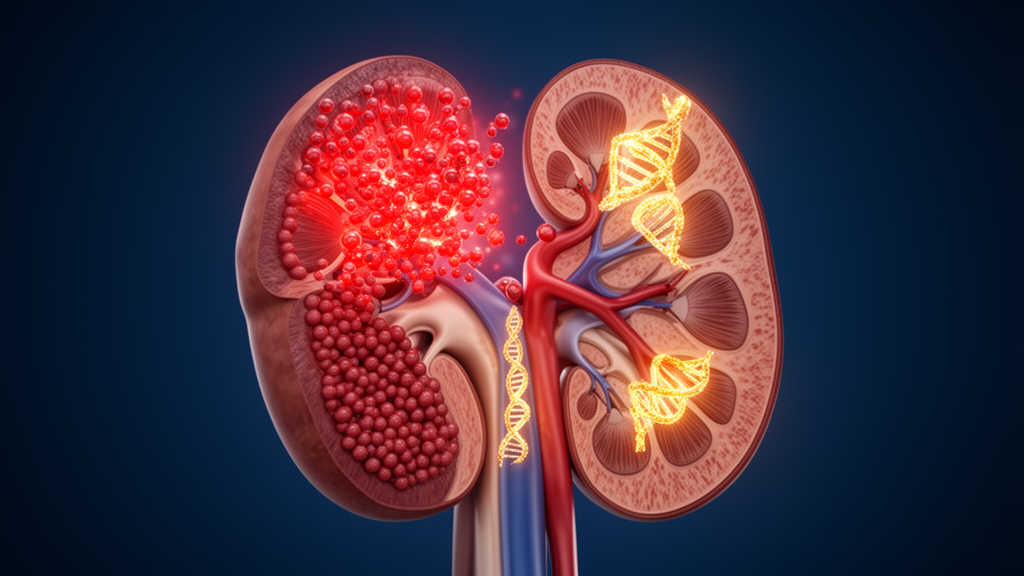
Renal ischemia-reperfusion injury, the damage that occurs when blood flow returns to oxygen-starved kidney tissue, is a major driver of acute kidney injury, and oxidative stress is considered a fundamental initiator of the downstream pathological cascades that follow, including inflammation. Although many molecular mediators of this process have already been identified, the key stress-responsive genes that govern inflammatory activation in renal ischemia-reperfusion injury remain incompletely understood. A new bioinformatic and experimental study set out to close that gap by screening for oxidative stress-related genes and testing their functional roles in the inflammatory response.
The research, published as an open access article in Biology Direct on 21 October 2026, integrated transcriptomic data from the publicly available GSE126805 dataset. From this analysis, the team identified 29 oxidative stress-related differentially expressed genes associated with the injury. The authors emphasize that this screening step was purely computational, drawing on existing gene expression data rather than new patient sampling.
To narrow the field, the researchers applied weighted gene co-expression network analysis, a method that clusters genes whose expression patterns rise and fall together across samples. This revealed that the so-called green gene module was most strongly correlated with renal ischemia-reperfusion injury. Within that module, 14 genes overlapped with the differentially expressed set identified in the first screening step, providing a smaller candidate pool for further testing.
Two complementary machine learning approaches were then used to prioritize the most informative candidates: Lasso regression and Support Vector Machine Recursive Feature Elimination. Both algorithms converged on three core genes, FOS, FOSB, and GDF15. FOS and FOSB encode members of the AP-1 family of transcription factors, while GDF15 encodes a secreted cytokine.
The three genes were then validated in independent datasets. In both GSE126805 and GSE90861, their expression rose significantly following reperfusion, and each showed strong discriminatory capacity for distinguishing pre- and post-reperfusion states, with area under the curve values exceeding 0.9. An AUC above 0.9 indicates that a marker separates the two conditions with high accuracy in the tested datasets, although such performance reflects association with reperfusion state rather than proven clinical diagnostic value.
Integrative analysis in mouse models confirmed the rapid upregulation of these genes after injury in vivo.
The team also probed function directly in cultured cells. Under oxygen-glucose deprivation and reoxygenation conditions, an in vitro model that mimics the metabolic stress of ischemia followed by reperfusion, silencing any of the three genes significantly increased expression of interleukin-6 and C-C Motif Chemokine Ligand 2, both well-established inflammatory signaling molecules. This result suggests that FOS, FOSB, and GDF15 normally act to limit excessive inflammatory activation in renal tubular cells under hypoxia-reoxygenation stress, rather than driving inflammation themselves.
Taken together, the authors conclude that FOS, FOSB, and GDF15 behave as conserved stress-response genes drawn from an oxidative stress-related gene panel. They are upregulated during renal ischemia-reperfusion injury in vivo and are associated with restraining inflammatory activation in renal tubular cells under hypoxia-reoxygenation stress in vitro. As AP-1 family transcription factors and a secreted cytokine respectively, their products appear to function as adaptive regulators of inflammation in this setting.
The study’s own framing is measured: these genes are described as potential molecular markers of reperfusion-related stress and candidate regulators of inflammation in renal ischemia-reperfusion injury. The evidence combines computational screening of transcriptomic datasets, machine learning feature selection, validation across two human datasets, murine in vivo confirmation, and in vitro knockdown experiments. Because the functional findings come from cell culture under controlled stress conditions and the clinical associations come from existing datasets, the results identify leads for further research rather than validated diagnostic tools or therapies.
For researchers studying acute kidney injury, the work offers a concrete shortlist of oxidative stress-linked genes whose behavior is consistent across human datasets, mouse models, and tubular cell experiments. Whether manipulating FOS, FOSB, or GDF15 can meaningfully alter the course of ischemia-reperfusion injury in patients remains an open question that this study, by design, does not answer.
Subject of Research: Oxidative stress-related genes involved in renal ischemia-reperfusion injury and inflammation
Article Title: Integrated analysis and validation of oxidative stress-related genes in renal ischemia-reperfusion injury
Article References: Shi, M., Li, B., Zhu, H., Zeng, R., & Yao, Y. (2026). Integrated analysis and validation of oxidative stress-related genes in renal ischemia-reperfusion injury. Biology Direct. https://doi.org/10.1186/s13062-026-01029-2
Image Credits: AI Generated
DOI: 10.1186/s13062-026-01029-2
Keywords: renal ischemia-reperfusion injury, acute kidney injury, oxidative stress, FOS, FOSB, GDF15, bioinformatics, inflammation, proximal tubule cells, machine learning, transcriptomics, AP-1 transcription factors
News Source: Juliet Wilcox. (October 29, 2026). Three Oxidative Stress Genes Emerged as Key Players in Kidney Reperfusion Injury. Scienmag.