Fossil records depict devastating effect of humans on birds in the Bahamas
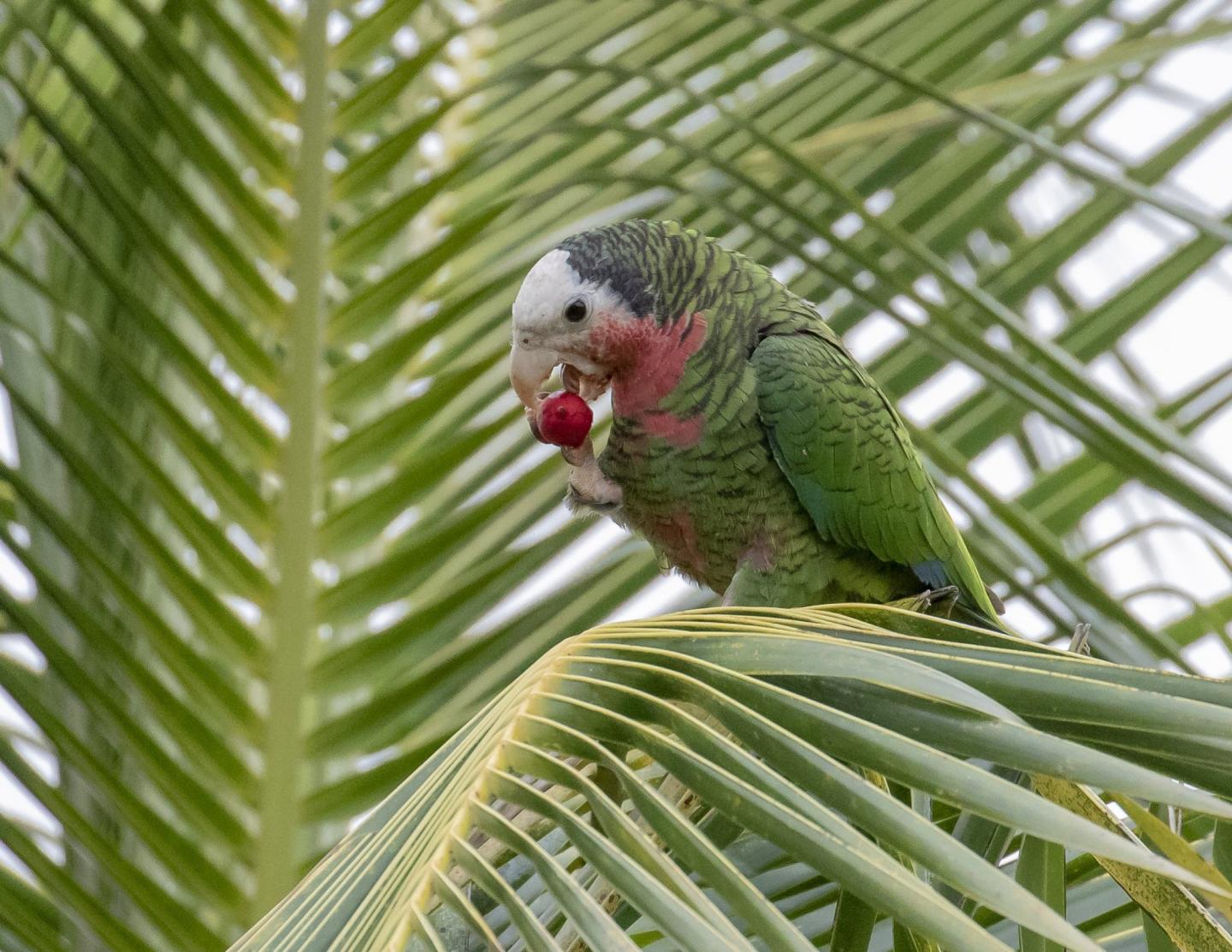
Credit: (Kamella Boullé/Macaulay Library)
Though some believe prehistoric humans lived in harmony with nature, a new analysis of fossils shows human arrival in the Bahamas caused some birds to be lost from the islands and other species to be completely wiped out.
The researchers examined more than 7,600 fossils over a decade and concluded that human arrival in the Bahamas about 1,000 years ago was the main factor in the birds’ extinction and displacement in recent millennia, although habitat fluctuations caused by increased storm severity and sea level rise could have played a role.
Many spectacular species, such as a colorful parrot, a striking scavenger called a caracara, and a number of hawks, doves, owls, and songbirds, were still found as recently as 900 years ago, and may have overlapped with people by a century before disappearing or retreating to only one or two islands in The Bahamas. “No other environmental change could explain their loss,” said study co-lead Janet Franklin, a distinguished professor of botany and plant sciences at UC Riverside.
Full results of Franklin’s study were published this week in the Proceedings of the National Academy of Sciences.
For example, the Abaco parrot is now only found on two islands in the Bahamas. There are many islands in between the two where the parrots now live that have the same habitat.
“We wondered why those parrots aren’t found in the middle islands,” Franklin said. “It turns out, they were, not that long ago.” Franklin and her collaborator, ornithologist David Steadman of University of Florida, found Abaco parrot fossils were on all the islands until 1,000 years ago.
The study was also able to identify losses of bird species that lived in the Bahamas since the end of the last ice age, more than 10,000 years before people arrived. These species included a giant barn owl and giant eagle — predators whose prey also disappeared from the islands after people arrived.
More than two thirds of the 90 bird species identified in the fossils that date from the end of the last ice age. Either they have gone altogether extinct or now only persist outside of the Bahamas.
The Bahamian islands are “treasure troves” of fossils because the limestone caves and flooded sinkholes there act as natural traps and are highly effective at preserving bones. Because they’re relatively small land areas lacking mountains or steep, remote areas where plants and animals can retreat to avoid people, the islands are also places where humans can have a big impact.
Giant predator birds likely competed with people for food such as giant tortoises — now extinct — and hutia, the only native land mammal in the Bahamas, which resembles a large guinea pig. In addition, humans hunt birds that eat fruit, because they tend to be fatter and more delicious.
It isn’t clear how much of the effect on birds is attributable to habitat change caused by people settling on the islands and how much was due to direct human predation. But Franklin said the wild habitat requires protections to preserve the animals that remain.
“The species here are the ones that survived,” Franklin said. “They might be more adaptable than other birds, and less dependent on a niche or habitat that’s strongly affected by human activity. But they are still vulnerable and worth conserving.”
Furthermore, the researchers note in the study that “the related futures of biodiversity and humanity perhaps never have been at a crossroads more than now. The transfer of a zoonotic disease from wildlife to humans, which has resulted in a global pandemic, is directly linked to biodiversity loss.”
In other words, as humans increasingly take over wild habitat, particularly rainforests, there are more opportunities for diseases to jump from wildlife to people.
“Protecting rainforests and regulating wildlife trade helps the animals and is also a component of preventing pandemics,” Franklin said.
###
Media Contact
Jules Bernstein
[email protected]
Original Source
https:/
Related Journal Article
http://dx.