


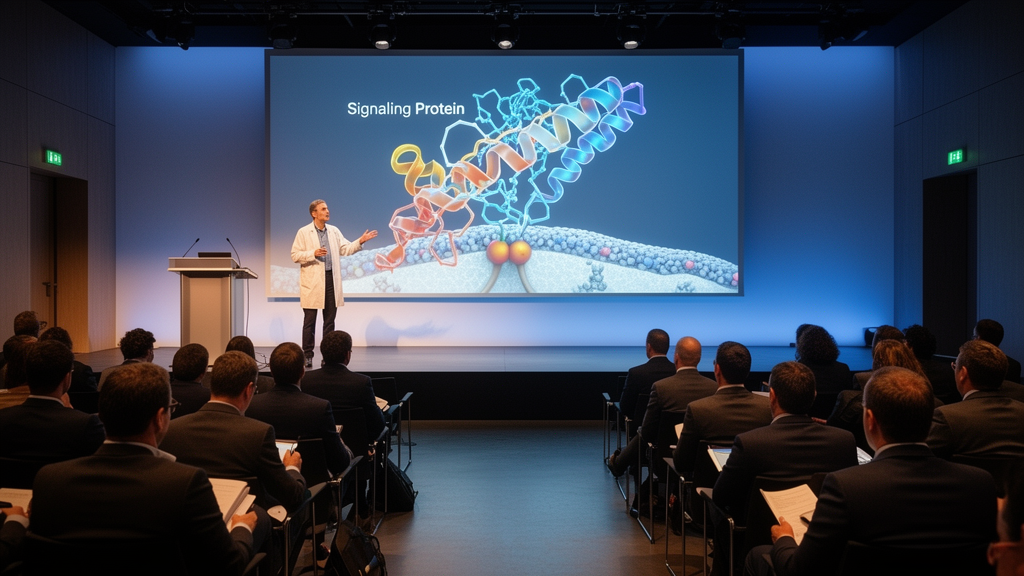
At a three-day meeting in Nanchang, China, researchers laid out how a single family of messenger molecules, the transforming growth factor-β (TGF-β) superfamily, steers cells through embryonic development, keeps adult tissues in balance, and, when its control systems fail, drives fibrosis, inflammation and cancer. The International Symposium on TGF-β: Signaling in Development and Diseases, hosted by the Chinese Society of Cell Signaling and organized by Nanchang University’s School of Basic Medical Sciences together with the Life Sciences Institute of Zhejiang University, ran from October 21 to 23, 2025, and gathered domestic and international scholars to discuss the latest advances in TGF-β signaling research.
The TGF-β superfamily is a class of structurally similar yet functionally diverse cytokines. Based on structural and biological characteristics, it splits into two subfamilies: the TGF-β subfamily, which includes three TGF-βs, four Activins, one Nodal and five growth/differentiation factors (GDFs), and the bone morphogenetic protein (BMP) subfamily, which includes eleven BMPs, four GDFs and the anti-Muellerian hormone. These factors exert diverse biological effects across distinct cell types and tissue environments, playing crucial roles in cell fate determination, embryonic development, organ formation and adult homeostasis. How a cell responds depends on the robustness and duration of the signal, its interactions with other pathways, and the type and developmental state of the target cell. Conversely, dysregulation of the pathway is closely associated with developmental defects, tissue fibrosis, inflammatory conditions, infectious diseases and cancer, which is why various strategies targeting TGF-β signaling have been developed, with promising safety and efficacy reported in clinical trials.
Several talks focused on the earliest decisions a cell makes. Qiong Wang of Shanghai Jiao Tong University described how TGF-β/Smad signaling regulates the mesendodermal differentiation of embryonic stem cells (ESCs), the route through which ESCs can give rise to organs such as the pancreas, liver and intestine. Her prior research showed that the p53/p63/p73 family proteins activate Wnt expression and integrate the Wnt-Tcf3 and Nodal-Smad2/3 pathways to jointly activate mesendodermal enhancers in mouse ESCs. Her group then found that Smad4 is dispensable for TGF-β-mediated epiblast formation in mouse ESCs: instead, Smad2/3 first upregulate DNA methyltransferase 3b (Dnmt3b) to establish proper DNA methylation patterns, which enables Smad2/3 binding to DNA and stimulates epiblast formation. Subsequently, Smad4 replaces Dnmt3b to form a complex with Smad2/3 and support mesendoderm differentiation, unveiling a delicate regulatory mechanism controlling ESC differentiation into epiblast and mesendoderm.
Pengfei Xu of Zhejiang University reported on the functions and mechanisms of Nodal and BMPs in embryonic development, using pluripotent stem cells, zebrafish and mouse models. The primary body axis is established from naive pluripotent cells by the dynamic interplay between opposing Nodal and BMP gradients in zebrafish. Nodal can act as a head organizer, instructing head formation by inducing and patterning the axial mesendoderm, while BMP functions as a conserved caudal organizer that drives development of posterior tissues in pluripotent stem cells. Leveraging these principles, his group engineered human neural tube organoids with a well-organized dorsal–ventral axis by establishing BMP and Sonic Hedgehog signaling gradients within neural ectodermal aggregates derived from human pluripotent stem cells. Yi Yu, an associate professor in Xin-Hua Feng’s group at Zhejiang University, added a new player: Smad9, traditionally classified as an R-Smad, is transcriptionally upregulated by BMP and acts as a critical feedback inhibitor of BMP-mediated cardiomyocyte differentiation in stem cell, zebrafish and mouse models, working as a transcriptional corepressor on the promoters of BMP target genes to impose a repressive chromatin state.
On the disease side, cancer took center stage. Carl-Henrik Heldin of Uppsala University provided a thorough overview of the mechanisms by which TGF-β activates non-Smad signaling pathways, including p38 MAPK, PI3K/Akt, Src, and direct gene regulation by the cleaved intracellular domain of the type I TGF-β receptor (TβRI). The ubiquitin ligase TRAF6 plays a key role: it induces K63-linked polyubiquitylation of the PI3K regulatory subunit p85α, leading to PI3K activation and subsequent activation of the kinase Akt, and it can also cause K63-linked polyubiquitination of TβRI, promoting its cleavage and the generation of a receptor fragment that enters the nucleus to regulate gene transcription. The kinase activities of the TGF-β receptors were not required in these processes. Src activation occurs when the type II receptor phosphorylates a tyrosine residue in TβRI, creating a docking site for Src. Activation of these non-Smad pathways has been shown to reinforce TGF-β-mediated cancer cell malignancy, including epithelial-mesenchymal transition, invasion and metastasis. Given this knowledge, Heldin argued, designing inhibitors that selectively block the tumor-promoting pathways while leaving the tumor-suppressing pathways unperturbed could offer a promising approach for treating advanced cancers.
Metabolism and epigenetics featured prominently. Cun Wang of the Shanghai Cancer Institute reported that TGF-β signaling influences the sensitivity of liver cancer cells to inhibition of mitochondrial oxidative phosphorylation. Through kinome-based CRISPR screening, his team found that knockout of DYRK1A, a dual-specificity tyrosine phosphorylation-regulated kinase, synergizes with the OXPHOS inhibitor IACS-010759 to kill liver cancer cells. DYRK1A directly phosphorylates Smad3 at threonine 132 and reduces TGF-β-mediated transcriptional repression of SLC1A5, leading to glutamine uptake and therapeutic resistance to OXPHOS inhibitors. Qiaoran Xi of Tsinghua University presented work on diffuse intrinsic pontine glioma, a fatal pediatric brainstem tumor with a median survival of less than one year and no effective treatments. In the H3.3K27M/ACVR1 wild-type subtype, BMP signaling is markedly suppressed owing to elevated expression of BMP antagonists, and restoring BMP activity inhibits tumor growth through activation of the tumor suppressor CXXC5. Conversely, the H3.3K27M mutation enhances CREB5 expression by remodeling the H3K27me3 landscape at super-enhancer regions, enabling CREB5–BRG1 cooperation to drive oncogenic transcription independently of canonical BMP signaling.
Parasites, liver disease and cellular metabolism supplied further twists. Peter ten Dijke of Leiden University reported that a parasite modulates murine host responses by secreting modular TGF-β mimics. TGM1, with five domains, acts as an agonist of TGF-β signaling by binding TGF-β receptors, whereas TGM6 lacks the domains necessary for interaction with TβRI but retains the domain required for type II receptor interaction, functioning as a natural competitive antagonist. TGM6 blocks TGF-β signaling in fibroblasts and epithelial cells but not in T cells, due to distinct co-receptor binding mediated by its fifth domain, and its structural mimicry offers a therapeutic blueprint for selectively blocking the fibrotic and oncogenic activities of TGF-β. Steven Dooley of the University of Heidelberg described how TGF-β, the principal driver of hepatic stellate cell activation and liver fibrogenesis, is secreted in a latent form and deposited in the extracellular matrix, where it requires activation to signal. His team identified ECM1 as a physiologically expressed matricellular protein in the liver that prevents activation of latent TGF-β, thus playing a critical role in liver homeostasis; ECM1 availability progressively declines during liver damage and fibrosis and is completely absent in liver cancer, suggesting that restoring ECM1 expression may be a safe therapeutic strategy for treating liver disease. Long Zhang of Zhejiang University reported that mammalian cells sense L-lactate through alanyl-tRNA synthetases AARS1/2, which catalyze lysine lactylation in an ATP-dependent manner; in response to L-lactate, AARS2 associates with cyclic GMP-AMP synthase in cellular and murine models, leading to lactylation and functional inactivation of cGAS, and his team identified L-lactate as a metabolite that may switch TGF-β’s function from a tumor suppressor into a promoter.
Keiji Miyazawa of the University of Yamanashi described a striking gain-of-function mechanism in human disease. Two somatic Smad3 mutations, Ser264Tyr and Ser264Phe, have been reported in bone samples from patients with melorheostosis, a rare disorder characterized by progressive hyperostosis of the cortex of tubular bones. He reported that the Smad3 Ser264Tyr mutant gains an inherent transcriptional activation capacity independent of its C-terminal phosphorylation status, and, unlike wild-type Smad3, can induce robust transcriptional activation in the absence of Smad4. The work delineates a novel mechanism underlying Smad activation that may help elucidate Smad signaling dysregulation in pathological conditions.
Translation efforts are advancing on several fronts. Andrew P. Hinck of the University of Pittsburgh gave a comprehensive overview of TGF-β ligand-receptor interactions from a structural biology perspective, highlighting recent structures of TGF-β with its co-receptor betaglycan. These interactions display distinct specificity, segregating TGF-β signaling from that of other family members and producing significant immunomodulatory effects. He also presented a protein-based inhibitor of the TGF-β receptor, which is highly effective in checkpoint refractory animal models of cancer and is currently in clinical trials for cancer immunotherapy. Seong-Jin Kim of the GILO Foundation Research Institute in Korea discussed findings from a Phase II trial of Vactosertib, a new TGF-β type I receptor kinase inhibitor. Clinical trials of Vactosertib have shown effectiveness in advanced, heavily pretreated solid tumors, along with a manageable safety profile comparable to other treatments, and the agent shows promise in enhancing antitumor efficacy when combined with different tumor treatment modalities.
As the meeting closed, participants emphasized that the symposium deepened understanding of the TGF-β family signaling network, particularly its diverse functions and context-dependent effects, and that discussions on global initiatives to explore the translational potential of therapeutic interventions targeting TGF-β signaling focused especially on treating human diseases, above all cancer. TGF-β has been investigated for over four decades since its discovery and isolation in the 1980s, yet new signaling pathways and detailed pathophysiological roles continue to be uncovered, and the Nanchang meeting made clear that both the basic biology and the clinical pipeline are moving quickly.
Subject of Research: TGF-β signaling regulation, pathophysiological roles and clinical translation
Article Title: Recent advances in TGF-β signaling: insights into regulation, pathophysiological function, and clinical translation
Article References: Yan, X., Zhang, J., Heldin, C.-H., Feng, X.-H., & Chen, Y.-G. (2026). Recent advances in TGF-β signaling: insights into regulation, pathophysiological function, and clinical translation. Cell Regeneration, 15(1), Article 13. https://doi.org/10.1186/s13619-026-00286-w
Image Credits: AI Generated
DOI: 10.1186/s13619-026-00286-w
Keywords: TGF-β, Smad proteins, BMP signaling, embryonic stem cells, cancer, liver fibrosis, DIPG, clinical trials, non-Smad pathways, lactylation, melorheostosis, immunotherapy
News Source: Nathaniel Bowman. (October 30, 2026). TGF-β signaling symposium reveals new paths from development to cancer therapy. Scienmag.



