• HOME
  • NEWS
  • EXPLORE
    • CAREER
      • Companies
      • Jobs
    • EVENTS
    • iGEM
      • News
      • Team
    • PHOTOS
    • VIDEO
    • WIKI
  • BLOG
  • COMMUNITY
    • FACEBOOK
    • INSTAGRAM
    • TWITTER
Friday, October 30, 2026
BIOENGINEER.ORG
No Result
View All Result
  • Login
  • HOME
  • NEWS
  • EXPLORE
    • CAREER
      • Companies
      • Jobs
        • Lecturer
        • PhD Studentship
        • Postdoc
        • Research Assistant
    • EVENTS
    • iGEM
      • News
      • Team
    • PHOTOS
    • VIDEO
    • WIKI
  • BLOG
  • COMMUNITY
    • FACEBOOK
    • INSTAGRAM
    • TWITTER
No Result
View All Result
Bioengineer.org
No Result
View All Result
Home NEWS Science News Health

Ten Years of Bee Sting Records Reveal Envenomation Patterns in French Guiana

by
October 29, 2026
in Health
Reading Time: 2 mins read
0
Ten Years of Bee Sting Records Reveal Envenomation Patterns in French Guiana

Ten Years of Bee Sting Records Reveal Envenomation Patterns in French Guiana

Share on FacebookShare on TwitterShare on LinkedinShare on RedditShare on Telegram

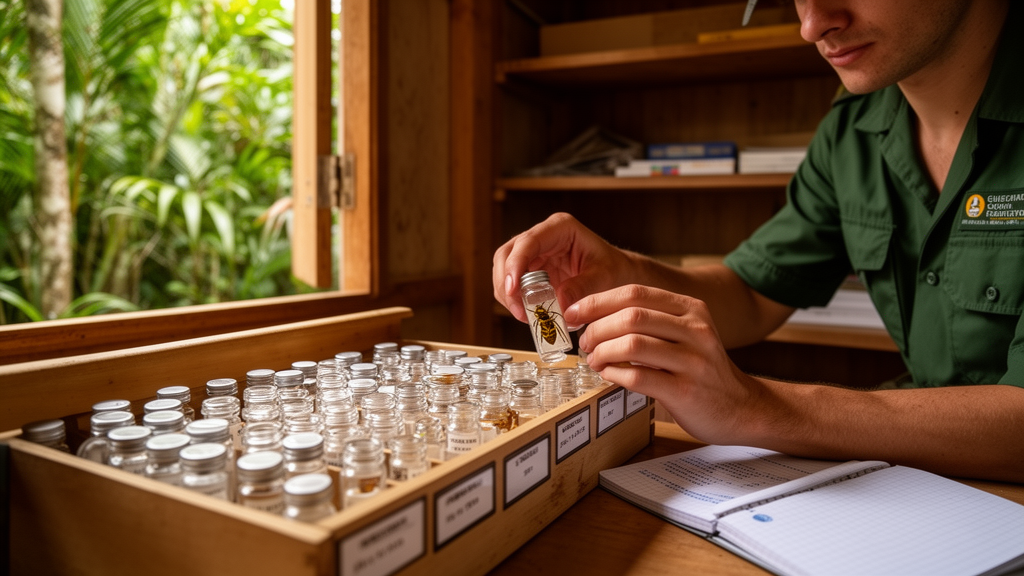
A ten-year review of medical records from Cayenne Hospital in French Guiana has provided the first detailed epidemiological and clinical description of massive bee envenomations in the territory. The retrospective study, published in PLOS Neglected Tropical Diseases, covered patients admitted for bee stings between 2014 and 2023 and analyzed 143 cases in total.

Massive bee stings can cause systemic manifestations and life-threatening complications, yet data on such envenomations in French Guiana had been scarce. The research team, led by Rémy Blaud, retrospectively reviewed the records of all patients presenting to the emergency department over the study period, creating a composite variable of systemic involvement that covered neurological, respiratory, hemodynamic and digestive manifestations. All analyses were descriptive.

The findings showed that 40% of the 143 patients, or 57 individuals, presented at least one systemic manifestation. The median number of stings was 50, with an interquartile range of 20 to 150. Overall mortality was low, with one death recorded among the 143 patients, equivalent to 0.7%.

In an exploratory two-graph receiver operating characteristic (TG-ROC) analysis, the researchers examined the sensitivity and specificity of sting-count cut-offs for four binary indicators of systemic involvement. The cut-offs maximizing the Youden index were approximately 72 stings for digestive and hemodynamic manifestations and 99 stings for neurological and respiratory manifestations. These cut-offs showed only modest sensitivity, ranging from 0.50 to 0.76, and specificity ranging from 0.68 to 0.76.

The authors cautioned that these exploratory analyses suggested systemic manifestations may occur at sting counts below the conventional 200-sting threshold, but stressed that the findings should not be interpreted as a validated clinical cutoff. They noted that confirmation would require prospective multicenter studies. As a retrospective, single-center, descriptive study, the work documents the clinical characteristics and management of these patients in French Guiana while leaving questions about optimal thresholds and outcomes for future research.

Subject of Research: Epidemiology and clinical management of massive bee envenomations in French Guiana

Article Title: Massive envenomations by bees in French Guiana: A ten-year retrospective study (2014–2023)

Article References: Blaud, R., Mutricy, R., Negrello, F., Eeckhout, M., Epelboin, L., Douine, M., Kallel, H., & Fremery, A. (2026). Massive envenomations by bees in French Guiana: A ten-year retrospective study (2014–2023). PLOS Neglected Tropical Diseases, 20(10), e0014824. https://doi.org/10.1371/journal.pntd.0014824

Image Credits: AI Generated

DOI: 10.1371/journal.pntd.0014824

Keywords: bee stings, envenomation, French Guiana, Cayenne Hospital, retrospective study, systemic manifestations, sting count, TG-ROC analysis, emergency department, toxicology, Massive, envenomations

News Source: Phoebe Ingram. (October 28, 2026). Ten Years of Bee Sting Records Reveal Envenomation Patterns in French Guiana. Scienmag.


Tags: bee stingsCayenne HospitalEmergency DepartmentenvenomationenvenomationsFrench GuianaMassiveRetrospective studysting countsystemic manifestationsTG-ROC analysisToxicology
Share12Tweet7Share2ShareShareShare1

Related Posts

TyG-CVAI Index Tops Rivals in Predicting Advanced Kidney-Heart-Metabolic Disease

TyG-CVAI Index Tops Rivals in Predicting Advanced Kidney-Heart-Metabolic Disease

October 30, 2026
Partner Adverse Tactics Linked to Lower Reproductive Health Scores Among Palestinian Women

Partner Adverse Tactics Linked to Lower Reproductive Health Scores Among Palestinian Women

October 30, 2026

Facial Skin Aging in Chinese Women Shows Structural Shifts After the Mid-Thirties

October 30, 2026

Glycolysis enzymes emerge as central players in Alzheimer’s brain energy failure

October 30, 2026

POPULAR NEWS

  • Scientists Map Regulatory DNA Behind Pig Body Size and Sharpen Genomic Prediction

    Scientists Map Regulatory DNA Behind Pig Body Size and Sharpen Genomic Prediction

    29 shares
    Share 12 Tweet 7
  • Rice Husk Waste Turned Into Chitosan Films That Shield Cherry Tomatoes

    29 shares
    Share 12 Tweet 7
  • Trust in government boosts perceived renewable energy benefits but fuels frustration

    29 shares
    Share 12 Tweet 7
  • Ferulic Acid Niosomes Shield Rat Testes from Chemotherapy Damage in Preclinical Study

    29 shares
    Share 12 Tweet 7

About

We bring you the latest biotechnology news from best research centers and universities around the world. Check our website.

Follow us

Recent News

Fins and Turbulators Keep Air-Cooled Battery Packs Cooler in Simulations

Sky and trees shape campus stress recovery, but more is not better

Host-derived peptide shows antiviral activity against herpes simplex virus type 1 in vitro

Subscribe to Blog via Email

Enter your email address to subscribe to this blog and receive notifications of new posts by email.

Join 86 other subscribers
  • Contact Us

Bioengineer.org © Copyright 2023 All Rights Reserved.

Welcome Back!

Login to your account below

Forgotten Password?

Retrieve your password

Please enter your username or email address to reset your password.

Log In
No Result
View All Result
  • Homepages
    • Home Page 1
    • Home Page 2
  • News
  • National
  • Business
  • Health
  • Lifestyle
  • Science

Bioengineer.org © Copyright 2023 All Rights Reserved.