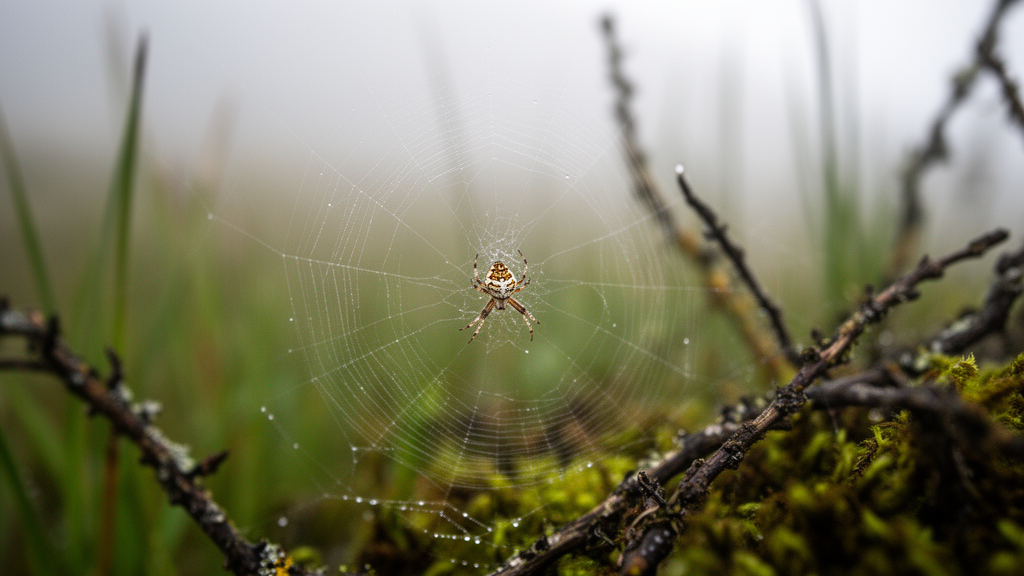
A taxonomic study of the orb-weaver genus Wangaraneus identified and described two new species, Wangaraneus fencha and Wangaraneus delicatus, from specimens collected in Xizang, China. The researchers also revised the composition of the genus, making two new combinations and establishing one new synonym.
The work combined morphological examination, historical taxonomic records and molecular analysis. The morphological methods followed Mi and Li (2022), while the molecular procedures followed Mi et al. (2024). All examined specimens were deposited in the Museum of Tongren University, China. The molecular analysis used partial mitochondrial cytochrome c oxidase subunit I (COI) sequences, with specimen voucher details and GenBank accession numbers listed in the study.
The researchers conducted a neighbor-joining reconstruction using the Kimura 2-parameter distance model in MEGA 5.0. Node support was evaluated with 1,000 bootstrap replicates, and Gea spinipes was selected as the outgroup. This was the first molecular study conducted on Wangaraneus. The molecular sample included a female W. fencha specimen and female and male specimens of W. delicatus, alongside specimens representing other araneid genera.
The two new species clustered together in a strongly supported clade with a bootstrap value of 100%. The authors reported that this molecular result was consistent with their morphological identification and provided additional evidence for placing both species within Wangaraneus.
W. delicatus was described from Dinggyê County, Xizang, where the type series was collected in May 2025 at approximately 2,390 metres above sea level. The type material comprised one male holotype and additional male and female specimens. The male holotype measured 2.65 mm in total length, and a female paratype measured 2.90 mm. Across the examined series, male total length ranged from 2.65 to 3.10 mm for five males, while female total length ranged from 2.70 to 3.20 mm for five females.
The species was distinguished from W. yequ by several genital and palpal characters. Its copulatory openings are positioned on the posterior surface rather than laterally, and its spermathecae are kidney-shaped and nearly touching, compared with spherical and separated spermathecae in W. yequ. The dorsal ramus of the male palpal tibia has three ctenidia, whereas it lacks them in W. yequ. The male also has a heavily sclerotized, triangular conductor and a long membranous terminal apophysis, the latter being the basis for the name delicatus.
W. fencha was described from a larger series collected in Mêdog County, Linzhi City, in 2023. The type material included one male holotype and 61 paratypes. The listed specimens came from seven named localities in the source account, at elevations ranging from about 570 to 1,940 metres above sea level. Total length ranged from 2.60 to 2.90 mm for 32 males and from 2.50 to 3.00 mm for 30 females. A male and a female paratype from Jiangxin Village were collected on the same web.
W. fencha resembles W. cruciformis in overall appearance and in its deeply bifurcated palpal tibia, but the authors identified six distinguishing characters. These included an anterior projection on the epigynal plate, a non-raised posterior epigynal plate, the position of the copulatory openings, separated spermathecae, three ctenidia on the dorsal ramus of the palpal tibia, and the absence of a terminal apophysis. The species name derives from the Chinese pinyin “fencha,” meaning “bifurcated,” referring to the bifurcated median apophysis of the male palp.
The study also transferred Singa cruciformis to Wangaraneus as W. cruciformis, based on similarities between its habitus and male palp and those of the genus type species, W. yequ. Examination of type material showed that S. cruciformis and Wangaraneus zioni represented the same species, so W. zioni was treated as a junior synonym. Chorizopes quadrituberculata was transferred as W. quadrituberculatus based on resemblance in habitus to the genus type species.
The classification of W. quadrituberculatus remains limited. Its type specimens were not examined, and the published figures of the male palp were considered unclear for identification. The authors instead judged from the male habitus that the species probably belongs to Gasteracantha, leaving its placement in Wangaraneus uncertain. They also reported that the male of W. quadrituberculatus had previously been misidentified. Across the revised genus, recognized species occur in China, India and Vietnam, while the two newly described species are known only from their type localities in China.
Subject of Research: Taxonomic revision of the Wangaraneus spider genus
Article Title: New data on Wangaraneus Mi, Wang & Li, 2024 ( Araneae , Araneidae ), with descriptions of two new species from Xizang, China
Article References: Zhu, H., Wang, C., Smagghe, G., & Mi, X. (2026). New data on Wangaraneus Mi, Wang & Li, 2024 (Araneae, Araneidae), with descriptions of two new species from Xizang, China. ZooKeys, 1291, 325-339. https://doi.org/10.3897/zookeys.1291.203690
Image Credits: AI Generated
DOI: 10.3897/zookeys.1291.203690
Keywords: Wangaraneus, spider taxonomy, new species, Xizang, China, Araneidae, molecular phylogeny, COI, species synonymization, taxonomic revision, data, Wang
News Source: Drew Townsend. (October 20, 2026). Taxonomic study describes two new Wangaraneus species from Xizang and revises the genus. Scienmag.