A single-center study in Jiangxi Province, southern China, has used targeted next-generation sequencing (tNGS) to re-examine respiratory specimens that had already tested positive for the Mycobacterium tuberculosis complex (MTC) with the Xpert MTB/RIF assay. The retrospective analysis, published in Annals of Clinical Microbiology and Antimicrobials, covered 83 such specimens and looked beyond tuberculosis to non-tuberculous mycobacteria (NTM), drug resistance mutations, and the patients’ own NAT2 acetylator genotypes.
The most striking result concerned overlapping detections. In bronchoalveolar lavage fluid samples, MTC and NTM were found together in 26.7% of cases (20 of 75 samples), which corresponds to 24.1% of the total cohort of 83 patients. Because TB and NTM infections can demand very different treatments, a co-detection rate at this level has direct diagnostic and therapeutic implications in a high-burden setting.
Among the 20 co-detected patients, three carried two distinct NTM species at the same time as MTC, producing 23 NTM species detections in total. The species identified were M. chelonae (12 detections), M. abscessus (9), M. intracellulare (1), and M. gordonae (1). The authors note that detailed molecular epidemiological data from tertiary care settings in Jiangxi had remained limited, which the study set out to address.
Drug resistance profiling also yielded notable findings. Genotypically predicted fluoroquinolone resistance was identified in 10.8% of MTC detections, equivalent to 9 of 83 patients. Across these detections, 14 distinct gyrA mutation occurrences were recorded, a pattern the authors describe as suggestive of potential subclonal heteroresistance rather than confirmed phenotypic heteroresistance.
Mutations potentially conferring resistance to newer agents, such as bedaquiline and clofazimine, were also observed, but only as unconfirmed candidate variants. Two pre-extensively drug-resistant TB cases were identified; both showed multidrug resistance with additional resistance to fluoroquinolones.
The study went beyond the pathogen to examine host pharmacogenetics. NAT2 acetylator genotypes, which relate to how patients metabolize certain anti-tuberculosis drugs, were distributed across slow, intermediate, and fast metabolizer phenotypes, with no disparity between genders in this cohort.
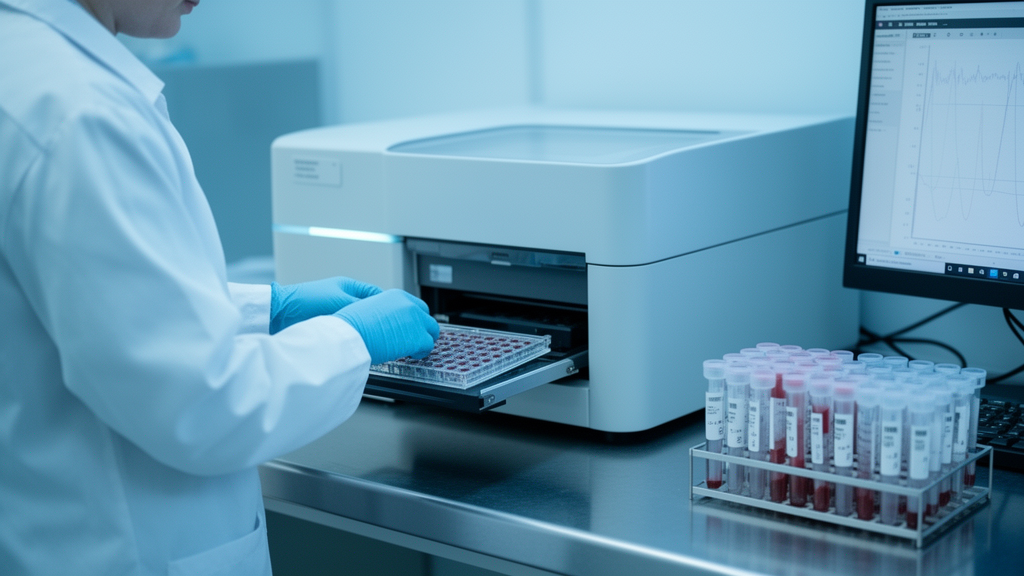
Technically, tNGS allowed a single assay to detect both MTC and NTM, profile resistance-associated mutations, and assess host genotypes from the same specimens. The authors frame this integrated approach as an exploratory framework that, subject to future clinical validation, may inform hypotheses about personalized therapy rather than an established clinical tool.
The conclusion drawn by the researchers is twofold: the co-detection rate of MTC and NTM is significant, and fluoroquinolone resistance is substantial in this Jiangxi cohort. They argue that sustained molecular surveillance is needed in drug-resistant TB management within this specialized referral context.
As a retrospective, single-center study of 83 Xpert-positive respiratory specimens, the findings describe one tertiary care population in southern China and are genotypic predictions rather than confirmed phenotypic resistance in most cases. The authors themselves emphasize that clinical validation will be needed before the integrated sequencing framework can guide individualized treatment decisions.
Subject of Research: Targeted next-generation sequencing of mycobacterial co-detection, drug resistance mutations, and host NAT2 pharmacogenetics in a Chinese tertiary care cohort.
Article Title: Integrated tNGS profiling reveals co-detection, drug resistance, and host pharmacogenetics of mycobacterial detections in Jiangxi, China
Article References: Mao, Z. Q., Mao, J., Liu, B. Y., Xu, Y., & Zhang, Q. L. (2026). Integrated tNGS profiling reveals co-detection, drug resistance, and host pharmacogenetics of mycobacterial detections in Jiangxi, China. Annals of Clinical Microbiology and Antimicrobials. https://doi.org/10.1186/s12941-026-00895-y
Image Credits: AI Generated
DOI: 10.1186/s12941-026-00895-y
Keywords: tuberculosis, non-tuberculous mycobacteria, targeted next-generation sequencing, drug resistance, fluoroquinolone resistance, MTC/NTM co-detection, NAT2 acetylator genotype, Jiangxi China, gyrA mutations, pre-XDR-TB, molecular surveillance, pharmacogenetics
News Source: Kristina Jarvis. (October 28, 2026). Targeted sequencing finds frequent TB and NTM co-detection in Chinese cohort. Scienmag.