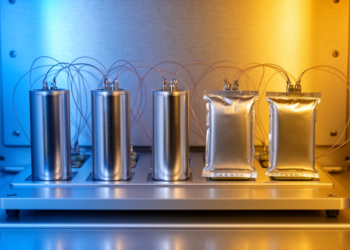
Temperature Acts as Mechanism Switch Governing Degradation Across Five Battery Chemistries
A comparative perspective demonstrates that operating temperature acts as a critical mechanism switch rather than a simple acceleration factor across ...
A comparative perspective demonstrates that operating temperature acts as a critical mechanism switch rather than a simple acceleration factor across ...

A physics-based modeling study shows that pairing a thirty-kilowatt-hour sodium-ion battery with a compact motorcycle engine generator cuts vehicle mass, ...

A core–shell antimony and hard carbon composite anode achieved a charge capacity of 482.4 mAh g−1 and retained 95.4 percent ...

An electroactive fiber-optic sensor combining surface plasmon resonance with electrode actuation enables real-time operando tracking of interfacial charge transfer and ...
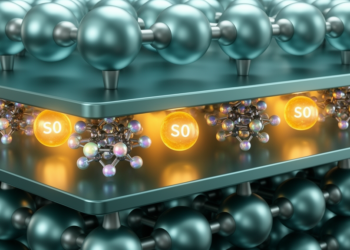
Regulating boron-oxygen coordination within layered oxide cathodes suppresses destructive phase transitions while accelerating sodium-ion transport in sodium-ion batteries.
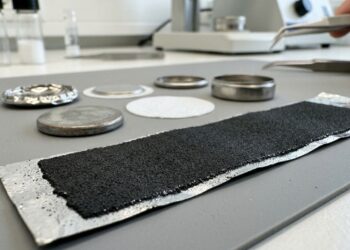
Researchers developed an acetonitrile-based solvothermal synthesis method that suppresses crystal defects in manganese-based Prussian white cathodes, significantly improving rate capability ...
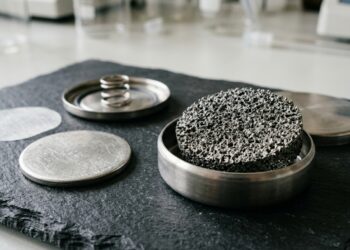
An iron-mediated redox strategy in a layered sodium cathode improves lattice-oxygen reversibility to nearly 99%, enhancing the practical viability of ...

A comprehensive vehicle-level simulation reveals how battery cell chemistry selection depends heavily on vehicle size and operating duty cycles across ...
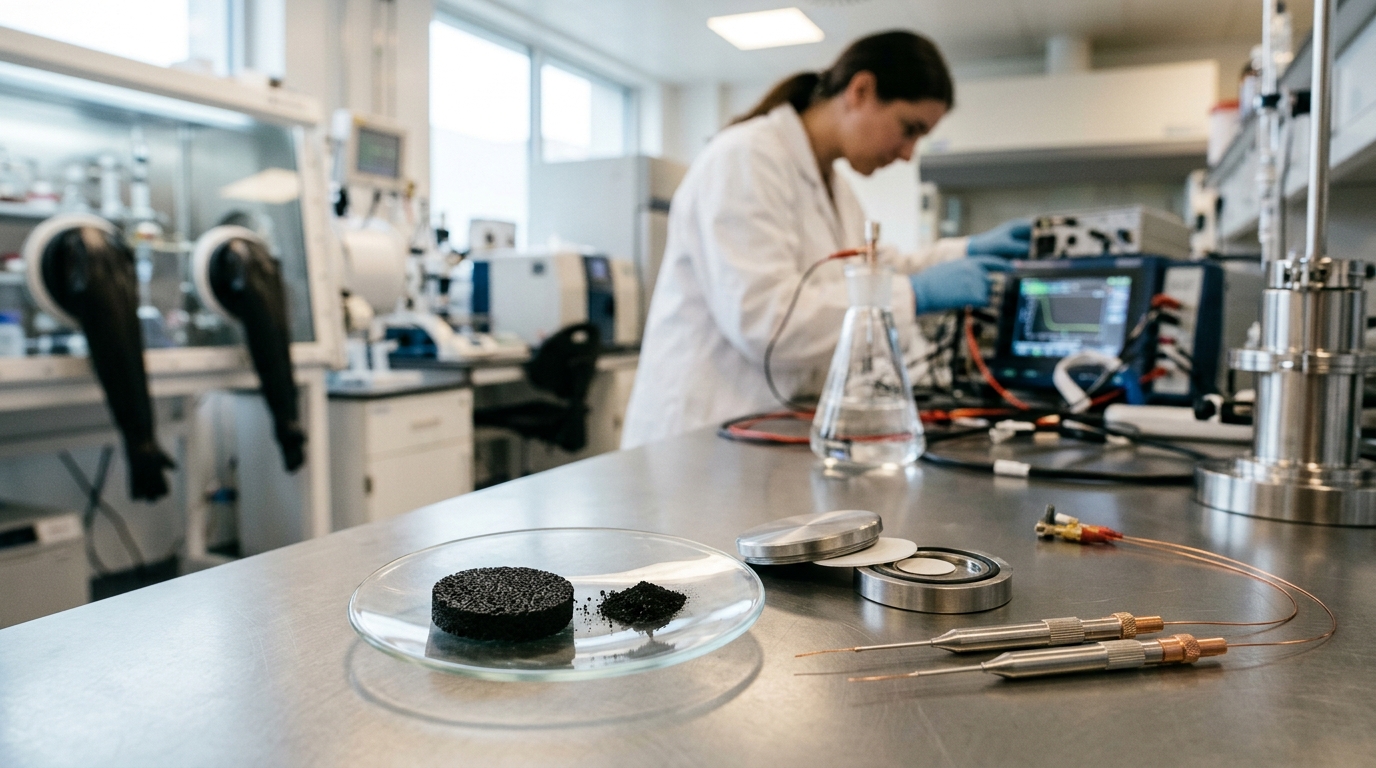
A new review in Ionics examines how metal-organic framework-derived carbons and their composites could serve as next-generation electrode materials for ...

A review argues that competing sodium-storage models for hard carbon anodes converge on a multi-stage adsorption-intercalation-filling framework, guiding precursor design ...
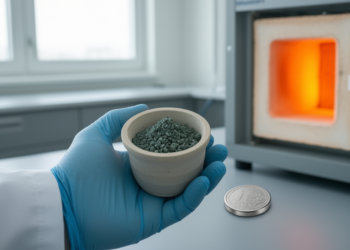
A solid-phase synthesis method produced a Na4Fe3(PO4)2P2O7 cathode that delivered 110 mAh·g−1 at 0.1 C and retained 91% capacity after ...
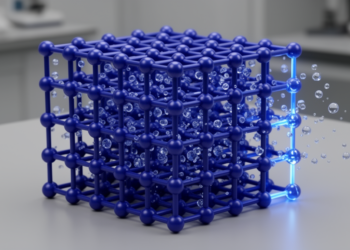
Researchers report that controlled dehydration of Prussian blue cathodes creates one-dimensional cyanide defects that enable adaptive water release during battery ...

Oxford chemists used machine learning-driven atomistic simulations to show how the polymer PVDC breaks down into hard carbon, whose five- ...

In a laboratory comparison of conductive additives for a P2-type sodium-ion battery cathode, carbon nanotubes reached electronic percolation at 1 ...
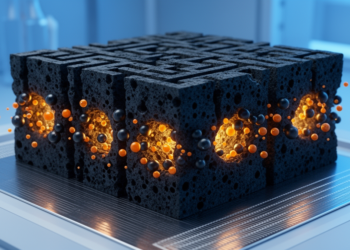
An iodine-mediated cross-linking strategy creates starch-derived hard carbon with sub-nanometer ultramicropores and carbonyl-rich surfaces, confining electrolyte solvation to build a ...
UL Research Institutes' Electrochemical Safety Research Institute will present studies on lithium-ion thermal-runaway mitigation, sodium-ion safety and emissions, and battery ...
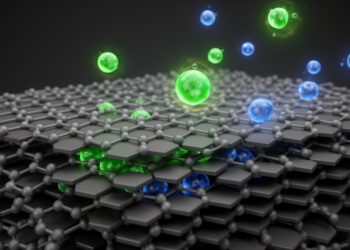
DFT simulations show that five common electrolyte anions interact with sodiated MoS2 surfaces in strikingly different ways, with FSI- spontaneously ...

A new review collection in Frontiers in Batteries and Electrochemistry shows battery research converging on safer interfaces, smarter manufacturing, computational ...
A simple change of solvent during hypophosphite phosphating lets researchers selectively grow Ni5P4 or Ni2P4O12 on carbon cloth, tuning sodium-storage ...
Researchers in Hefei have engineered pyridinic nitrogen and carbonyl sites on hard carbon anodes to direct anion transport, forming a ...