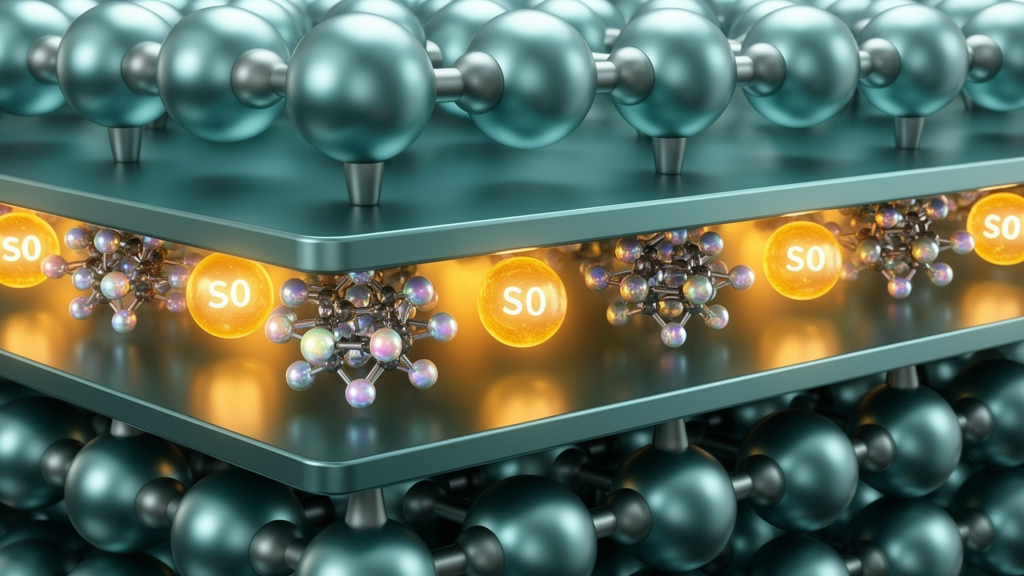
A research team has demonstrated that regulating boron-oxygen coordination within layered oxide cathode materials can effectively resolve the persistent performance trade-off between structural stability and ion transport kinetics in sodium-ion batteries. In their published investigation, the authors report a non-metallic coordination modulation strategy applied to a cobalt-containing P2-phase sodium nickel cobalt manganese oxide host, formulated as Na2/3Ni1/3Co1/3Mn1/3O2. Layered transition-metal oxide cathodes represent a critical constituent for sodium-ion energy storage systems because of their compositional tunability and high reversible capacities. However, conventional P2-type frameworks inevitably experience severe structural degradation when operated at elevated cell voltages. During deep extraction of sodium ions, slippage among transition-metal slabs triggers an irreversible structural transformation from the open prismatic P2 phase into the close-packed O2 phase. This transition induces macroscopic lattice stress, particle cracking, and accelerated capacity loss over repeated cycling. By introducing small amounts of boron to form tetrahedral interstitial-like boron-oxygen coordination configurations within the transition-metal layers, the researchers successfully mitigated this macroscopic phase transition while simultaneously expanding the interlayer pathway for rapid sodium-ion diffusion.
The fundamental challenge confronting P2-phase layered oxide cathodes stems from the geometric and kinetic differences inherent to their crystalline frameworks. The pristine P2 structure features open prismatic sodium diffusion channels that provide high ionic conductivity, permitting rapid insertion and extraction of sodium ions to deliver high rate capability. In contrast, alternative layered configurations such as the O3 phase feature more tortuous diffusion pathways that impose severe kinetic bottlenecks under rapid charge and discharge conditions. Nevertheless, the practical deployment of P2 cathodes has long been hindered by the abrupt P2-to-O2 phase transition occurring under high-voltage desodiation. When large amounts of sodium ions leave the host framework, adjacent transition-metal slabs slide across one another, resulting in substantial anisotropic volume variations and significant accumulation of internal lattice strain. Over extended electrochemical cycling, this persistent mechanical strain produces microcracks within individual particles, drives gradual structural collapse, and causes rapid capacity fading. Conventional chemical interventions have typically failed to resolve this dilemma because strategies designed to reinforce crystal frameworks frequently obstruct sodium transport paths, whereas methods targeting faster ion mobility generally compromise mechanical robustness.
Traditional metal-ion doping methodologies applied to layered oxide cathodes illustrate these conflicting structural constraints. Introducing electrochemically inactive metal cations directly into the transition-metal lattice sites can reinforce framework integrity and suppress structural transitions, yet replacing redox-active transition metals systematically compromises the reversible specific capacity of the cathode material. Conversely, attempting to stabilize the structure by inserting large-radius dopant cations into the alkali metal layers tends to obstruct the prismatic sodium-ion channels, which diminishes the intrinsic ionic conductivity that makes P2-phase oxides desirable in the first place. Recent exploratory efforts have explored boron modification across sodium layered oxides through mechanisms such as interstitial coordination, phase construction, surface reconstruction, co-doping, and oxygen-framework stabilization. Building on these concepts, the investigators focused on establishing the non-monotonic relationship connecting boron concentration, high-voltage phase reversibility, and sodium migration kinetics in Na2/3Ni1/3Co1/3Mn1/3O2 hosts. Their design strategy relies on strong covalent interactions within newly established boron-oxygen bonds to contract the transition-metal slabs, which indirectly expands the adjacent sodium interlayer spacing and strengthens the surrounding oxygen framework.
To experimentally realize this structural design, the authors synthesized a series of boron-modified P2-phase Na2/3Ni1/3Co1/3Mn1/3O2 materials using a solid-state synthesis route. The raw precursor materials were first homogenized through ball milling, followed by high-temperature calcination under a controlled atmosphere and an annealing step to stabilize the intended P2 crystalline framework. The resulting materials were designated as NCMx, where x represents the nominal boron doping percentage across values of zero, one, three, and five percent. Inductively coupled plasma optical emission spectrometry confirmed that the measured boron molar ratios for the modified samples were 0.008 for NCM1, 0.028 for NCM3, and 0.047 for NCM5, aligning closely with nominal targets despite slight boron volatilization during thermal processing. The measured elemental ratios of sodium, nickel, cobalt, and manganese remained close to their intended stoichiometric compositions across all samples, confirming that boron incorporation did not substantially alter the overall transition-metal ratios. Rietveld refinement of X-ray diffraction patterns verified that all synthesized samples retained the typical hexagonal P2 crystal symmetry indexed to the P63/mmc space group without destroying the primary host lattice.
Detailed structural analyses revealed distinct physical alterations within the crystal lattice resulting from boron incorporation. In the powder diffraction patterns, the (002) diffraction peak systematically shifted toward lower diffraction angles upon boron introduction, corresponding to an increase in the interplanar spacing according to Bragg’s law. Interestingly, the diffraction peak position remained essentially unchanged as the nominal boron doping level increased from one to five percent, indicating that minimal boron addition effectively accomplishes interlayer expansion without inducing further macroscopic lattice shifts. High-resolution transmission electron microscopy confirmed this structural expansion, revealing that the average (002) crystal plane lattice spacing increased from 0.550 nanometers in the pristine NCM0 material to 0.555 nanometers in the optimized NCM3 sample, alongside a slight expansion of the (103) plane from 0.201 to 0.203 nanometers. Scanning electron microscopy and transmission electron microscopy showed that both unmodified and boron-doped particles exhibited irregular flake-like morphologies with preserved bulk dimensions and single-crystalline characteristics verified by selected area electron diffraction. Energy dispersive spectroscopy mapping confirmed that boron, sodium, nickel, cobalt, and manganese were uniformly distributed throughout the particles without noticeable element segregation.
X-ray photoelectron spectroscopy was employed to elucidate the surface chemical environments and elemental valence states of the synthesized cathodes. Survey spectra verified the presence of sodium, nickel, cobalt, and manganese in all compositions, while prominent boron 1s peaks emerged exclusively in the doped samples with intensities scaling proportionally to the boron content. High-resolution core-level spectra showed the sodium 1s peak centered at 1071.0 electron volts, confirming the dominant Na+ state, while nickel 2p, cobalt 2p, and manganese 2p signals indicated primary oxidation states of Ni2+, Co3+, and Mn4+. The lack of observable binding energy shifts among these transition-metal peaks supports a model wherein boron occupies tetrahedral interstitial-like sites rather than directly substituting transition-metal cations. During cycling, redox-active Ni2+ and Co3+ cations undergo oxidation and reduction to maintain charge neutrality, while electrochemically inactive Mn4+ preserves framework integrity. High-resolution oxygen 1s spectra demonstrated that boron incorporation increased the proportion of lattice oxygen while lowering the relative amounts of defective and adsorbed oxygen species, with the lattice oxygen peak shifting to higher binding energy due to strong boron-oxygen covalency reducing outer electron density around coordinated oxygen atoms.
Electrochemical evaluations using coin-type half-cells operated between 1.5 and 4.2 volts versus sodium metal confirmed marked improvements in electrochemical reversibility and cycling durability for the boron-modified cathodes. Cyclic voltammetry profiles recorded for pristine NCM0 displayed pronounced hysteresis, severe polarization, and inconsistent current responses across the first three cycles. In contrast, the optimized NCM3 cathode exhibited highly reproducible voltammetric curves with minimal peak potential separation over six cycles, reflecting enhanced reversibility for both the Ni2+/Ni4+ redox couple located between 2.1 and 4.0 volts and the Co3+/Co4+ couple appearing above 4.0 volts. Galvanostatic cycling at a rate of 0.3 C demonstrated that pristine NCM0 retained only 88.6 percent of its initial capacity after 150 cycles, suffering from severe particle cracking and structural degradation. Meanwhile, the boron-doped variants NCM1, NCM3, and NCM5 achieved superior retention rates of 92.7 percent, 93.1 percent, and 91.9 percent, respectively. The NCM3 material delivered an initial reversible discharge capacity of 112.5 milliampere-hours per gram at 0.3 C compared to 90.7 milliampere-hours per gram for pristine NCM0, maintaining 75.9 percent capacity retention with 85.4 milliampere-hours per gram after 300 cycles.
Rate capability assessments demonstrated that moderate boron incorporation substantially improves charge-discharge performance under elevated current densities. Across tested current rates, rate performance exhibited a non-monotonic trend of initial enhancement followed by attenuation with increasing boron content, establishing an optimum concentration window at three percent doping. The NCM3 cathode delivered a specific capacity of 101.9 milliampere-hours per gram at a high discharge rate of 5 C, exhibiting a minor capacity decrease of merely 14.7 milliampere-hours per gram relative to its capacity at 0.3 C. Extended high-rate testing at 5 C demonstrated excellent durability, with NCM3 initiating at 99.5 milliampere-hours per gram and maintaining 78.7 milliampere-hours per gram after 400 cycles, corresponding to a retention of 79.1 percent. In contrast, NCM1 contained insufficient boron to expand sodium interlayer channels adequately, while excessive boron addition in NCM5 introduced local structural and chemical inhomogeneities that partially obstructed sodium migration pathways. Galvanostatic intermittent titration technique measurements quantitatively confirmed these kinetic differences, revealing that NCM3 achieved superior apparent sodium diffusion coefficients of approximately 10^-8.95 square centimeters per second during charging and 10^-8.29 square centimeters per second during discharging.
Quantitative kinetic investigations revealed that rapid sodium-ion storage in the modified material is strongly governed by surface-controlled pseudocapacitive charge storage. Cyclic voltammetry carried out across scan rates ranging from 0.5 to 5.0 millivolts per second yielded linear logarithmic peak current relationships with b-values of 0.9398 for the primary anodic peak and 0.9164 for the cathodic peak, confirming pronounced capacitive character. At a high scan rate of 5.0 millivolts per second, the surface-controlled capacitive contribution in NCM3 reached 98.99 percent, substantially exceeding its diffusion-controlled component. Across the full 0.5 to 5.0 millivolts per second range, capacitive contributions for NCM3 spanned from 90.0 to 98.9 percent, compared to 76.6 to 96.9 percent for pristine NCM0. Electrochemical impedance spectroscopy indicated that NCM3 possessed substantially smaller charge transfer and surface film resistances prior to cycling, and maintained smaller resistance increments after 50 cycles. To confirm practical feasibility, the authors assembled full sodium-ion cells coupling NCM3 cathodes with commercial hard carbon anodes in the 1.5 to 4.2 volt window. The full-cell configuration successfully illuminated an LED display panel, demonstrated minimal polarization, and retained 91.87 percent of its initial capacity after 100 cycles at a 1 C rate with Coulombic efficiency exceeding 99 percent.
Density functional theory calculations and structural tracking provided deeper theoretical insight into the atomic-scale mechanisms underpinning the observed performance enhancements while delineating explicit boundaries for experimental interpretation. Computational models incorporating boron ions into tetrahedral interstitial positions within transition-metal slabs indicated lower average Bader charges on oxygen atoms surrounding coordination polyhedra, confirming enhanced electron transfer and framework stabilization that suppresses layer sliding at high voltages. Furthermore, theoretical modeling demonstrated that boron incorporation lowers the calculated sodium-ion migration energy barrier from 2.33 electron volts in the pristine lattice down to 1.06 electron volts in NCM3. Density of states calculations revealed enhanced electronic densities around the Fermi level, with increased oxygen 2p orbital contributions suggesting potential modulation of oxygen-related charge compensation. Nevertheless, the authors emphasize important analytical limitations: ex-situ X-ray diffraction tracking across the first cycle detected no macroscale P2-to-O2 phase separation at selected states, but transient transformations or localized stacking disorder between discrete sampling points cannot be entirely discounted. Additionally, direct oxygen-sensitive and boron-sensitive spectroscopic analyses remain necessary in future work to unambiguously establish the exact interstitial coordination geometries and verify the reversible participation of lattice-oxygen redox.
Subject of Research: Boron-oxygen coordination regulation in layered oxide cathodes for sodium-ion batteries
Article Title: Interstitial-like B-O coordination regulation enables enhanced structural stability and Na+ transport in P2-type layered oxides for sodium-ion batteries
Article References: Bai, Y., Liang, J., Zhang, H., Li, H., Sun, J., Li, X., Luo, H., & Kong, J. (2026). Interstitial-like B-O coordination regulation enables enhanced structural stability and Na+ transport in P2-type layered oxides for sodium-ion batteries. Carbon Neutrality, 5(1), Article 35. https://doi.org/10.1007/s43979-026-00190-x
Image Credits: AI Generated
DOI: 10.1007/s43979-026-00190-x
Keywords: sodium-ion batteries, layered oxide cathodes, boron doping, phase transition, electrochemical energy storage, diffusion kinetics, crystal structure, density functional theory, Interstitial-like, coordination, regulation, enables
News Source: Denise Maddox. (November 9, 2026). Boron Coordination Strategy Stabilizes Layered Cathodes for Sodium Ion Batteries. Scienmag.