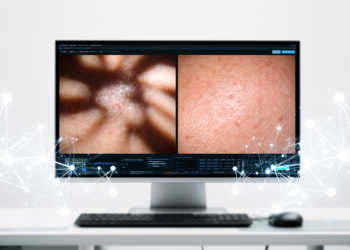
Task-Based Neural Network Assesses Illumination Correction in Dermatological Photographs
Researchers developed GISR-Net to evaluate skin lesion illumination correction by directly predicting achievable automated segmentation accuracy.
Researchers developed GISR-Net to evaluate skin lesion illumination correction by directly predicting achievable automated segmentation accuracy.
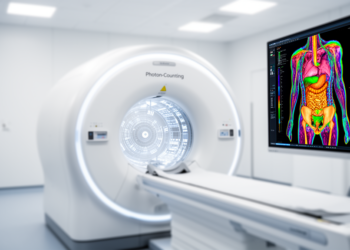
A clinical comparison of abdominopelvic CT scans in 49 patients found photon-counting CT reduced radiation dose by an average of ...
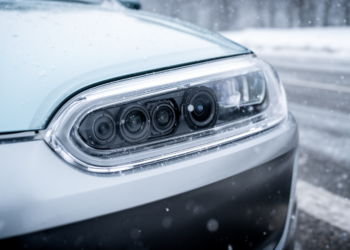
A study shows that autonomous driving camera performance varies significantly based on lens configuration and specific winter weather conditions.
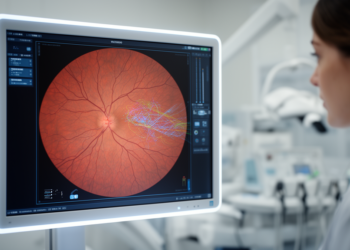
A narrative review evaluating artificial intelligence in ischemic retinopathies reveals that high diagnostic accuracy across retinal imaging tasks has outpaced ...
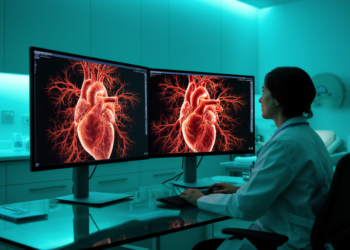
In a retrospective study of 25 patients with coronary artery disease, deep learning denoising combined with contrast enhancement significantly improved ...
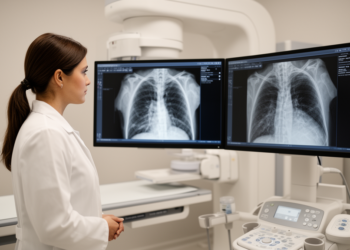
A head-to-head comparison of two automated PGMI-based tools on the same DBT screening images found only 48.2 percent exact agreement ...
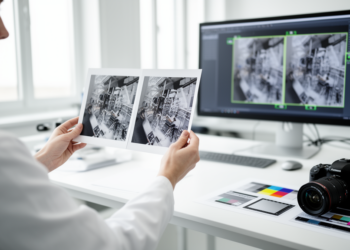
Researchers in Naples have developed EDOKS, a transparent image similarity metric that combines Earth Mover's Distance texture analysis with Oklab ...

A new deep learning network grades the gain quality of automated breast ultrasound images with 95.49 percent accuracy, outperforming standard ...
A new open-source Python framework called combHIQA standardizes the preparation, validation, and combination of image quality assessment metrics to make ...
Researchers at Dalian University of Technology have developed PD-Dehaze, a progressive diffusion framework that restores haze-degraded photographs with stable coarse-to-fine ...