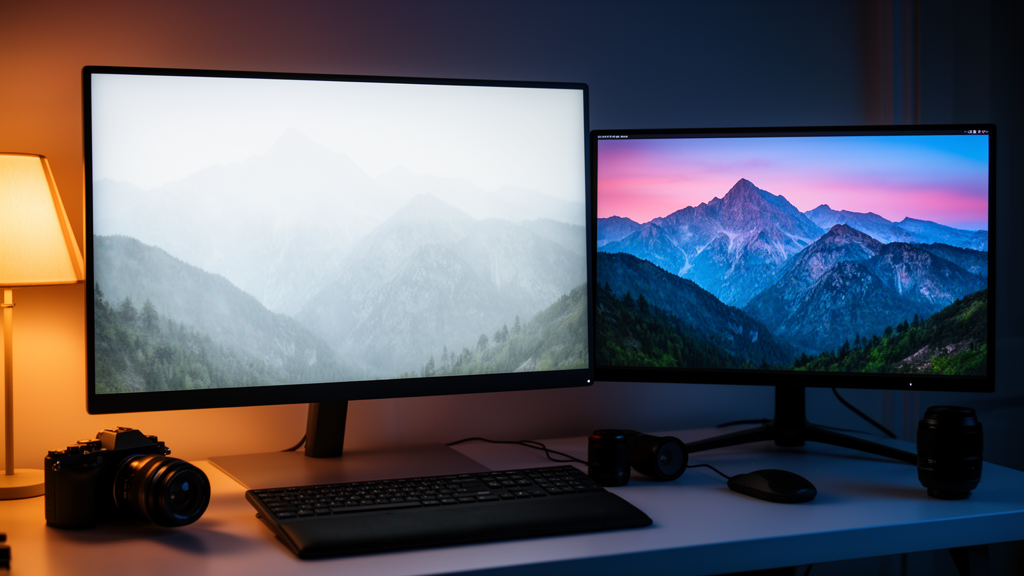
Haze is one of the most stubborn enemies of clear photography. When dense fog or smoke rolls between a camera and the scene it wants to capture, contrast collapses, colors wash out, and fine textures simply vanish. For years, computer vision researchers have wrestled with the problem of single image dehazing: recovering a clean, haze-free picture from one degraded photograph, with no second viewpoint, no depth sensors, and no clean reference to guide the way. Now, a team of researchers at Dalian University of Technology in China has introduced a new artificial intelligence framework that promises to make those recovered images sharper, more stable, and truer in color than ever before. Their work, published as an open access article in the journal Neural Processing Letters, is called PD-Dehaze, and it builds on one of the most powerful generative technologies of the moment: denoising diffusion probabilistic models.
Diffusion models have taken the machine learning world by storm in recent years, powering everything from photorealistic image generators to medical image reconstruction tools. The core idea is elegant. During training, a model learns to destroy an image step by step, gradually adding random noise until nothing recognizable remains. It then learns to reverse that process, peeling away noise layer by layer until a coherent image emerges. Applied to restoration tasks like dehazing, this generative machinery can reconstruct plausible scene details that were obscured by the atmosphere, rather than merely enhancing whatever faint signals survive the haze. But the Dalian team, led by authors Xinyue Liu, Jiayu Liu, Junchi Wu, Linlin Zong, and Wenxin Liang, identified two major weaknesses that have kept diffusion-based dehazing from reaching its full potential.
The first weakness concerns stability under severe haze. Many existing approaches attempt a coarse-to-fine restoration, first recovering the rough layout of a scene and then progressively refining the details. In theory this is sensible; in practice, when the haze is dense and non-uniform, the transition between the coarse and fine stages can become unstable, producing restoration results that fluctuate wildly or degrade as the process advances. Scene structures that survived the early stages may be lost during the fine refinement, and the model may hallucinate inconsistent details from one iteration to the next. Under thick atmospheric haze, where the input already contains precious little information, this instability is not a cosmetic nuisance. It is the difference between a usable image and a muddled mess.
The second weakness is more subtle but equally damaging: stochastic color inconsistency. Because diffusion models generate images through an iterative, inherently random sampling process, the colors of the final output can drift unpredictably. The resulting images often exhibit color shift artifacts, where the overall tone of the restored scene deviates from what the true scene would look like. A slate-gray road might come out tinted blue, or a neutral wall might take on a warm cast. For applications where color fidelity matters, from surveillance to remote sensing to everyday photography, this stochastic drift undermines trust in the reconstruction. The researchers set out to solve both problems within a single, unified framework.
Their answer to the instability problem is a progressive diffusion framework that gradually increases image resolution during both training and inference. Rather than asking the model to jump from a heavily degraded, low-information input directly to a full-resolution reconstruction, the framework works its way up in stages. At each stage, the model operates at a particular resolution, learning stage-wise features appropriate to that scale before the image is handed to the next, higher-resolution stage. To make this efficient, the team designed a progressive backbone architecture that evolves with the input scale, allowing the network to adapt its internal structure as the resolution climbs. Crucially, they also introduced a fade-in strategy that smoothly transitions the optimization between adjacent restoration stages. Instead of an abrupt switch that can shock the model and destabilize training, the fade-in blends the stages so that the coarse-to-fine progression remains stable even under the harshest haze conditions.
The answer to the color drift problem is a consistency-preserving group-level feature statistics module. During the diffusion sampling process, this module regularizes the consistency of feature distributions, keeping the statistical properties of the internal representations aligned across the many denoising steps. By anchoring these feature statistics, the framework reduces the random color deviations that plague conventional diffusion sampling and improves global color fidelity. In other words, the model is not left to wander freely through the space of plausible colorings as it denoises; it is gently steered to stay true to the color character of the scene it is restoring. The result is a dehazed image whose hues remain where they should be, from the first sampling step to the last.
The evidence for these design choices comes from an extensive battery of experiments on both synthetic and real-world datasets. On the synthetic side, the researchers evaluated PD-Dehaze on the SOTS-Indoor and SOTS-Outdoor benchmarks, standard testbeds for dehazing research. An interesting observation from their results is that, given the relatively mild degradation in the SOTS datasets, most recent methods published since 2022 have achieved near-saturation performance, indicating that thin synthetic haze is comparatively tractable. Even in this crowded, high-performing field, PD-Dehaze held its own. On the SOTS-Indoor dataset it achieved the second-best SSIM, a structural similarity metric that measures how closely the restored image matches the ground truth in structure and texture. On SOTS-Outdoor, it attained the top PSNR result while ranking second in SSIM, demonstrating that even in easier synthetic scenarios the progressive diffusion strategy delivers highly competitive quality and robustness.
Perhaps more telling is how the model performs when it leaves the comfort of synthetic data. To examine generalization, the team deployed PD-Dehaze directly on two real-world hazy image datasets, URHI and RTTS, without any additional fine-tuning. The model had been trained solely on the NH-HAZE dataset, which contains dense and non-uniform haze, and was then released onto genuinely unconstrained conditions. Because real hazy images come with no clean ground truth, the researchers used two widely adopted no-reference image quality metrics, BRISQUE and NIQE, both of which assess perceptual quality without needing a pristine reference. PD-Dehaze consistently achieved better perceptual quality on both datasets, as indicated by lower BRISQUE and NIQE scores, a result the authors say clearly demonstrates the superior generalization capability of their approach. For a field where models trained on synthetic haze often stumble on real fog, that cross-domain transfer is a meaningful achievement.
The team also went to unusual lengths to quantify the color consistency problem itself. They proposed a new metric called C-Diff, short for Color Difference, which computes the pixel-wise color deviation between a restored output and its ground truth. Both images are converted to HSV color space, and the mean squared error is calculated across the hue, saturation, and brightness channels; a lower C-Diff score signals better color consistency and less distortion. In side-by-side comparisons, a model trained without the consistency guidance suffered severe color distortion, particularly in regions with dense textures or illumination changes, and this showed up both in high C-Diff values and in intense HSV error heatmaps. The consistency-preserving model, by contrast, produced outputs visually faithful to the ground truth, with significantly reduced color deviation and improved spatial coherence. The researchers further analyzed the probability distributions of the output images in LAB color space, finding that the distributions of the L, a, and b channels produced by the constrained model align more closely with the ground truth, especially in the b channel, which is particularly sensitive to color shift. Together, these analyses show that the consistency-aware regularization is doing exactly what it was designed to do.
The broader significance of this work lies in what it says about the maturing of diffusion models for image restoration. The technology’s generative power is not in doubt; what has been missing is the engineering discipline to keep that power stable and faithful under real-world stress. PD-Dehaze tackles that discipline on two fronts at once, combining a resolution-climbing architecture with a fade-in optimization schedule to tame the coarse-to-fine instability, and a feature-statistics regularizer to pin down the color. The framework restores scene structures and fine textures while significantly improving perceptual color consistency, achieving highly competitive performance across the evaluated benchmarks. The authors received no specific funding for the work and declare no competing interests, and the code of PD-Dehaze has been made publicly available, inviting other researchers to build on the approach. As diffusion models continue their march through computer vision, techniques like progressive resolution scaling and consistency-preserving sampling are likely to spread well beyond dehazing, into any task where a machine must conjure a clean image from a corrupted one without losing sight of what the original scene actually looked like.
Subject of Research: Diffusion model-based single image dehazing using progressive resolution restoration and color consistency preservation
Article Title: Progressive Diffusion for Single Image Dehazing
Article References: Liu, X., Liu, J., Wu, J., Zong, L., & Liang, W. (2026). Progressive Diffusion for Single Image Dehazing. Neural Processing Letters. https://doi.org/10.1007/s11063-026-11886-7
Image Credits: AI Generated
DOI: 10.1007/s11063-026-11886-7
Keywords: single image dehazing, diffusion model, denoising diffusion probabilistic models, image restoration, progressive reconstruction, color consistency, computer vision, DDPM, deep learning, image quality assessment, color shift artifacts, Neural Processing Letters
News Source: Blake Davidson. (October 9, 2026). New Progressive Diffusion AI Strips Haze from Single Photos with Unmatched Color Fidelity. Scienmag.