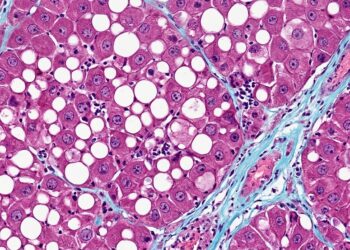
Machine learning spots liver scarring in metabolic liver disease
Explainable machine-learning models built from routine clinical variables outperformed conventional fibrosis scores for identifying significant fibrosis in adults with MASLD ...
Explainable machine-learning models built from routine clinical variables outperformed conventional fibrosis scores for identifying significant fibrosis in adults with MASLD ...

A systematic review of 62 studies finds no single machine learning algorithm consistently best for early Alzheimer's detection, with very ...

A study of Swiss referendum debates reveals that large language models align with human evaluations of political arguments through surface ...

Explainable artificial intelligence reveals key building density and traffic thresholds governing urban heat island intensity in a high-density northern Chinese ...

A new explainable AI framework integrates bioelectrical impedance and clinical data to screen for cancer in peritoneal dialysis patients, showing ...

A systematic review of 101 studies published between 2021 and 2025 finds that AI-based deepfake detectors often exceed 95% accuracy ...

A retrospective machine learning study identified systemic inflammation, coagulation changes, and allergy history as key predictors of severe human rhinovirus ...

Researchers have developed a hierarchical taxonomy and decision tree framework to help artificial intelligence developers systematically select appropriate interpretability techniques ...

A comprehensive review outlines how integrating proactive pharmacogenomic testing with real-world pharmacovigilance can transform drug safety and prevent adverse reactions.

Researchers evaluating text-to-image generative models found that automated tools struggle to reliably measure subtle gender-object stereotypes, often confounded by significant ...

A new physiology-informed neural network with attributable branches predicts blood glucose in type 1 diabetes while revealing which factors drive ...

A systematic literature review using the PRISMA framework analyzes 91 primary studies on artificial intelligence applications in water quality monitoring ...

A structured narrative review maps how human-to-machine, machine-to-machine and machine-to-human learning could enable collaborative search and rescue robotics while exposing ...

Researchers extended the PPCEF counterfactual explanation method to regression targets and mixed numerical-and-categorical tabular data while enforcing probabilistic plausibility through ...

A new review proposes an AI-centred framework that integrates data-driven methods, process-based crop models, and manipulation experiments to understand how ...

Researchers propose a Holistic Explainable AI framework that embeds explanation into every stage of the data-analysis workflow and maps its ...

Researchers report a simulation-based explainability framework that pairs a physics-guided reinforcement learning controller with XGBoost and SHAP analysis to trace ...

A condition-stratified study of westbound Interstate I-94 found that XGBoost without weather variables delivered the most accurate hour-ahead traffic forecasts.

A proof-of-concept deep learning framework called CardioHolisticAI combines clinical, radiomic and genomic data to stratify coronary artery disease risk, achieving ...

A new Brain Informatics review traces how AI methods, from co-expression statistics to causal graph neural networks and foundation models, ...