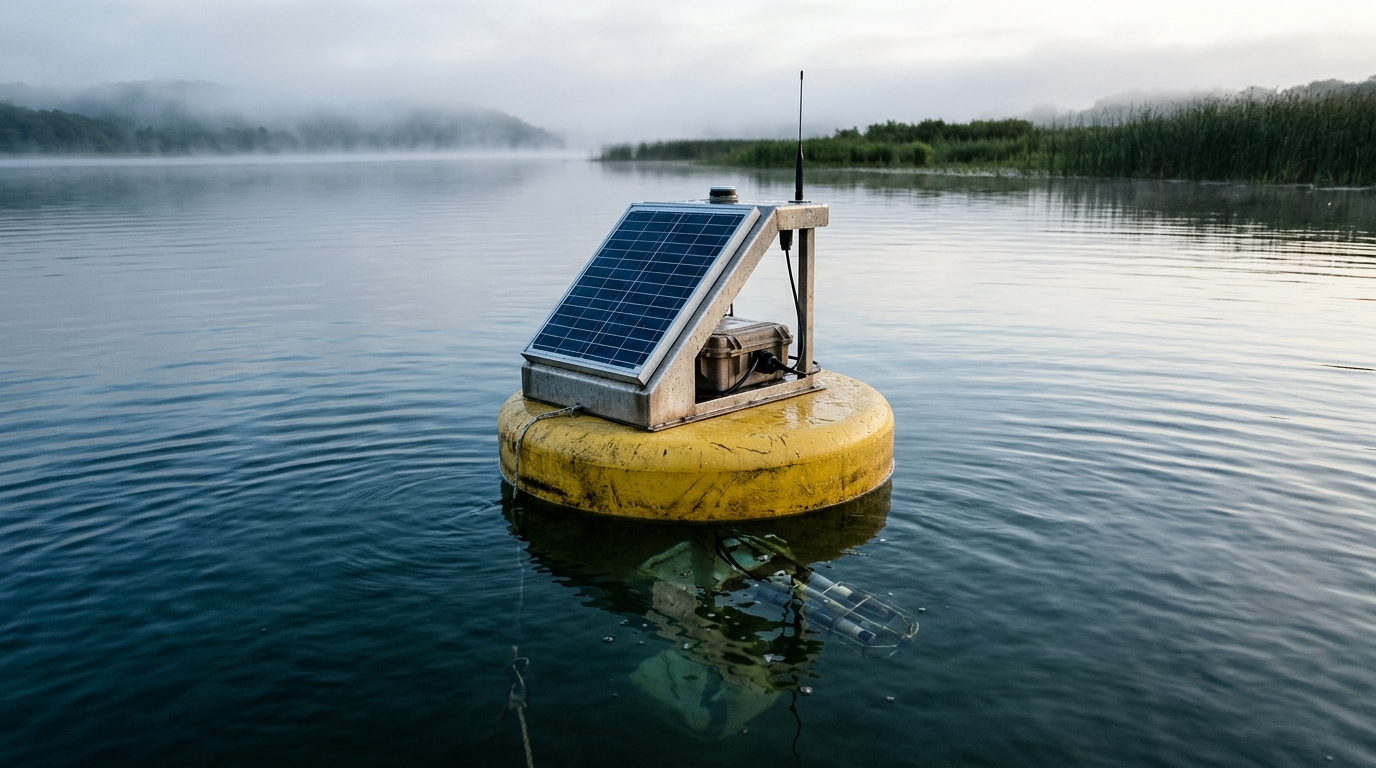
A systematic literature review evaluating artificial intelligence in water quality monitoring has synthesized findings from 91 primary research studies published between 2020 and 2026. Applying the Preferred Reporting Items for Systematic Reviews and Meta-Analyses framework, the review examined how data-driven machine learning models detect contamination events, model complex nonlinear environmental relationships, and support predictive decision-making across aquatic environments.
The researchers conducted systematic literature searches across five academic databases: IEEE Xplore, Scopus, Web of Science, ScienceDirect, and SpringerLink. To ensure secondary literature was not pooled with primary investigations, review and survey articles were excluded from the analytical corpus, leaving 91 studies that satisfied predefined inclusion and exclusion criteria.
To evaluate the literature, the authors developed a structured taxonomy characterizing the strengths, limitations, interpretability, and reported applicability of various AI model families. The authors did not report a pooled performance comparison across model categories or conduct a meta-analysis because the included studies varied significantly in target variables, datasets, preprocessing techniques, and validation protocols.
The review identified several operational and technical challenges that constrain current implementations. These include heterogeneous datasets, data inconsistency, overfitting, computational complexity, sensor calibration issues, limited model generalization, and an absence of standardized benchmark datasets across the field.
Conventional water quality assessment relies heavily on manual sampling and laboratory analysis, which the authors note are labour-intensive, costly, time-consuming, and unsuitable for continuous real-time monitoring of large-scale water bodies threatened by urbanization, industrialization, climate change, and human activities. To address current methodological limitations and support sustainable water resource management, the review outlines emerging research directions, including Explainable Artificial Intelligence, Federated Learning, Edge AI, Graph Neural Networks, Digital Twins, Foundation Models, and multimodal environmental intelligence.
Beyond artificial intelligence methods alone, the review highlights how recent advances in the Internet of Things and sensing technologies contribute to intelligent, data-driven water quality monitoring. Together, these technological developments support systems capable of modeling complex nonlinear environmental relationships, identifying contamination events, and improving predictive decision-making across freshwater resources subjected to urbanization, industrialization, climate change, and anthropogenic pressures.
By establishing a structured taxonomy that characterizes model families by their strengths, limitations, interpretability, and reported applicability, the authors seek to provide researchers, practitioners, and policymakers with a structured reference to the current evidence base. The review explicitly contextualizes these findings within the methodological limitations of existing studies, offering guidance to inform the development of future monitoring systems for sustainable water resource management.
Subject of Research: Artificial intelligence applications in water quality monitoring
Article Title: Artificial intelligence for water quality monitoring: a PRISMA-based systematic literature review, taxonomy, comparative analysis, and future research directions
Article References: Rani, N., Mittal, P., Panigrahy, A. K., Rao, A. S., & Sharma, Y. K. (2026). Artificial intelligence for water quality monitoring: a PRISMA-based systematic literature review, taxonomy, comparative analysis, and future research directions. Artificial Intelligence Review. https://doi.org/10.1007/s10462-026-11725-0
Image Credits: AI Generated
DOI: 10.1007/s10462-026-11725-0
Keywords: water quality monitoring, artificial intelligence, systematic literature review, PRISMA, machine learning, environmental monitoring, Explainable AI, Edge AI, Artificial, intelligence, water, quality
News Source: Blake Davidson. (November 6, 2026). Systematic Review Analyzes Artificial Intelligence for Water Quality Monitoring. Scienmag.