• HOME
  • NEWS
  • EXPLORE
    • CAREER
      • Companies
      • Jobs
    • EVENTS
    • iGEM
      • News
      • Team
    • PHOTOS
    • VIDEO
    • WIKI
  • BLOG
  • COMMUNITY
    • FACEBOOK
    • INSTAGRAM
    • TWITTER
Tuesday, October 20, 2026
BIOENGINEER.ORG
No Result
View All Result
  • Login
  • HOME
  • NEWS
  • EXPLORE
    • CAREER
      • Companies
      • Jobs
        • Lecturer
        • PhD Studentship
        • Postdoc
        • Research Assistant
    • EVENTS
    • iGEM
      • News
      • Team
    • PHOTOS
    • VIDEO
    • WIKI
  • BLOG
  • COMMUNITY
    • FACEBOOK
    • INSTAGRAM
    • TWITTER
No Result
View All Result
Bioengineer.org
No Result
View All Result
Home NEWS Science News Biology

Systematic review of 14 in vitro studies links natural products to apoptosis in salivary gland mucoepidermoid carcinoma

by
October 20, 2026
in Biology
Reading Time: 2 mins read
0
Systematic review of 14 in vitro studies links natural products to apoptosis in salivary gland mucoepidermoid carcinoma

Natural products converge on survival pathways in salivary gland mucoepidermoid carcinoma cells

Share on FacebookShare on TwitterShare on LinkedinShare on RedditShare on Telegram

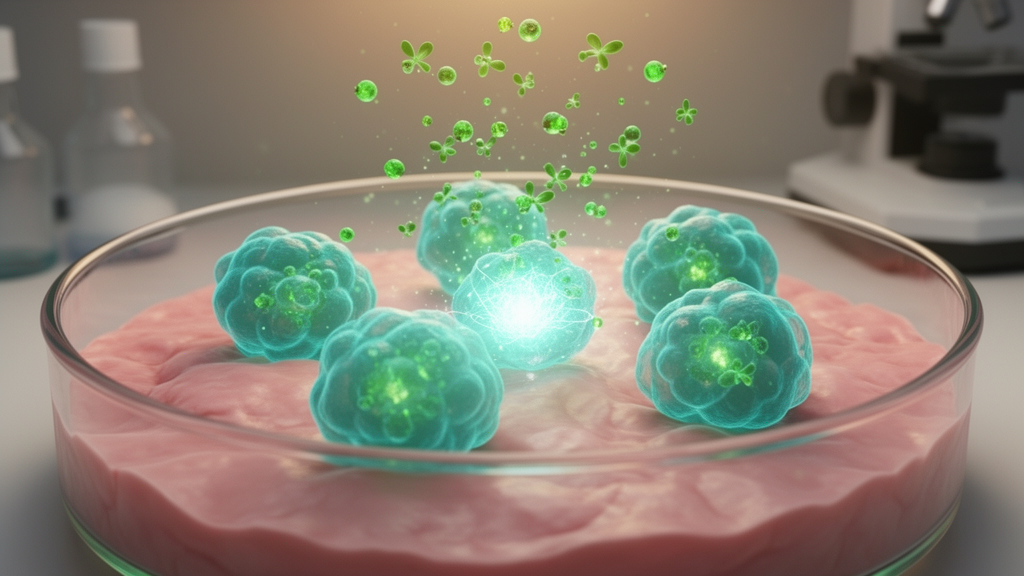
The published abstract of a 2026 systematic review reports that natural products impaired viability or proliferation and primarily induced apoptosis in human mucoepidermoid carcinoma cell models. The review included 14 in vitro studies, four of which also contained xenograft validation. Across the studies, the observed cellular effects were associated with changes in nuclear morphology, Annexin V/PI and sub-G1 fractions, mitochondrial membrane depolarization, caspase activation, and PARP cleavage, according to the abstract.

The review followed PRISMA guidance and was registered with PROSPERO as CRD420261404862. PubMed, Scopus, ProQuest, ScienceDirect, and Taylor & Francis were searched through July 2026. Eligible studies evaluated natural products in human mucoepidermoid carcinoma cell lines; studies with corresponding in vivo xenograft components were also admitted, with their findings extracted separately as supportive translational evidence. Viability, apoptosis, cell-cycle, and molecular-pathway data were synthesized narratively and mechanistically. Methodological quality was assessed with QUIN and SciRAP.

The abstract identifies convergence around several survival-related signaling pathways, including ERK/MAPK, Mcl-1, XIAP, and STAT3. It describes disruption of these signals as linked to mitochondrial apoptosis and the caspase execution phase, with Mcl-1 emerging as the most frequently identified anti-apoptotic regulator. Autophagy was evaluated in two studies, where its measured effects were characterized as cytoprotective. The review therefore presents natural products as having antiproliferative and proapoptotic activity in cell-based mucoepidermoid carcinoma models, rather than demonstrating clinical efficacy in patients.

Important limitations constrain comparisons among the interventions. The included studies used different natural products, concentrations, cell lines, and measurement methods, making it difficult to compare potency across candidates. The available evidence also combines cell-culture findings with a smaller number of supportive xenograft results, and the abstract does not establish that the observed effects would translate into safe or effective human treatments. Within the scope of the reviewed preclinical evidence, however, the findings support natural products as a source of lead compounds for further development. The conclusion is based on the review’s synthesis of 14 in vitro studies, not on a clinical trial or demonstration of patient benefit.

Subject of Research: Preclinical natural-product activity in human mucoepidermoid carcinoma cell models

Article Title: Natural products targeting the molecular pathology of salivary gland mucoepidermoid carcinoma: A systematic review of In vitro studies

Article References: Marleen, S., Miskad, U. A., Cangara, M. H., Prihantono, P., Putra Tandi, Y. Y., Amalia, N., Hendrawan, A. F., & Nurkolis, F. (2026). Natural products targeting the molecular pathology of salivary gland mucoepidermoid carcinoma: A systematic review of In vitro studies. Molecular Biology Reports, 53(1), Article 1563. https://doi.org/10.1007/s11033-026-12751-5

Image Credits: AI Generated

DOI: 10.1007/s11033-026-12751-5

Keywords: mucoepidermoid carcinoma, salivary gland cancer, natural products, in vitro studies, apoptosis, cell proliferation, molecular pathways, xenograft models, systematic review, preclinical research, Natural, products

News Source: Nathaniel Bowman. (October 20, 2026). Systematic review of 14 in vitro studies links natural products to apoptosis in salivary gland mucoepidermoid carcinoma. Scienmag.
Tags: ApoptosisCell proliferationin vitro studiesMolecular Pathwaysmucoepidermoid carcinomanaturalnatural productspreclinical researchproductssalivary gland cancersystematic reviewxenograft models
Share12Tweet7Share2ShareShareShare1

Related Posts

LX-2 hepatic stellate cells alter 3D HepG2 hepatocellular carcinoma spheroids and are associated with lower sorafenib sensitivity

LX-2 hepatic stellate cells alter 3D HepG2 hepatocellular carcinoma spheroids and are associated with lower sorafenib sensitivity

October 20, 2026
Review maps molecular pathways and management strategies for low-risk HPV skin warts

Review maps molecular pathways and management strategies for low-risk HPV skin warts

October 20, 2026

Quercetin improves bone measures in rats with collagen-induced arthritis alongside reduced Wnt3A and β-catenin expression

October 20, 2026

MPO and NE mRNA associated with severe albuminuric diabetic kidney disease in 70-patient study

October 20, 2026

POPULAR NEWS

  • ARDS subphenotypes offer a path toward personalized critical care

    ARDS subphenotypes offer a path toward personalized critical care

    29 shares
    Share 12 Tweet 7
  • Microstructure evolution and dynamic recrystallization of spray-formed Al–Zn–Mg–Cu alloy under hot deformation

    29 shares
    Share 12 Tweet 7
  • Systematic review of 14 in vitro studies links natural products to apoptosis in salivary gland mucoepidermoid carcinoma

    29 shares
    Share 12 Tweet 7
  • Study reports aqueous one-pot 1,3-oxazine synthesis with nano-eggshell/B(III) catalyst and DFT

    29 shares
    Share 12 Tweet 7

About

We bring you the latest biotechnology news from best research centers and universities around the world. Check our website.

Follow us

Recent News

ARDS subphenotypes offer a path toward personalized critical care

Microstructure evolution and dynamic recrystallization of spray-formed Al–Zn–Mg–Cu alloy under hot deformation

Systematic review of 14 in vitro studies links natural products to apoptosis in salivary gland mucoepidermoid carcinoma

Subscribe to Blog via Email

Enter your email address to subscribe to this blog and receive notifications of new posts by email.

Join 85 other subscribers
  • Contact Us

Bioengineer.org © Copyright 2023 All Rights Reserved.

Welcome Back!

Login to your account below

Forgotten Password?

Retrieve your password

Please enter your username or email address to reset your password.

Log In
No Result
View All Result
  • Homepages
    • Home Page 1
    • Home Page 2
  • News
  • National
  • Business
  • Health
  • Lifestyle
  • Science

Bioengineer.org © Copyright 2023 All Rights Reserved.