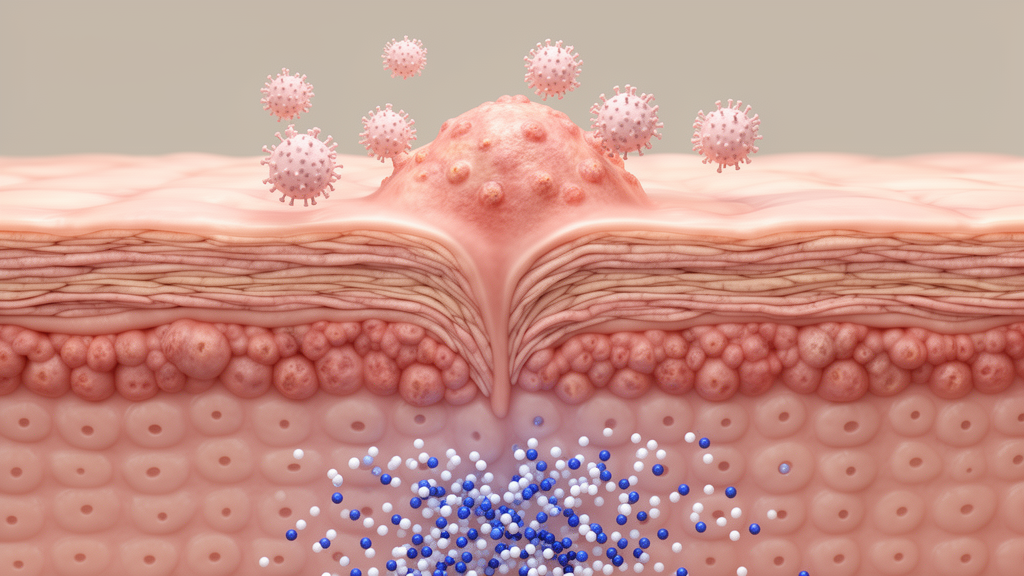
A review in Molecular Biology Reports examines how low-risk human papillomavirus types are associated with benign skin warts and surveys the molecular pathways and clinical management strategies described for these lesions. The review focuses on cutaneous warts, distinguishing them from high-risk HPV types associated with malignancy, and synthesizes mechanistic and treatment evidence rather than reporting results from a new clinical trial.
The abstract states that low-risk HPV genomes remain in an episomal state while expressing E6 and E7 proteins. Compared with high-risk HPVs, these proteins have a reduced ability to degrade pRb and p53, which the review links to controlled epithelial hyperplasia rather than malignancy. It also describes activation of host signaling pathways that promote keratinocyte proliferation and wart formation, alongside innate and adaptive immune responses that can clear lesions.
Particular attention is given to the integrin–FAK–PI3K/AKT, Hippo–YAP/TAZ and MAPK–ERK pathways. The review presents these as molecular routes implicated in cutaneous benign wart formation, summarizing the existing literature on their involvement. The available evidence is limited to the published abstract and does not provide detailed methods, study populations, effect estimates or the quality assessments used to reach its conclusions.
For clinical management, the abstract identifies destructive approaches such as cryotherapy, keratolytics and excision; immunotherapies including imiquimod, interferon injections and intralesional antigen; and adjunctive approaches including photodynamic therapy and intralesional chemotherapeutics. It also discusses emerging HPV vaccination strategies. Intralesional Candida antigen and intralesional HPV vaccination are described as having encouraging clinical responses, but the review emphasizes that extensive controlled studies are needed to establish efficacy, clinical value and standardization. Because the supplied source is an abstract rather than the full review, the relative strength of evidence for individual treatments cannot be independently assessed here.
Subject of Research: Review of molecular pathways and clinical management of low-risk HPV-associated cutaneous warts
Article Title: Molecular insights and therapeutic innovations in low-risk human papillomavirus-associated cutaneous wart
Article References: Sarkar, A., Pan, S., Ghorai, T., Nayak, D., & Das, S. (2026). Molecular insights and therapeutic innovations in low-risk human papillomavirus-associated cutaneous wart. Molecular Biology Reports, 53(1), Article 1565. https://doi.org/10.1007/s11033-026-12746-2
Image Credits: AI Generated
DOI: 10.1007/s11033-026-12746-2
Keywords: low-risk HPV, cutaneous warts, viral molecular mechanisms, keratinocyte proliferation, immune response, destructive treatment, intralesional immunotherapy, Candida antigen, HPV vaccination, clinical evidence, Molecular, insights
News Source: Kristina Jarvis. (October 20, 2026). Review maps molecular pathways and management strategies for low-risk HPV skin warts. Scienmag.