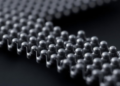
In a groundbreaking development that promises to redefine our understanding of light manipulation, researchers have successfully demonstrated the synthetic moving effect in carefully engineered metamaterials. This pioneering work, published recently, uncovers a novel approach to controlling electromagnetic waves by mimicking movement through static structures. The implications of this discovery could revolutionize fields ranging from optical communications to the emerging domain of cloaking devices.
Metamaterials, artificial composites designed to exhibit extraordinary properties not found in nature, have long been a focus of intense scientific inquiry. By tailoring their subwavelength architecture, scientists can dictate how these materials interact with electromagnetic waves, allowing unprecedented control over light propagation. The latest experiment pushes these boundaries further by synthesizing motion within a stationary medium, effectively creating the illusion of material movement without any physical displacement.
Traditional methods of inducing motion in waveguides or mediums often face limitations due to mechanical constraints or energy inefficiency. However, the concept of a synthetic moving medium offers a more practical alternative. Through intricate temporal and spatial modulation of metamaterial properties, the research team can emulate characteristics associated with moving media, such as Doppler shifts and nonreciprocal propagation, within a fixed framework. This ability opens avenues for novel devices that function based on effective motion without requiring actual movement.
Fundamentally, the researchers crafted a metamaterial whose electromagnetic parameters—permittivity and permeability—are modulated in both time and space. Such modulation protocols generate synthetic velocities that interact with incident light similarly to real velocities in moving materials. As a result, phenomena typically arising from motion, such as energy exchange and frequency shifts, manifest in a controlled laboratory setting. This theoretical and experimental synergy provides invaluable insights into the physics of dynamic systems.
One of the remarkable aspects of this study lies in the precision engineering involved in the metamaterial lattice. The subwavelength resonators are arranged to facilitate seamless modulation of their electromagnetic responses, ensuring that the synthetic movement emulates actual material motion with minimal losses. The fine tuning of these responses enables researchers to observe Doppler-like effects and energy nonreciprocity under laboratory conditions, a feat that was previously aspirational.
Delving deeper into the experimental setup, the team employed a combination of advanced fabrication techniques and cutting-edge modulation technologies. Electro-optic modulators embedded within the metamaterial framework allowed for real-time control of refractive index variations. This dynamic manipulation, synchronized across the structure, effectively simulates the traversing of the optical medium through space. The success of this approach required meticulous calibration and a profound understanding of wave-matter interactions in engineered systems.
From a theoretical standpoint, the observation validates longstanding predictions about moving media and their impact on electromagnetic waves. Historically, studying moving dielectrics has been complicated by practical challenges associated with high-speed motion. The synthetic approach bypasses these hurdles by replicating velocity effects through controlled modulations. This advancement strengthens the bridge between electromagnetics, relativity, and photonics, offering fertile ground for interdisciplinary research.
Furthermore, this newfound capability has critical implications for the design of nonreciprocal devices, which allow light to propagate preferentially in one direction. Such devices are essential for optical isolators and circulators, indispensable in photonic communication networks to prevent detrimental feedback and signal degradation. The synthetic moving medium can serve as a platform for fabricating compact, chip-integrated nonreciprocal components without relying on magnetic fields or bulky arrangements.
The prospect of implementing synthetic movement also excites researchers aiming to develop invisibility cloaks and advanced sensing technologies. By manipulating the phase and amplitude of light in unprecedented ways, metamaterials exhibiting the synthetic moving effect could dynamically adapt their optical characteristics in response to environmental stimuli. This adaptability paves the way for smart camouflage materials and highly sensitive detectors capable of responding to minute perturbations.
Scientifically, the experiment elucidates the interplay between temporal modulation and spatial periodicity in metamaterials. It highlights how deliberate choices in modulation schemes influence the dispersion relations and group velocities of propagating waves. Understanding these parameters is vital for crafting materials that achieve desired wave control outcomes, such as slow light effects, enhanced nonlinear interactions, or controlled the angular momentum of photons.
In the realm of practical applications, industries leveraging photonics foresee transformative benefits. For instance, synthetic moving metamaterials could optimize signal processing algorithms by introducing controllable delay lines or frequency conversion within compact devices. Their integration into existing silicon photonics platforms could accelerate the realization of faster, more efficient optical circuits that outperform electronic counterparts.
Moreover, this work challenges conventional wisdom about static materials and dynamic properties. It underscores the potential of temporal metamaterials, a burgeoning field where time-dependent parameters add another dimension to material design. The synthetic moving effect exemplifies how temporal engineering can yield phenomena unattainable in steady-state materials, positioning time modulation as a key tool in future photonic innovations.
Researchers also note potential for extending the synthetic moving concept across broader electromagnetic spectra, including microwaves and terahertz frequencies. Such versatility could impact radar technology, wireless communication, and imaging systems. By tailoring modulation frequencies and metamaterial architectures, it becomes possible to customize wave dynamics for specific operational needs, enhancing functionality across diverse technological landscapes.
Though challenges remain—such as minimizing losses, scaling fabrication, and ensuring stability under extended operation—the proof-of-concept achieved by this study marks a significant milestone. It invites a reexamination of how movement and time variations can be harnessed synthetically to unlock new dimensions in light-matter interactions. This paradigm shift encourages collaboration across physics, materials science, and engineering disciplines to realize the full potential of synthetic moving metamaterials.
In conclusion, the observation of the synthetic moving effect heralds a promising chapter for metamaterial research. By marrying ingenious design with dynamic modulation, scientists have captured the elusive essence of material motion within static constructs. This leap forward not only enriches our fundamental understanding but also sets the stage for innovative applications poised to transform photonics technology in the coming decades.
Subject of Research: Synthetic moving effect in metamaterials
Article Title: Observation of synthetic moving effect in metamaterials
Article References:
Yang, Q., Li, Z., Wen, X. et al. Observation of synthetic moving effect in metamaterials. Light Sci Appl 15, 268 (2026). https://doi.org/10.1038/s41377-026-02361-y
Image Credits: AI Generated
DOI: 10.1038/s41377-026-02361-y
Keywords: Synthetic moving effect, metamaterials, electromagnetic wave modulation, nonreciprocal devices, temporal modulation, photonics, Doppler shift, dynamic metamaterials
Tags: applications of synthetic motion in optical communicationsartificial composites for wave controlcontrolling electromagnetic waves with metamaterialsDoppler shifts in synthetic moving mediaenergy-efficient waveguide modulationlight manipulation using synthetic motionmetamaterials for cloaking devicesnonreciprocal propagation in metamaterialsspatial modulation in metamaterialssubwavelength architecture in metamaterialssynthetic motion effects in metamaterialstemporal modulation of metamaterials