• HOME
  • NEWS
  • EXPLORE
    • CAREER
      • Companies
      • Jobs
    • EVENTS
    • iGEM
      • News
      • Team
    • PHOTOS
    • VIDEO
    • WIKI
  • BLOG
  • COMMUNITY
    • FACEBOOK
    • INSTAGRAM
    • TWITTER
Thursday, June 25, 2026
BIOENGINEER.ORG
No Result
View All Result
  • Login
  • HOME
  • NEWS
  • EXPLORE
    • CAREER
      • Companies
      • Jobs
        • Lecturer
        • PhD Studentship
        • Postdoc
        • Research Assistant
    • EVENTS
    • iGEM
      • News
      • Team
    • PHOTOS
    • VIDEO
    • WIKI
  • BLOG
  • COMMUNITY
    • FACEBOOK
    • INSTAGRAM
    • TWITTER
  • HOME
  • NEWS
  • EXPLORE
    • CAREER
      • Companies
      • Jobs
        • Lecturer
        • PhD Studentship
        • Postdoc
        • Research Assistant
    • EVENTS
    • iGEM
      • News
      • Team
    • PHOTOS
    • VIDEO
    • WIKI
  • BLOG
  • COMMUNITY
    • FACEBOOK
    • INSTAGRAM
    • TWITTER
No Result
View All Result
Bioengineer.org
No Result
View All Result
Home NEWS Science News Chemistry

SwRI granted $3.5 million in awards from US Department of Energy Solar Energy Technologies Office

Bioengineer by Bioengineer
April 1, 2019
in Chemistry
Reading Time: 3 mins read
0
IMAGE
Share on FacebookShare on TwitterShare on LinkedinShare on RedditShare on Telegram

Two early-stage research projects will advance solar power technologies
IMAGE

Credit: Courtesy of Southwest Research Institute

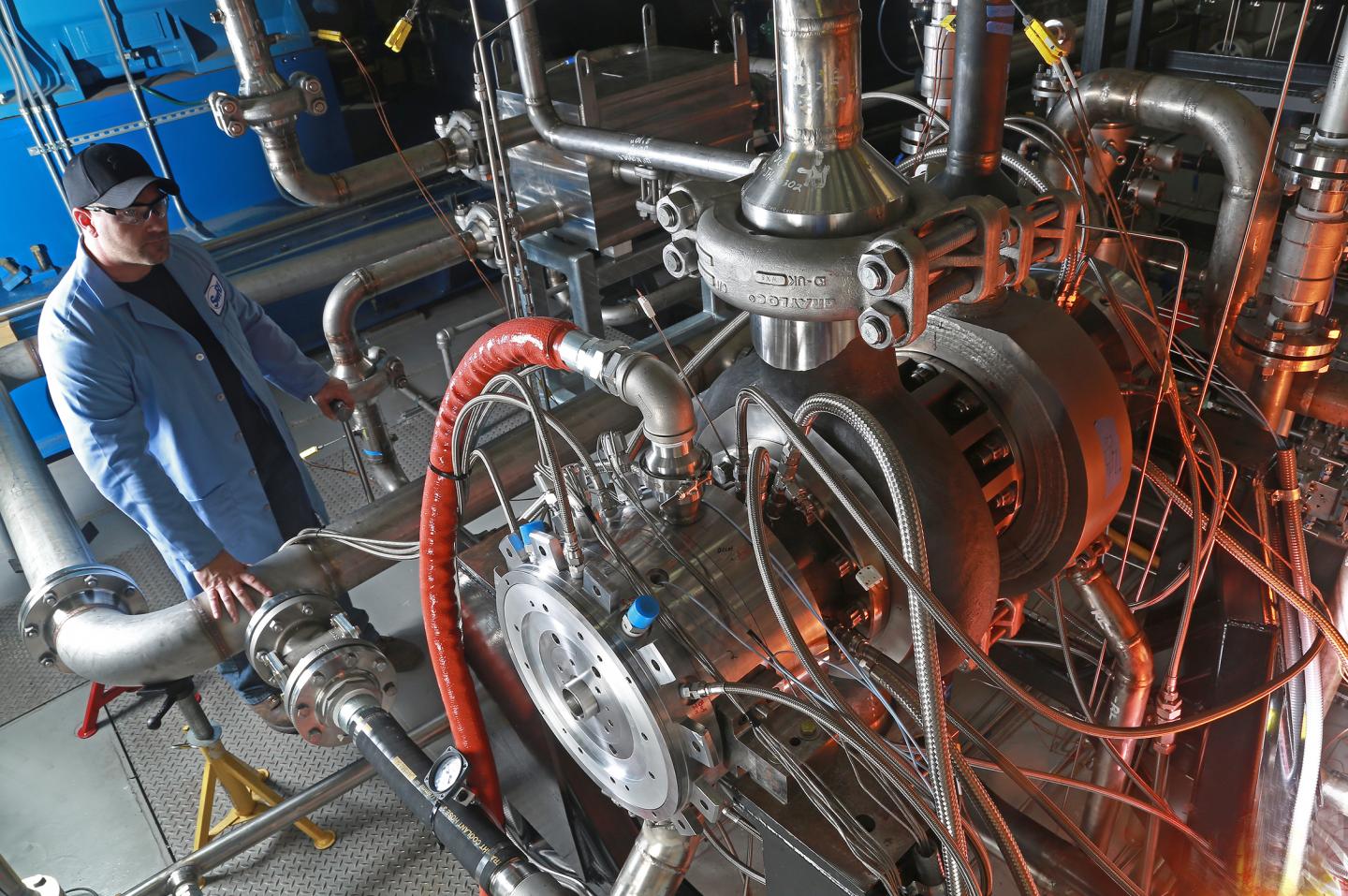
SAN ANTONIO — April 1, 2019 — Southwest Research Institute has been selected to receive two awards from the U.S. Department of Energy Solar Energy Technologies Office (SETO) to advance concentrating solar-thermal power (CSP) research and development. Both projects will support CSP power cycles that use supercritical carbon dioxide (sCO2) as the working fluid, which has the potential to yield higher thermal efficiencies at a lower cost than steam.

For the first project, valued at $1.5 million, SwRI will collaborate with Vacuum Process Engineering to develop and test a compact dry-cooling heat exchanger for sCO2 power cycles. Dry cooling reduces the water used by power plants but can also reduce the thermal-to-electric conversion efficiency of the power cycle. The SwRI design will efficiently exchange heat between sCO2 and ambient air to conserve water while optimizing the system for peak power cycle performance.

“We’ll also test the performance and reliability of the dry cooling system within a MW-scale sCO2 test loop,” said Dr. Tim Allison, manager of the Rotating Machinery Dynamics Section of the Mechanical Engineering Division. “This concept could reduce the cooler cost from $168 per kilowatt to $95 per kW and reduce cooling power consumption in CSP plants by 14 percent.”

For the second project, valued at $2 million, SwRI will team with EagleBurgmann to develop a high-temperature dry-gas seal for sCO2 power cycle turbomachinery. CSP plants with sCO2 power cycles use mechanical seals to prevent fluid leaks. The increased temperatures and pressures of sCO2 power cycles, however, require novel materials to reach the targeted thermal-to-electric power conversion efficiency of 50 percent.

“By replacing the temperature-sensitive elements with more durable components, the new seals will be able to reach temperatures over 500 degrees C and reach higher efficiencies,” said Dr. Jason Wilkes, SwRI senior research engineer. “This design will also be smaller, which reduces the complexity of the sCO2 turbine design and improves reliability and turbine efficiency.”

“Including these projects, SwRI has supported more than two dozen DOE-funded projects designed to advance sCO2 technology for CSP plants,” said Danny Deffenbaugh, vice president of the Mechanical Engineering Division. “These are the technology building blocks for sCO2 power cycles. We’re eager to see their adoption at some point in the future.”

In 2018, SwRI broke ground on the Supercritical Transformational Electric Power (STEP) pilot plant being built in collaboration with Gas Technology Institute, GE Global Research and the DOE National Energy Technology Laboratory. This first-of-its-kind 10-megawatt sCO2 facility will demonstrate next generation higher-efficiency, lower-cost electric power technology.

SwRI was selected for the new projects as a part of the Energy Department’s effort to invest in research to lower solar electricity costs and support a growing solar energy workforce. SwRI’s awards are two of several CSP projects to develop materials and designs for collectors, power cycles and thermal transport systems that can withstand high temperatures and resist corrosion.

For more information, visit https://www.swri.org/supercritical-carbon-dioxide-power-systems.

###

Media Contact
Maria Stothoff
[email protected]

Original Source

https://www.swri.org/press-release/swri-awards-doe-solar-energy-technologies-office

Tags: Electrical Engineering/ElectronicsEnergy/Fuel (non-petroleum)Industrial Engineering/ChemistryResearch/DevelopmentTechnology/Engineering/Computer Science
Share12Tweet8Share2ShareShareShare2

Related Posts

AI and Physics Collaborate to Design Advanced Hydrogen Storage Materials

June 25, 2026

International Team Including Dresden Scientists Develops Novel Designer Proteins for Advanced Study of Living Tissue

June 25, 2026

New Study Uncovers Key Factors Driving Water Chemistry in Nanoscale Environments

June 25, 2026

Plasma Technology Extends Catalyst Lifespan in Hydrogen Production

June 24, 2026
Please login to join discussion

POPULAR NEWS

  • Saying Goodbye to PGY-6: Pediatric Fellowship Realities

    103 shares
    Share 41 Tweet 26
  • Multi-Hospital Study Reveals Long Covid Burden Is Twice as High as Current Estimates

    92 shares
    Share 36 Tweet 23
  • Detection of EDCs in Breast Milk and Infant Urine Up to Six Months Highlights Early Exposure Risks

    77 shares
    Share 31 Tweet 19
  • New Drug Candidate Developed at McMaster Shows Potential for Treating Brain Cancer

    58 shares
    Share 23 Tweet 15

About

We bring you the latest biotechnology news from best research centers and universities around the world. Check our website.

Follow us

Recent News

Tracking Lanthanide-Labeled Microplastics in Plants

POSTECH Researchers Slash Cost of Reconstituted Cell-Free Systems by 95%

AI and Physics Collaborate to Design Advanced Hydrogen Storage Materials

Subscribe to Blog via Email

Enter your email address to subscribe to this blog and receive notifications of new posts by email.

Join 82 other subscribers
  • Contact Us

Bioengineer.org © Copyright 2023 All Rights Reserved.

Welcome Back!

Login to your account below

Forgotten Password?

Retrieve your password

Please enter your username or email address to reset your password.

Log In
No Result
View All Result
  • Homepages
    • Home Page 1
    • Home Page 2
  • News
  • National
  • Business
  • Health
  • Lifestyle
  • Science

Bioengineer.org © Copyright 2023 All Rights Reserved.