• HOME
  • NEWS
  • EXPLORE
    • CAREER
      • Companies
      • Jobs
    • EVENTS
    • iGEM
      • News
      • Team
    • PHOTOS
    • VIDEO
    • WIKI
  • BLOG
  • COMMUNITY
    • FACEBOOK
    • INSTAGRAM
    • TWITTER
Sunday, May 10, 2026
BIOENGINEER.ORG
No Result
View All Result
  • Login
  • HOME
  • NEWS
  • EXPLORE
    • CAREER
      • Companies
      • Jobs
        • Lecturer
        • PhD Studentship
        • Postdoc
        • Research Assistant
    • EVENTS
    • iGEM
      • News
      • Team
    • PHOTOS
    • VIDEO
    • WIKI
  • BLOG
  • COMMUNITY
    • FACEBOOK
    • INSTAGRAM
    • TWITTER
  • HOME
  • NEWS
  • EXPLORE
    • CAREER
      • Companies
      • Jobs
        • Lecturer
        • PhD Studentship
        • Postdoc
        • Research Assistant
    • EVENTS
    • iGEM
      • News
      • Team
    • PHOTOS
    • VIDEO
    • WIKI
  • BLOG
  • COMMUNITY
    • FACEBOOK
    • INSTAGRAM
    • TWITTER
No Result
View All Result
Bioengineer.org
No Result
View All Result
Home NEWS Science News Chemistry

SwRI develops new model, controller to optimize fast charging of electric vehicles

Bioengineer by Bioengineer
March 17, 2021
in Chemistry
Reading Time: 3 mins read
0
IMAGE
Share on FacebookShare on TwitterShare on LinkedinShare on RedditShare on Telegram

Technique averts potentially damaging “lithium plating,” accelerates recharge by 35%
IMAGE

Credit: SwRI

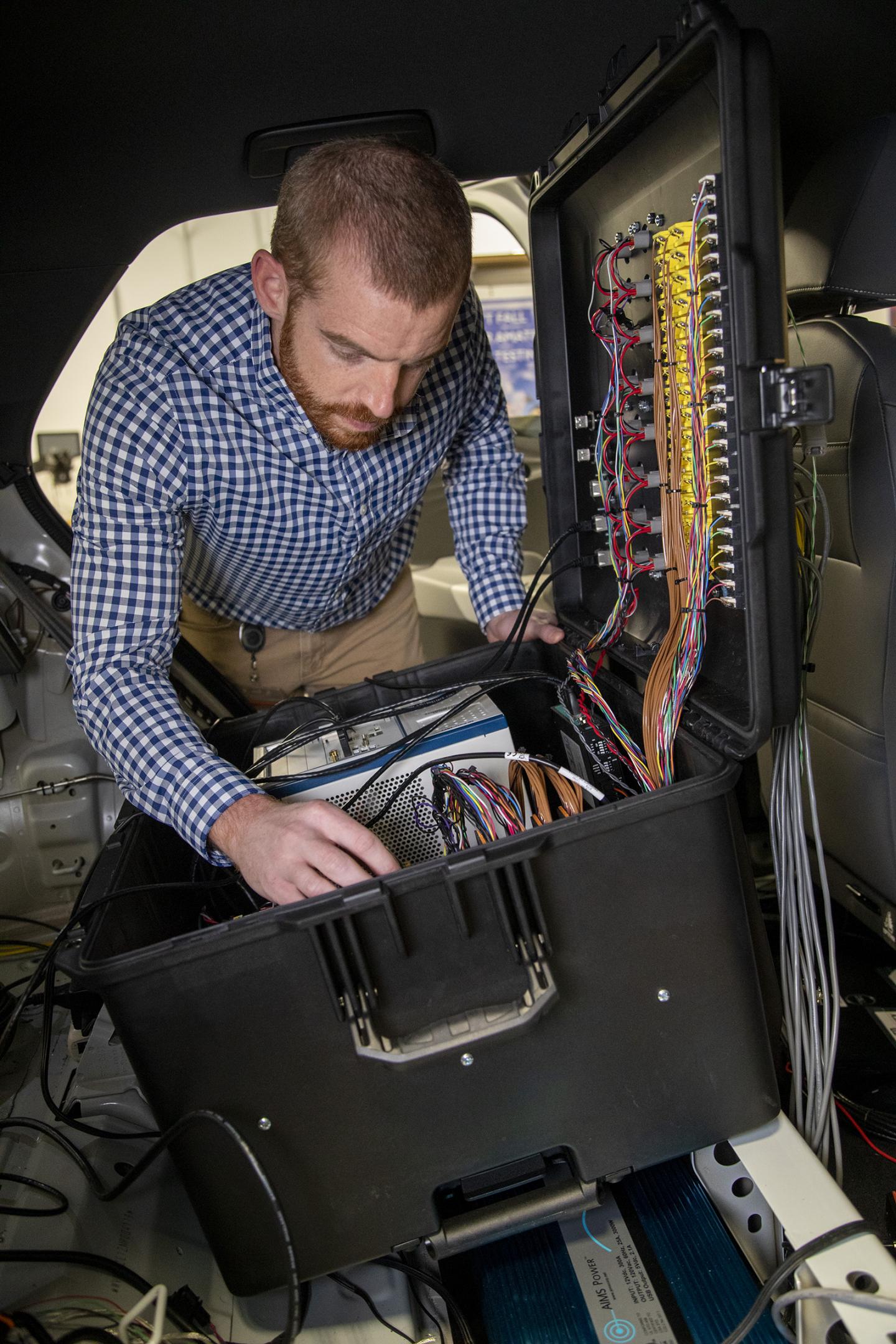
SAN ANTONIO — March 17, 2021 — Engineers at Southwest Research Institute are using internal research funds to tackle challenges with fast charging to reduce the time needed to recharge electric vehicles (EVs).

As electric vehicles gain popularity, consumers expect the switch to battery-reliant platforms to be seamless, with the same acceleration, performance and comfort of vehicles powered by fossil fuels. For the most part, manufacturers have delivered, but technology still lags in some areas, such as battery recharge. While consumers need only a few minutes to fill a tank with fuel before they can get back on the road, an electric vehicle (EV) typically needs hours to do the same.

Fast charging converts the AC power found in homes to the DC power required by batteries within the charging station itself to significantly speed up charging. However, that speed introduces new challenges.

Fast recharging maximizes the transfer of lithium ions within a battery pack. At these high rates, ions can accumulate on the surface of the battery’s anode and deposit metallic lithium by a process called “lithium plating,” which can reduce battery performance and, if left unchecked, cause it to short circuit and fail.

“The electrochemistry that causes lithium plating is complex and not completely understood,” said Dr. Bapiraju Surampudi, a staff engineer in SwRI’s Powertrain Engineering Division. “Our physics-based model allows us to detect, in real time, the occurrence of lithium plating so we can adjust the charging rate to prevent battery damage while also allowing for shorter charging times.”

SwRI developed and calibrated a linearized battery model for a 57 Ah nickel manganese cobalt (NMC) cell, successfully predicting when lithium plating is occurring. The model uses differential equations to calculate various battery inner states, with no need for additional instrumentation or resources. Other state-of-the-art techniques to detect lithium plating are non-real time and involve destructive physical analysis of the cell.

The SwRI model successfully predicted the cell voltage to within ±5% of experimental data. The team then developed a model-based adaptive fast charge controller to optimize the charge profile for the NMC cell. The controller includes a learning feature that adjusts the charge current based on the previous cycle’s charge efficiency. The controller “learns” the optimal charge profile after 10 to 20 charge cycles and balances durability, safety and performance in real time.

The team compared the SwRI charge controller to two baseline charge profiles to assess its effectiveness. The first baseline profile uses an industry-standard constant current, constant voltage strategy to intentionally initiate lithium plating. The samples aged with this profile showed significant battery capacity fade, or loss. The second baseline profile was recorded from an electric vehicle at a fast charger and enabled meaningful comparison of charge time.

“The SwRI charge controller showed several improvements compared to the two baseline profiles, including a significant decrease in capacity fade, a 35% reduction in battery charge time and an average charge efficiency of 89%,” Surampudi said. “While pleased with these results, we believe there are additional improvements to be made.”

###

SwRI has filed for a patent on this development and will expand the technology for use by original equipment manufacturers and battery manufacturers, as well as for electrified military vehicles.

For more information, visit https://www.swri.org/energy-storage-system-development.

Media Contact
Maria Stothoff
[email protected]

Original Source

https://www.swri.org/press-release/swri-develops-new-model-controller-optimize-fast-charging-of-electric-vehicles?utm_source=EurekAlert!&utm_medium=Distribution&utm_campaign=Charging-PR

Tags: Energy/Fuel (non-petroleum)Mechanical EngineeringResearch/DevelopmentTechnology/Engineering/Computer ScienceVehicles
Share13Tweet8Share2ShareShareShare2

Related Posts

Miniature Sensor Uses Light to Detect Touch — Chemistry

Miniature Sensor Uses Light to Detect Touch

May 8, 2026
Iron Minerals Determine Whether Dissolved Organic Matter Fuels Microbes or Becomes Long-Term Carbon Storage — Chemistry

Iron Minerals Determine Whether Dissolved Organic Matter Fuels Microbes or Becomes Long-Term Carbon Storage

May 8, 2026

Kate Evans Appointed Associate Lab Director for Biological and Environmental Systems Science at ORNL

May 8, 2026

Advancing Multiscale Modeling and Overcoming Operational Challenges in Autothermal CO₂-to-Methanol Reactors

May 8, 2026
Please login to join discussion

POPULAR NEWS

  • Research Indicates Potential Connection Between Prenatal Medication Exposure and Elevated Autism Risk

    840 shares
    Share 336 Tweet 210
  • New Study Reveals Plants Can Detect the Sound of Rain

    727 shares
    Share 290 Tweet 181
  • Scientists Investigate Possible Connection Between COVID-19 and Increased Lung Cancer Risk

    68 shares
    Share 27 Tweet 17
  • Salmonella Haem Blocks Macrophages, Boosts Infection

    61 shares
    Share 24 Tweet 15

About

We bring you the latest biotechnology news from best research centers and universities around the world. Check our website.

Follow us

Recent News

Evaluating Digoxin Use in Patients with Symptomatic Rheumatic Heart Disease

Evaluating the Effectiveness and Safety of Digitalis Glycosides in Treating Heart Failure

Urdu Fall Risk Questionnaire Adapted for Elderly

Subscribe to Blog via Email

Success! An email was just sent to confirm your subscription. Please find the email now and click 'Confirm' to start subscribing.

Join 82 other subscribers
  • Contact Us

Bioengineer.org © Copyright 2023 All Rights Reserved.

Welcome Back!

Login to your account below

Forgotten Password?

Retrieve your password

Please enter your username or email address to reset your password.

Log In
No Result
View All Result
  • Homepages
    • Home Page 1
    • Home Page 2
  • News
  • National
  • Business
  • Health
  • Lifestyle
  • Science

Bioengineer.org © Copyright 2023 All Rights Reserved.