A sustainable strategy for replacing non-biodegradable synthetic plastics utilizes reversible interpolyelectrolyte complexes assembled from synthetic poly(allylammonium) bicarbonate and natural sodium alginate, driven entirely by carbon dioxide sorption and desorption. According to research published in Discover Polymers by Eri Yoshida, synthetic poly(allylamine) reacts with carbon dioxide dissolved as carbonic acid in aqueous solutions to generate water-soluble poly(allylammonium) bicarbonate. When introduced to an aqueous solution containing sodium alginate, a natural anionic polysaccharide extracted from brown algae, spontaneous electrostatic complexation occurs. This process precipitates water-insoluble interpolyelectrolyte complexes formed through stoichiometric ionic bonding between the opposing ammonium and carboxylate units. These solid architectures present a closed-loop recycling mechanism because the addition of a chemical base causes total dissociation back into separate water-soluble components, whereas the subsequent reintroduction of carbon dioxide regenerates the complex precipitate without generating chemical decomposition fragments.
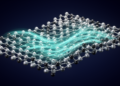
Interpolyelectrolyte complexes have gathered significant interest as saloplastics, which represent a potential class of next-generation plastic alternatives whose physical properties and morphology can be manipulated using ionic conditions. Typically, these macromolecular architectures are formed through stoichiometric reactions between two oppositely charged water-soluble polyelectrolytes, producing water-insoluble networks that are physically crosslinked by strong electrostatic interactions in ladder-like structural arrangements. While such complexes naturally occur in biological configurations like chromatin and membraneless organelles, synthetic applications frequently exploit solid-liquid or liquid-liquid phase separation phenomena. Unlike traditional petroleum-derived plastics that resist biological breakdown and accumulate persistently across ecosystems, interpolyelectrolyte complexes offer intrinsic dissociation-based degradability. When exposed to external environmental stimuli such as altered pH levels or shifting salt concentrations, the electrostatic networks disassemble cleanly into their precursor polymer components. This dissociation prevents the accumulation of persistent microplastic fragments and facilitates complete chemical recovery, thereby mitigating fossil fuel consumption.
To investigate the electrostatic complexation mechanism and subsequent morphological behavior, the study evaluated poly(allylamine) polymers across three distinct weight-average molecular weights: a low-molecular-weight variant at 1,600 grams per mole, a medium-molecular-weight variant at 5,000 grams per mole, and a high-molecular-weight variant at 15,000 grams per mole. These synthetic polymers were paired against natural sodium alginate with a weight-average molecular weight of 270,000 grams per mole and a beta-D-mannuronic acid to alpha-L-guluronic acid unit ratio of 1.3. While synthetic poly(allylamine) possesses a flexible carbon backbone, natural alginate features a rigid polysaccharide chain resulting from restricted rotational mobility around the glycosidic linkages between its six-membered pyranose rings. Synthesizing the complexes involved bubbling carbon dioxide with greater than 99.995 percent purity into the poly(allylamine) solutions at a flow rate of 300 milliliters per minute at 25 degrees Celsius for 20 to 30 minutes, producing poly(allylammonium) bicarbonate solutions that were subsequently added dropwise to the sodium alginate solutions under continuous stirring.
Spectroscopic, conductometric, and potentiometric investigations confirmed that the repeating units of poly(allylammonium) bicarbonate and sodium alginate complex at an exact 1:1 molar equivalence ratio. Turbidity and light scattering measurements demonstrated that the high-molecular-weight polymer continuously decreased ultraviolet transmittance at 400 nanometers while progressively increasing light scattering intensity without undergoing macro-precipitation. In contrast, the medium- and low-molecular-weight polymers caused an initial decrease in transmittance followed by an increase once the molar ratio of allylammonium to alginate units exceeded 0.8, reflecting rapid phase separation and macroscopic precipitation. Conductometric titrations showed a linear increase in electrical conductivity caused by the liberation of free sodium and bicarbonate counterions during ionic exchange, exhibiting a clear inflection point precisely at the equimolar equivalence ratio. Potentiometric pH titrations similarly tracked this ionic reorganization, where solution pH rose toward the equivalence point as basic sodium bicarbonate accumulated, followed by a gradual decrease upon the addition of excess poly(allylammonium) bicarbonate solution.
The structural configurations of the resulting complexes varied substantially depending on the degree of polymerization of the synthetic polyelectrolyte chain relative to the natural polysaccharide backbone. Based on molecular weights, the degree of polymerization for the high-molecular-weight poly(allylammonium) was 263, which is roughly five times shorter than that of the alginate chain, which possessed a degree of polymerization of 1363. The medium-molecular-weight polymer had a degree of polymerization of 88, approximately 15 times shorter than alginate, while the low-molecular-weight polymer had a degree of polymerization of 28, approximately 49 times shorter than alginate. The longer, flexible high-molecular-weight chains formed incomplete ladder-like complexes characterized by unreacted allylammonium units looped away into the aqueous solvent and unreacted carboxylate units positioned along the alginate chain. These hydrophilic loops maintained partial water solubility and suppressed complete hydrophobic aggregation, whereas the shorter chains exhibited higher translational and conformational mobility, enabling the formation of fully aligned, ladder-like linear blocks that drove extensive intermolecular hydrophobic aggregation.
Computational molecular modeling using GROMACS and physical validation with stereochemical models clarified the steric matching responsible for this ladder-like alignment. Distance calculations performed on molecular trimers revealed that the separation between neighboring ammonium groups along the poly(allylammonium) chain measured 0.441 plus or minus 0.000 nanometers, while the distance between neighboring carboxylate groups along a mannuronic acid alginate trimer measured 0.480 plus or minus 0.002 nanometers. Stereochemical HGS molecular models produced virtually identical distances, estimating 0.440 plus or minus 0.000 nanometers between adjacent ammonium groups, 0.480 plus or minus 0.000 nanometers between adjacent carboxylates, and an ammonium-carboxylate ion-pair separation of 0.195 plus or minus 0.005 nanometers. This negligible spatial discrepancy between functional binding sites allows the flexible poly(allylammonium) chains to align along the rigid polysaccharide backbone. Modeling an extended hexamer containing both mannuronic and guluronic acid units demonstrated that structural bends introduced by guluronic residues can promote loop defects in longer polymer chains while still permitting localized electrostatic crosslinking.
Field-emission scanning electron microscopy demonstrated that polyelectrolyte chain length, concentration, and temperature dictate the nanoscale morphology of the self-assembled architectures. At an equimolar ratio, high-molecular-weight complexes produced thin nanofibers with an average diameter of 20.7 nanometers, while medium-molecular-weight complexes yielded partially fused nanofibers measuring 14.6 nanometers across. Low-molecular-weight complexes initially produced 17.9-nanometer nanofibers that coalesced into thick bundles exceeding 200 nanometers in diameter, accompanied by fused spherical domains. Increasing the polyelectrolyte concentration sixfold caused high-molecular-weight complexes to assemble into dense, directionally aligned planar nanorods, while medium-molecular-weight complexes formed leaf-like arrays of needle nanorods, and low-molecular-weight variants organized into doughnut-shaped or football-shaped rings. Furthermore, the complexes exhibited reversible thermo-responsive remodeling in aqueous dispersion: when heated from 30 degrees Celsius up to 60 degrees Celsius, aligned nanorods progressively fused into spherical particles and continuous sheets, which subsequently reverted back into spherical particles, fused nanofibers, and aligned nanorods upon controlled cooling.
Surface and chemical profiling by X-ray photoelectron spectroscopy confirmed that the physical precipitation process effectively excluded mineral salts from the solid material interior. Depth-profiling spectra obtained using delay argon ion gun sputtering revealed no detectable sodium atoms on the surface or within the fractured interior of the isolated complex films, demonstrating that sodium bicarbonate remained dissolved in the aqueous supernatant. Sputtering depth profiles indicated that oxygen and nitrogen atomic percentages decreased with progressive etching time while carbon content increased, confirming that the polar ammonium-carboxylate ion pairs were preferentially concentrated at the exterior boundaries of the complex particles. In contrast, pure sodium alginate controls displayed higher internal sodium and oxygen concentrations, as ionic carboxylate-sodium pairs sought internal positions to minimize interfacial contact with nonpolar air. This spatial redistribution demonstrates that the pairing of cationic allylammonium with anionic alginate masks polarity, producing a water-insoluble, hydrophobic complex core surrounded by an ionic exterior interface.
Thermal stability evaluations conducted via thermogravimetric analysis and differential thermal analysis revealed distinct degradation profiles for the hybrid materials compared to their individual starting constituents. Pure sodium alginate exhibited an initial moisture loss followed by a primary exothermic decomposition at 211.0 degrees Celsius, retaining 41 percent of its original mass at 500 degrees Celsius under an inert nitrogen atmosphere. Uncomplexed high-molecular-weight poly(allylamine) displayed an exothermic weight loss at 255.3 degrees Celsius, a secondary loss at 418.5 degrees Celsius, and retained only 4 percent mass at 500 degrees Celsius. The assembled high-molecular-weight complexes underwent an initial endothermic dissociation at 169.1 degrees Celsius followed by secondary decomposition at 357.5 degrees Celsius, leaving 21 percent residual mass at 500 degrees Celsius. Because this primary decomposition temperature was slightly lower than that of either raw component, researchers concluded that thermal input first induces the endothermic cleavage of ionic crosslinks, which subsequently triggers decomposition of the liberated poly(allylamine) chain while the alginate backbone preserves elevated char yields.
The closed-loop recyclability of the interpolyelectrolyte complexes was verified across repeated chemical dissociation and recomplexation cycles monitored by proton nuclear magnetic resonance spectroscopy, ultraviolet transmittance, and electron microscopy. Adding sodium hydroxide at an alkaline equivalence ratio of two relative to the ammonium-carboxylate ion pairs induced complete dissociation of the solid complexes into homogeneous solutions of water-soluble sodium alginate and neutral poly(allylamine) at room temperature. Reintroducing carbon dioxide gas into this clear alkaline solution regenerated the cationic bicarbonate species, prompting spontaneous re-precipitation of insoluble complex fibers. Although repeated cycles caused an accumulation of sodium bicarbonate that buffered the aqueous medium and required progressively higher quantities of sodium hydroxide to raise the pH above 10, scanning electron microscopy confirmed that the characteristic nanofiber morphologies remained intact after three successive dissociation and regeneration cycles. This stimulus-responsive assembly provides a verifiable framework for circular polymer processing driven by carbon dioxide sorption.
Subject of Research: Closed-loop recycling of carbon-dioxide-driven interpolyelectrolyte complexes
Article Title: CO2 sorption-driven interpolyelectrolyte complexes of poly(allylammonium) bicarbonate and sodium alginate with dissociation-based recyclability
Article References: Yoshida, E. (2026). CO2 sorption-driven interpolyelectrolyte complexes of poly(allylammonium) bicarbonate and sodium alginate with dissociation-based recyclability. Discover Polymers, 3(1), Article 36. https://doi.org/10.1007/s44347-026-00076-2
Image Credits: AI Generated
DOI: 10.1007/s44347-026-00076-2
Keywords: interpolyelectrolyte complexes, carbon dioxide capture, closed-loop recycling, poly(allylammonium) bicarbonate, sodium alginate, saloplastics, polyelectrolytes, electrostatic complexation, reversible dissociation, nanofibers, biopolymers, sustainable plastics, thermo-responsive materials, molecular modeling, X-ray photoelectron spectroscopy, green chemistry
News Source: Bethany Barker. (November 15, 2026). Recyclable Polymer Complexes Reversibly Assemble and Dissociate Driven by Carbon Dioxide. Scienmag.