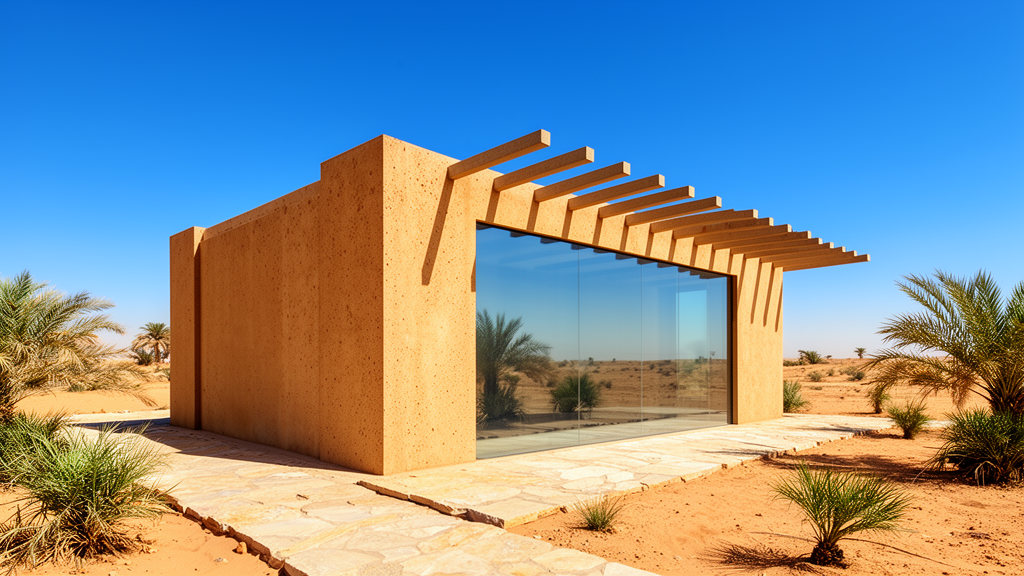
A new literature-informed dataset establishes a decision support framework to evaluate nano-enabled building technologies for sustainable building-envelope applications in Egypt’s hot-arid climate. Reported by researchers Rania Ismail Ahmed Ahmed and Nihad Mohamed Abd El-Hamed in Discover Materials, the dataset was developed to address the need for a comparative evaluation combining thermal and indoor environmental performance with implementation feasibility and potential health concerns associated with nanomaterials.
The evaluation system analyzes assessment results for six specific nano-enabled technologies applied to building envelopes: phase change materials, low-emissivity glazing, aerogel insulation, vacuum insulation panels, titanium dioxide coatings, and silver nanoparticles. Rather than relying on primary experimental measurements conducted directly in Egypt, the underlying data were compiled from previously published studies.
The compiled information is organized through a two-layer comparative evaluation framework that integrates sustainability performance indicators alongside implementation feasibility. Across this structure, the dataset incorporates performance indicators specifically addressing energy efficiency, indoor environmental quality, implementation feasibility, and potential health risks tied to the selected building materials.
To examine how alternative weighting scenarios influence the comparative ranking of the evaluated technologies, the dataset provides sensitivity analysis results that allow users to assess how dependent the final rankings are on adopted weighting assumptions. The authors note that the dataset can assist researchers investigating sustainable building materials in hot-arid regions and support future comparative assessments of nanotechnology applications across the built environment.
Subject of Research: Decision support framework for nano-enabled building envelope technologies in hot-arid architecture
Article Title: A decision support framework for sustainable and safe nanotechnology applications in hot arid architecture in Egypt
Article References: Ahmed, R. I. A., & Abd El-Hamed, N. M. (2026). A decision support framework for sustainable and safe nanotechnology applications in hot arid architecture in Egypt. Discover Materials. https://doi.org/10.1007/s43939-026-00992-x
Image Credits: AI Generated
DOI: 10.1007/s43939-026-00992-x
Keywords: nanotechnology, building envelopes, hot-arid climate, Egypt, phase change materials, low-emissivity glazing, aerogel insulation, vacuum insulation panels, titanium dioxide coatings, silver nanoparticles, decision support framework, sustainability performance, implementation feasibility, energy efficiency, indoor environmental quality, health risk, sensitivity analysis, weighting scenarios
News Source: Denise Maddox. (November 15, 2026). Decision Framework Evaluates Six Building Nanotechnologies for Egypt’s Hot Arid Architecture. Scienmag.