• HOME
  • NEWS
  • EXPLORE
    • CAREER
      • Companies
      • Jobs
    • EVENTS
    • iGEM
      • News
      • Team
    • PHOTOS
    • VIDEO
    • WIKI
  • BLOG
  • COMMUNITY
    • FACEBOOK
    • INSTAGRAM
    • TWITTER
Thursday, October 29, 2026
BIOENGINEER.ORG
No Result
View All Result
  • Login
  • HOME
  • NEWS
  • EXPLORE
    • CAREER
      • Companies
      • Jobs
        • Lecturer
        • PhD Studentship
        • Postdoc
        • Research Assistant
    • EVENTS
    • iGEM
      • News
      • Team
    • PHOTOS
    • VIDEO
    • WIKI
  • BLOG
  • COMMUNITY
    • FACEBOOK
    • INSTAGRAM
    • TWITTER
No Result
View All Result
Bioengineer.org
No Result
View All Result
Home NEWS Science News Biology

Switchgrass gene PvHIPP23 acts as a brake on cadmium tolerance

by
October 28, 2026
in Biology
Reading Time: 2 mins read
0
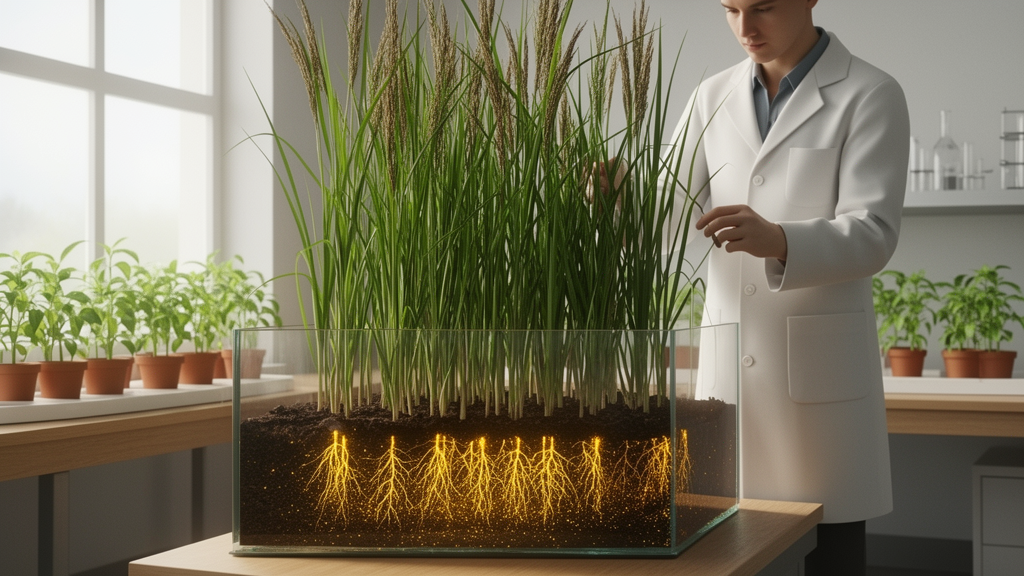
Switchgrass gene PvHIPP23 acts as a brake on cadmium tolerance

Switchgrass gene PvHIPP23 acts as a brake on cadmium tolerance

Share on FacebookShare on TwitterShare on LinkedinShare on RedditShare on Telegram

Researchers have mapped the heavy metal-associated isoprenylated plant protein (HIPP) gene family in switchgrass (Panicum virgatum L.), a bioenergy crop, and identified one member, PvHIPP23, as a negative regulator of cadmium tolerance. The genome-wide survey identified 79 PvHIPP genes, which the authors assigned phylogenetically into five groups. Among these, PvHIPP23 showed substantial induction following cadmium exposure in both roots and shoots, prompting a closer functional analysis of its role in the metal stress response.

When the team suppressed PvHIPP23 through RNA interference, the resulting switchgrass plants showed improved cadmium tolerance. This enhanced tolerance was accompanied by diminished cadmium accumulation in the roots and increased cadmium translocation factors, suggesting that the gene normally constrains how the plant handles and moves the metal. In a complementary test, ectopic expression of PvHIPP23 in Arabidopsis thaliana reduced cadmium tolerance, as indicated by impaired root elongation, decreased chlorophyll levels, and reduced biomass production under cadmium stress.

The study also probed how PvHIPP23 might act at the molecular level. According to the results, PvHIPP23 negatively regulated the expression of PvHMA2.1, a heavy-metal transporter, and the two proteins were found to interact at the plasma membrane in bimolecular fluorescence complementation (BiFC) assays. Independently, overexpression of PvHMA2.1 enhanced cadmium tolerance in switchgrass, producing phenotypic outcomes comparable to those observed when PvHIPP23 was silenced. This parallel outcome supports the idea that the two genes function in the same pathway.

The authors are careful to frame the findings as preliminary. They note that additional evidence is required to fully characterize the PvHIPP23–PvHMA2.1 regulatory module, and the interaction evidence rests on BiFC assays rather than a complete mechanistic dissection. Even so, they argue that the identification of this module expands current knowledge of the molecular mechanisms controlling cadmium responses in switchgrass and points to a potential genetic target for breeding or engineering switchgrass lines with enhanced cadmium phytoextraction potential. Because switchgrass is grown as a bioenergy crop, understanding how its genes govern cadmium uptake and movement could inform strategies for managing metal contamination on land used for biomass production, though any such application would depend on future validation of the proposed regulatory module.

Subject of Research: Characterization of the HIPP gene family in switchgrass and the role of PvHIPP23 in cadmium tolerance

Article Title: Genome-wide characterization of the HIPP gene family in Panicum virgatum reveals PvHIPP23 to be a negative regulator of cadmium tolerance

Article References: Zang, H., Yan, Q., Xue, Y., Zhang, S., & Shang, D. (2026). Genome-wide characterization of the HIPP gene family in Panicum virgatum reveals PvHIPP23 to be a negative regulator of cadmium tolerance. BMC Plant Biology. https://doi.org/10.1186/s12870-026-10308-z

Image Credits: AI Generated

DOI: 10.1186/s12870-026-10308-z

Keywords: switchgrass, Panicum virgatum, HIPP gene family, cadmium tolerance, PvHIPP23, PvHMA2.1, heavy metal transport, phytoextraction, RNA interference, Arabidopsis thaliana, gene regulation, plant biotechnology

News Source: Juliet Wilcox. (October 28, 2026). Switchgrass gene PvHIPP23 acts as a brake on cadmium tolerance. Scienmag.
Tags: Arabidopsis thalianacadmium toleranceGene regulationheavy-metal transportHIPP gene familyPanicum virgatumphytoextractionPlant biotechnologyPvHIPP23PvHMA2.1RNA interferenceswitchgrass
Share12Tweet7Share2ShareShareShare1

Related Posts

Tiny transparent fish yields first whole-body single-cell atlas of an adult vertebrate

Tiny transparent fish yields first whole-body single-cell atlas of an adult vertebrate

October 29, 2026
PCL Coating Keeps PLGA Suture Anchors Strong as They Degrade, Study Finds

PCL Coating Keeps PLGA Suture Anchors Strong as They Degrade, Study Finds

October 29, 2026

Dwarf crocodiles flow through Niger Delta bushmeat markets in worrying numbers

October 29, 2026

Probiotics cut severe gut disease and death risk in preterm infants, review finds

October 29, 2026

POPULAR NEWS

  • Simulations Show Greening Could Cool Japan's Fukuyama Station Square by Nearly 0.6°C

    Simulations Show Greening Could Cool Japan’s Fukuyama Station Square by Nearly 0.6°C

    29 shares
    Share 12 Tweet 7
  • Benign Tumor at a Lung Surgery Port Site Fooled Doctors Into Fearing Cancer Recurrence

    29 shares
    Share 12 Tweet 7
  • Genetic Study Links Panic Disorder Liability to Lower Blood Triglyceride Levels

    29 shares
    Share 12 Tweet 7
  • New Bayesian Model Extracts Shared Microbial Signals Across Heterogeneous Studies

    29 shares
    Share 12 Tweet 7

About

We bring you the latest biotechnology news from best research centers and universities around the world. Check our website.

Follow us

Recent News

Rare Genetic Syndrome Unmasked at 31 After Diabetes, Gout, and Hypogonadism

Tiny transparent fish yields first whole-body single-cell atlas of an adult vertebrate

Computational Tools Take Center Stage in Designing Nanoparticle Cancer Drug Delivery

Subscribe to Blog via Email

Enter your email address to subscribe to this blog and receive notifications of new posts by email.

Join 85 other subscribers
  • Contact Us

Bioengineer.org © Copyright 2023 All Rights Reserved.

Welcome Back!

Login to your account below

Forgotten Password?

Retrieve your password

Please enter your username or email address to reset your password.

Log In
No Result
View All Result
  • Homepages
    • Home Page 1
    • Home Page 2
  • News
  • National
  • Business
  • Health
  • Lifestyle
  • Science

Bioengineer.org © Copyright 2023 All Rights Reserved.