Around one in five human cancers carries mutations in genes that build the SWI/SNF chromatin remodeling complex, a molecular machine that reshapes how DNA is packaged and, in doing so, helps decide which genes are switched on or off. A new study has now charted the expression of every one of the complex’s 29 component genes across 33 tumor types, using DNA and messenger RNA data from The Cancer Genome Atlas covering roughly 11,000 samples. The analysis, published in Epigenetics & Chromatin, reveals that while most SWI/SNF genes behave similarly across cancers, a handful stand out as unusually variable, and ten tumor types carry expression signatures that set them clearly apart from the rest.
The SWI/SNF complex exists in three main subtypes: the canonical BAF complex, or cBAF; the polybromo BAF complex, PBAF; and the GLTSCR1/1L BAF complex, GBAF, sometimes called the non-canonical BAF. All three share a structural core built around SMARCC1, one of the SMARCD paralogs, and one of two ATPase engines, SMARCA2 or SMARCA4, which power the remodeling reaction using energy from ATP hydrolysis. Beyond that shared machinery, each subtype carries its own distinctive subunits: ARID1A or ARID1B and the DPF paralogs mark cBAF, ARID2, PBRM1, PHF10 and BRD7 mark PBAF, and BRD9 together with BICRA or BICRAL defines GBAF. These compositional differences matter, because the subtypes preferentially occupy different parts of the genome, with cBAF localizing mainly to enhancers, PBAF to promoters and gene bodies, and GBAF largely to CTCF sites.
When the research team, led by Vilma Canfjorden and Anders Ståhlberg, profiled the expression of all 29 genes across the 11,069 tumor samples, four genes emerged as the most variable among tumor types: ACTL6B, DPF1, DPF3 and SMARCD3. At a qualitative level, ACTB was expressed at the highest level of any component, while those four variable genes showed lower expression than the other 24. Pairwise correlation analysis found that 93 percent of gene pairs were significantly correlated, and, perhaps surprisingly, no strong negative correlations appeared between paralogs or between subunits destined for different complexes. Genes that compete for a place in the assembled protein complex, such as the ARID family members, were positively correlated at the messenger RNA level, suggesting that the mutual exclusivity seen during protein complex assembly is not mirrored in gene expression.
Ten of the 33 tumor types showed distinct SWI/SNF expression signatures when the researchers applied t-distributed stochastic neighbor embedding, a dimensionality reduction technique, to the expression data. These were acute myeloid leukemia, liver hepatocellular carcinoma, kidney chromophobe, thyroid carcinoma, kidney renal papillary cell carcinoma, kidney renal clear cell carcinoma, pancreatic adenocarcinoma, pheochromocytoma and paraganglioma, brain lower-grade glioma, and glioblastoma multiforme. The remaining 23 tumor types overlapped in their expression profiles, although minor subgroupings were visible within the main cluster. When the whole transcriptome of 20,533 genes was analyzed instead, samples from the same tumor type clustered together, including the ten entities with specific SWI/SNF signatures.
The pattern of variability was not random. Cancers originating from the brain or nervous tissue, including glioblastoma multiforme, brain lower-grade glioma and pheochromocytoma and paraganglioma, expressed relatively high levels of ACTL6B, DPF1, DPF3 and SMARCD3. Kidney-related and thyroid tumors grouped together, showing low DPF1 expression paired with high DPF3 expression. Functional enrichment analysis of the genes regulated in the ten signature tumor types consistently highlighted epigenetic regulation. The authors note that this brain-tumor pattern echoes earlier findings in which SWI/SNF subunits shift from ACTL6A and PHF10 toward ACTL6B, DPF1 and DPF3 as neural stem cells mature into differentiated neurons, and that a recent study identified a SMARCD3-driven neurodevelopmental epigenetic program hijacked in metastatic medulloblastoma.
To test whether these expression patterns reflect the tissue a tumor came from, the team compared tumor samples with normal tissues using the TNMplot database, which drew on the GEO, GTEx, TCGA and TARGET repositories and covered 22 of the 33 tumor types. Many SWI/SNF genes showed similar expression in tumor and normal tissue, but there were notable exceptions. Acute myeloid leukemia displayed increased expression of most SWI/SNF components in tumor samples, while the kidney cancers resembled normal tissue. Across tumor types, ACTL6A and DPF1 consistently showed increased expression in tumors, whereas SMARCD3 and DPF3 were higher in normal tissues. The ATPase paralogs diverged too: SMARCA4 expression was generally increased in tumors while SMARCA2 was decreased, consistent with the low SMARCA2 levels seen in undifferentiated cells. Overall, the data indicate that tumors partly retain the SWI/SNF expression patterns of their tissue of origin, even as substantial deviations accumulate.
At the subtype level, the picture was one of relative stability. Mean expression of subtype-specific genes was broadly similar across tumor types, with cBAF showing more variation than PBAF or GBAF. Brain lower-grade glioma and glioblastoma multiforme displayed the highest cBAF expression, while prostate adenocarcinoma and liver hepatocellular carcinoma showed the lowest. Among the ten signature tumor types, acute myeloid leukemia showed increased PBAF and GBAF expression, while the four kidney and liver tumor types showed decreased expression of all three subtypes.
Mutation analysis added a second layer to the study. Mutation information was available for 9,102 samples, of which 25 percent carried at least one SWI/SNF mutation, ranging from 1 to 19 mutations per sample. Uterine corpus endometrial carcinoma and bladder urothelial carcinoma had the highest frequencies, exceeding 50 percent of tumors, while pheochromocytoma, paraganglioma and testicular germ cell tumors sat near 1 percent. ARID1A was the most frequently mutated gene at 7.9 percent, followed by PBRM1 at 4.2 percent and SMARCA4 and ARID2 at 3.8 percent each. Tumor-specific patterns were pronounced: ARID1A was mutated in 44 percent of uterine corpus endometrial carcinomas, PBRM1 in 40 percent of kidney renal clear cell carcinomas, and ARID2 in 14 percent of ovarian serous cystadenocarcinomas. Missense mutations accounted for 58 percent of the total, with nonsense and frameshift deletions contributing 14 and 12 percent respectively.
Despite this high mutation burden, mutations in SWI/SNF genes produced only minor changes in the expression of the SWI/SNF genes themselves. Mutated samples showed significant downregulation of more than 20 percent for SMARCD3, SMARCA2 and ACTL6B, and different mutation types had distinct expression effects, with missense mutations linked to downregulation of SMARCD3 and DPF3 and nonsense or frameshift deletions linked to downregulation of SMARCA4 and BRD7. The larger impact appeared downstream. Comparing mutated with non-mutated samples across the whole transcriptome, sixteen tumor types had significantly regulated genes, with the largest numbers in uterine corpus endometrial carcinoma at 416 genes, stomach adenocarcinoma at 339, kidney renal clear cell carcinoma at 276, colon adenocarcinoma at 218, lung adenocarcinoma at 54 and skin cutaneous melanoma at 33. Enrichment analysis tied these regulated genes to epigenetic processes, including H3K27me3 modifications and PRC2 complexes, especially in colon adenocarcinoma, kidney renal clear cell carcinoma, stomach adenocarcinoma and uterine corpus endometrial carcinoma.
Survival associations were context-dependent. Across the pan-cancer cohort, SWI/SNF mutations were significantly associated with decreased overall survival, as they were in lung adenocarcinoma and rectum adenocarcinoma, but with increased overall survival in stomach adenocarcinoma and uterine corpus endometrial carcinoma. Of 986 tests pairing individual SWI/SNF genes with tumor types, only 16 showed significant overall survival differences. Mutations in PBRM1 were associated with decreased survival in kidney renal papillary cell carcinoma, while ARID1A and SMARCA4 mutations were associated with increased survival in uterine corpus endometrial carcinoma and brain lower-grade glioma respectively. The authors caution that these are observational associations from retrospective TCGA data rather than evidence of causation, and that absolute expression levels could not be directly measured because of unknown reverse transcription and amplification efficiencies. Even so, they argue that mapping SWI/SNF gene and subtype expression in this way may support the development of biomarkers and, given that most SWI/SNF mutations are loss-of-function events, strategies targeting synthetic lethal relationships between SWI/SNF subunits or with PRC2 components.
Subject of Research: Expression of SWI/SNF chromatin remodeling complex genes and subtypes across human cancers
Article Title: Delineating SWI/SNF gene and subtype expression in cancer
Article References: Canfjorden, V., Lindén, M., Österlund, T., Larsson, E., & Ståhlberg, A. (2026). Delineating SWI/SNF gene and subtype expression in cancer. Epigenetics & Chromatin, 19(1), Article 35. https://doi.org/10.1186/s13072-026-00696-9
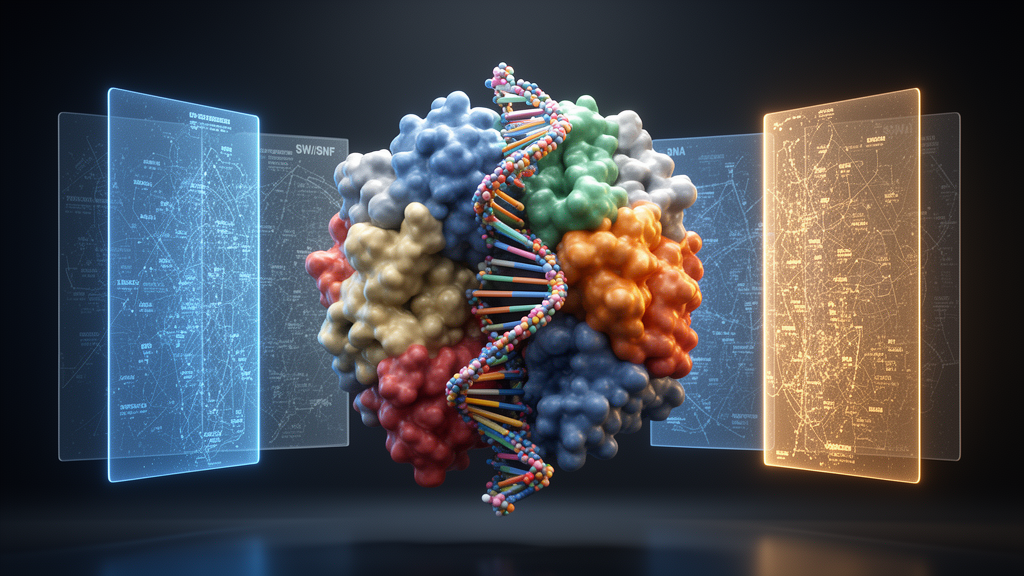
Image Credits: AI Generated
DOI: 10.1186/s13072-026-00696-9
Keywords: SWI/SNF, chromatin remodeling, cancer genomics, TCGA, gene expression, cBAF, PBAF, GBAF, ARID1A, epigenetics, mutation, biomarkers
News Source: Juliet Wilcox. (October 29, 2026). SWI/SNF Chromatin Complex Gene Expression Mapped Across 33 Cancer Types. Scienmag.