A groundbreaking study published in The Annals of Family Medicine reveals important insights into the effectiveness of colorectal cancer (CRC) screening interventions across diverse racial and ethnic groups in federally qualified health centers (FQHCs). This research addresses a critical gap in public health, focusing on overcoming persistent disparities in CRC screening rates among minoritized populations who have historically been underscreened. The findings, derived from a robust randomized clinical trial, hold significant implications for the equitable implementation of preventative cancer care in underserved communities.
Colorectal cancer remains a leading cause of cancer-related morbidity and mortality globally. Early detection through effective screening is vital to improving patient outcomes, yet disparities in screening rates continue to impose a disproportionate burden of disease on racially and ethnically minoritized groups. This study’s intervention leveraged a combination of mailed fecal immunochemical tests (FITs) targeted at patients overdue for screening, alongside patient navigation services for those who tested positive, implemented across two major FQHC systems in North Carolina.
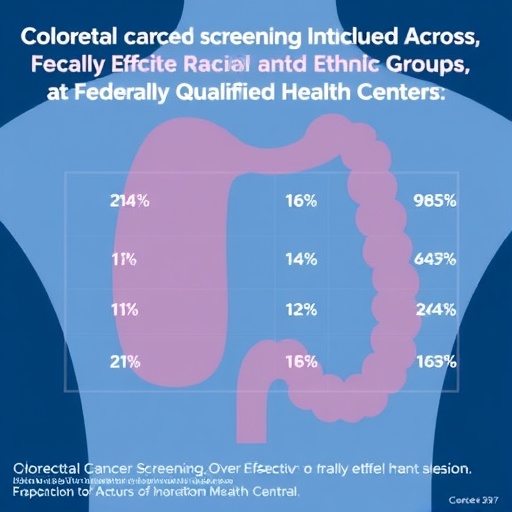
The research involved a sizeable cohort of 3,734 patients, encompassing Hispanic, non-Hispanic Black, and non-Hispanic White individuals, thereby enabling a comprehensive evaluation of intervention efficacy by race and ethnicity. Quantitative analysis from the trial indicated an 18.3 percentage point overall increase in CRC screening uptake attributable to the intervention, a statistically significant and clinically meaningful enhancement in preventative healthcare delivery.
Crucially, the intervention’s effectiveness was consistent across racial and ethnic groups. This parity in response underscores the potential scalability and generalizability of mailed FIT combined with patient navigation as an equitable strategy for improving CRC screening rates in resource-limited settings. By removing barriers such as lack of access, information, and follow-up support, the initiative demonstrated that structured outreach can close gaps that traditionally undermine cancer prevention efforts.
However, despite these encouraging results, the study also illuminated enduring disparities in follow-up colonoscopy completion rates after a positive FIT result. Black patients, even when engaged through the intervention, exhibited significantly lower rates of colonoscopy completion compared to their White counterparts. This finding highlights a critical area for future interventions, necessitating a deeper understanding of systemic, structural, and social determinants impeding final diagnostic evaluation in minoritized populations.
Patient navigation—a personalized approach involving communication, scheduling assistance, and barrier reduction—was integral to the intervention’s design. Its uniform impact across races suggests that tailored support mechanisms effectively enhance patient engagement, yet the lower follow-up colonoscopy rates observed might reflect downstream challenges beyond navigation’s current scope, possibly including healthcare system factors and socioeconomic obstacles.
The research team, led by Dr. Anisha P. Ganguly of the University of North Carolina at Chapel Hill’s Division of General Medicine and Clinical Epidemiology, underscores the potential of FQHCs as pivotal arenas for health equity interventions. These centers serve large numbers of medically underserved individuals, positioning them strategically to implement population-level interventions that can attenuate longstanding cancer screening disparities.
Further examination into the barriers affecting colonoscopy adherence post-positive FIT in Black patients is imperative. Potential contributors may include limited healthcare access, distrust of medical systems, financial constraints, or logistical difficulties. Addressing these multifaceted challenges will require integrated efforts combining patient-centered care models with systemic reforms targeting social determinants of health.
This study aligns with a growing body of evidence advocating for the broad adoption of mailed FIT programs paired with responsive patient navigation in primary care settings. The relative cost-effectiveness and ease of deployment make this intervention an attractive approach for FQHCs striving to elevate CRC screening among populations historically marginalized by sociocultural and economic inequities.
While the intervention successfully improved initial screening across racial and ethnic lines, the consistent disparity in follow-up completion further stresses the necessity for interventions to move beyond initial testing to ensure the entire continuum of care is accessible and actionable. Bridging this gap could be transformative in reducing CRC mortality disparities and warrants prioritized attention in health policy and clinical practice.
Importantly, by demonstrating equal efficacy in screening uptake across diverse populations, the study challenges any preconceived notions that racial or ethnic groups differ fundamentally in their responsiveness to mailing-based screening programs when coupled with appropriate navigation support. This revelation legitimizes the scaling of such interventions within FQHCs and potentially other healthcare delivery models serving vulnerable communities nationwide.
To achieve sustained progress against colorectal cancer disparities, stakeholders must incorporate findings from this study into comprehensive strategies that blend evidence-based screening programs with targeted efforts to overcome post-screening obstacles. Enhancing culturally responsive care, expanding insurance coverage, and improving healthcare system navigation remain essential components of this broader approach.
In conclusion, this study represents a critical advance in our understanding of how structured, multi-component interventions can equitably increase colorectal cancer screening in populations that have faced entrenched healthcare disparities. The equal gains in screening uptake across racial and ethnic groups signal promise, yet the persistence of lower colonoscopy completion rates among Black patients signals an urgent call to action. Future research and program development must strive to optimize the entire CRC diagnostic pathway to achieve true equity in cancer prevention and control.
Subject of Research: Colorectal Cancer Screening Intervention Efficacy Across Race/Ethnicity at Federally Qualified Health Centers
Article Title: Study Finds Colorectal Cancer Screening Intervention Had Similar Effects Across Race/Ethnicity at Federally Qualified Health Centers
News Publication Date: 26-May-2026
Web References: https://www.annfammed.org/content/24/3/231.pdf
Keywords: colorectal cancer, cancer screening, racial disparities, fecal immunochemical test, patient navigation, federally qualified health centers, health equity, public health intervention
Tags: colorectal cancer early detection strategiescolorectal cancer screening effectivenessequitable cancer screening programsfederally qualified health centers colorectal programsHispanic colorectal cancer screening ratesmailed fecal immunochemical tests FITnon-Hispanic Black cancer screening interventionspatient navigation in cancer carepublic health interventions in minoritized groupsracial and ethnic disparities in cancer screeningrandomized clinical trial colorectal cancerunderserved populations cancer prevention