• HOME
  • NEWS
  • EXPLORE
    • CAREER
      • Companies
      • Jobs
    • EVENTS
    • iGEM
      • News
      • Team
    • PHOTOS
    • VIDEO
    • WIKI
  • BLOG
  • COMMUNITY
    • FACEBOOK
    • INSTAGRAM
    • TWITTER
Saturday, June 27, 2026
BIOENGINEER.ORG
No Result
View All Result
  • Login
  • HOME
  • NEWS
  • EXPLORE
    • CAREER
      • Companies
      • Jobs
        • Lecturer
        • PhD Studentship
        • Postdoc
        • Research Assistant
    • EVENTS
    • iGEM
      • News
      • Team
    • PHOTOS
    • VIDEO
    • WIKI
  • BLOG
  • COMMUNITY
    • FACEBOOK
    • INSTAGRAM
    • TWITTER
  • HOME
  • NEWS
  • EXPLORE
    • CAREER
      • Companies
      • Jobs
        • Lecturer
        • PhD Studentship
        • Postdoc
        • Research Assistant
    • EVENTS
    • iGEM
      • News
      • Team
    • PHOTOS
    • VIDEO
    • WIKI
  • BLOG
  • COMMUNITY
    • FACEBOOK
    • INSTAGRAM
    • TWITTER
No Result
View All Result
Bioengineer.org
No Result
View All Result
Home NEWS Science News Science

Study: New cars are safer, but women most likely to suffer injury

Bioengineer by Bioengineer
July 10, 2019
in Science
Reading Time: 2 mins read
0
IMAGE
Share on FacebookShare on TwitterShare on LinkedinShare on RedditShare on Telegram

IMAGE

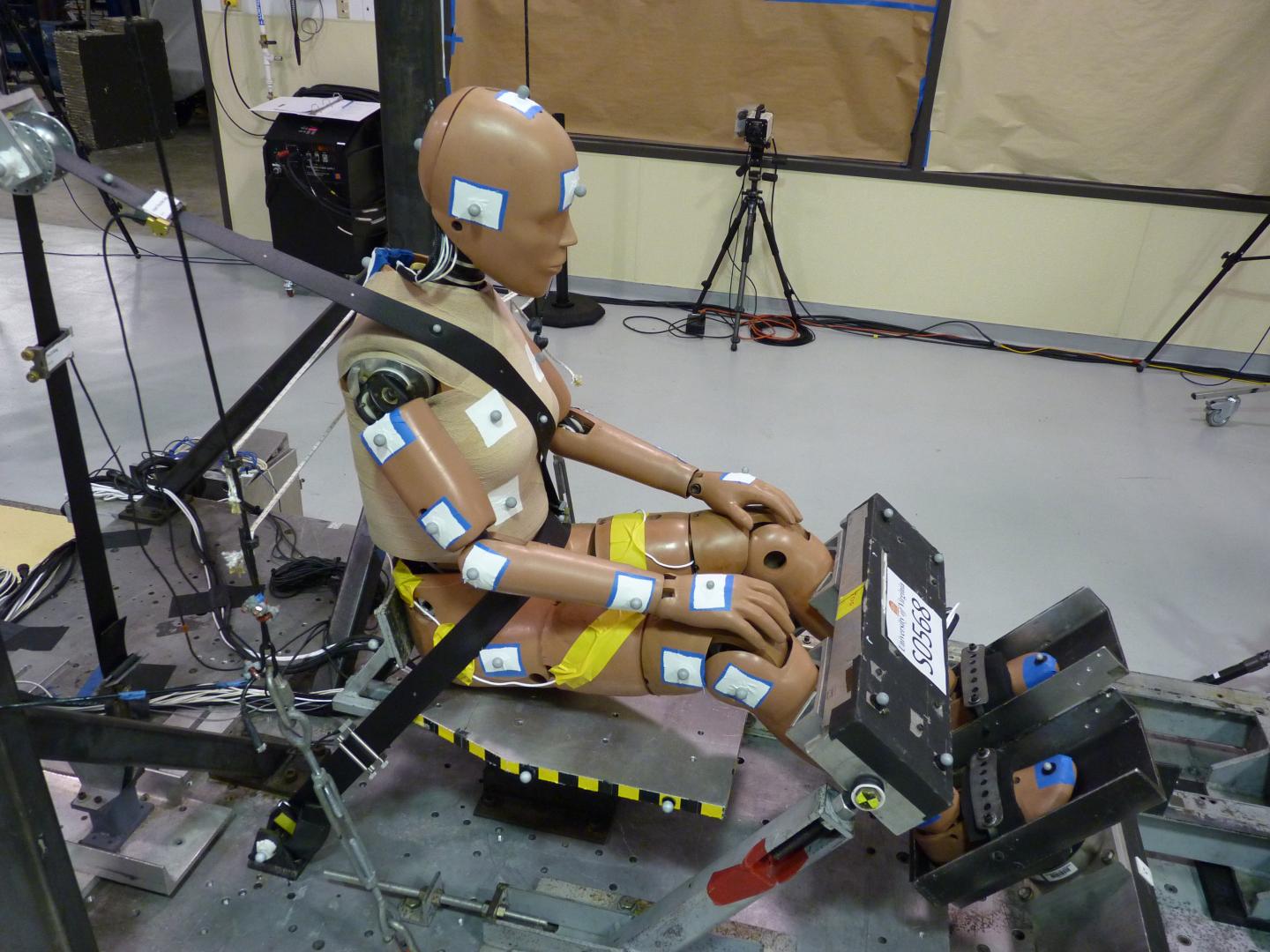
Credit: UVA Center for Applied Biomechanics

Cars built in the last decade have been shown to be safer than older models, including in the most common types of crashes – frontal collisions. However, a new study conducted by researchers at the University of Virginia’s Center for Applied Biomechanics shows that women wearing seat belts are significantly more likely to suffer injury than their male counterparts.

Belted female auto occupants have 73% greater odds of being seriously injured in frontal car crashes compared to belted males (after controlling for collision severity, occupant age, stature, body mass index and vehicle model year). The difference in risk is greatest for injury to the lower extremities, but also occurs with several other types of injury.

“Until we understand the fundamental biomechanical factors that contribute to increased risk for females, we’ll be limited in our ability to close the risk gap,” said Jason Forman, a principal scientist with the Center for Applied Biomechanics. “This will take substantial effort, and in my view the National Highway Traffic Safety Administration does not have the resources needed to address this issue.”

Additionally, vehicle occupants age 66 and older continue to be particularly susceptible to thoracic injury, likely resulting from increased fragility of the ribcage with advanced age.

The good news is that newer automobiles have tended to exhibit a decreased risk of injury overall. Specifically, risk has decreased for skull fractures, cervical spine injury and abdominal injury. Injury risks to the knee-thigh-hip region and the ankle are also significantly reduced. The risk of sternum fractures and serious rib fractures, however, has not been significantly reduced.

The study, published this week in the journal Traffic Injury Prevention, is an analysis of crash and injury data compiled from the National Automotive Sampling System Crashworthiness Data System for the years 1998 to 2015. These data come from a sample of police-reported crashes in the U.S.

“For belted occupants in frontal collisions, substantial reductions in injury risk have been realized in many body regions in recent years,” Forman said. “These results provide insight into where advances in the field have made gains in occupant protection, and what injury types and risk factors remain to be addressed.”

This study focused on frontal-impact crashes with belted occupants, aged 13 and older. The data included nearly 23,000 front-end crashes involving more than 31,000 occupants, and a nearly equal number of females and males. Pregnant women who were past the first trimester were not included.

###

UVA’s Center for Applied Biomechanics performs fundamental research related to injury biomechanics, including injury causation, risk factors, prediction and prevention.

Media Contact
Fariss Samarrai
[email protected]

Original Source

https://news.virginia.edu/content/study-new-cars-are-safer-women-most-likely-suffer-injury

Related Journal Article

http://dx.doi.org/10.1080/15389588.2019.1630825

Tags: AgingMechanical EngineeringMedicine/HealthPhysiologyPublic HealthScience/Health/LawTechnology/Engineering/Computer ScienceTransportation/TravelTrauma/InjuryVehicles
Share12Tweet8Share2ShareShareShare2

Related Posts

Five or more hours of smartphone usage per day may increase obesity

July 25, 2019
IMAGE

NASA’s terra satellite finds tropical storm 07W’s strength on the side

July 25, 2019

NASA finds one burst of energy in weakening Depression Dalila

July 25, 2019

Researcher’s innovative flood mapping helps water and emergency management officials

July 25, 2019
Please login to join discussion

POPULAR NEWS

  • Saying Goodbye to PGY-6: Pediatric Fellowship Realities

    103 shares
    Share 41 Tweet 26
  • Multi-Hospital Study Reveals Long Covid Burden Is Twice as High as Current Estimates

    92 shares
    Share 36 Tweet 23
  • Detection of EDCs in Breast Milk and Infant Urine Up to Six Months Highlights Early Exposure Risks

    77 shares
    Share 31 Tweet 19
  • New Drug Candidate Developed at McMaster Shows Potential for Treating Brain Cancer

    58 shares
    Share 23 Tweet 15

About

We bring you the latest biotechnology news from best research centers and universities around the world. Check our website.

Follow us

Recent News

Tracking Lanthanide-Labeled Microplastics in Plants

POSTECH Researchers Slash Cost of Reconstituted Cell-Free Systems by 95%

AI and Physics Collaborate to Design Advanced Hydrogen Storage Materials

Subscribe to Blog via Email

Success! An email was just sent to confirm your subscription. Please find the email now and click 'Confirm' to start subscribing.

Join 82 other subscribers
  • Contact Us

Bioengineer.org © Copyright 2023 All Rights Reserved.

Welcome Back!

Login to your account below

Forgotten Password?

Retrieve your password

Please enter your username or email address to reset your password.

Log In
No Result
View All Result
  • Homepages
    • Home Page 1
    • Home Page 2
  • News
  • National
  • Business
  • Health
  • Lifestyle
  • Science

Bioengineer.org © Copyright 2023 All Rights Reserved.