

• HOME
  • NEWS
  • EXPLORE
    • CAREER
      • Companies
      • Jobs
    • EVENTS
    • iGEM
      • News
      • Team
    • PHOTOS
    • VIDEO
    • WIKI
  • BLOG
  • COMMUNITY
    • FACEBOOK
    • INSTAGRAM
    • TWITTER
Sunday, November 1, 2026
BIOENGINEER.ORG
No Result
View All Result
  • Login
  • HOME
  • NEWS
  • EXPLORE
    • CAREER
      • Companies
      • Jobs
        • Lecturer
        • PhD Studentship
        • Postdoc
        • Research Assistant
    • EVENTS
    • iGEM
      • News
      • Team
    • PHOTOS
    • VIDEO
    • WIKI
  • BLOG
  • COMMUNITY
    • FACEBOOK
    • INSTAGRAM
    • TWITTER
No Result
View All Result
Bioengineer.org
No Result
View All Result
Home NEWS Science News Biology

Stem Cell Exosomes Deliver pVHL to Degrade HIF-1α and Ease Kidney Scarring

by
October 28, 2026
in Biology
Reading Time: 2 mins read
0
Stem Cell Exosomes Deliver pVHL to Degrade HIF-1α and Ease Kidney Scarring

Stem Cell Exosomes Deliver pVHL to Degrade HIF-1α and Ease Kidney Scarring

Share on FacebookShare on TwitterShare on LinkedinShare on RedditShare on Telegram

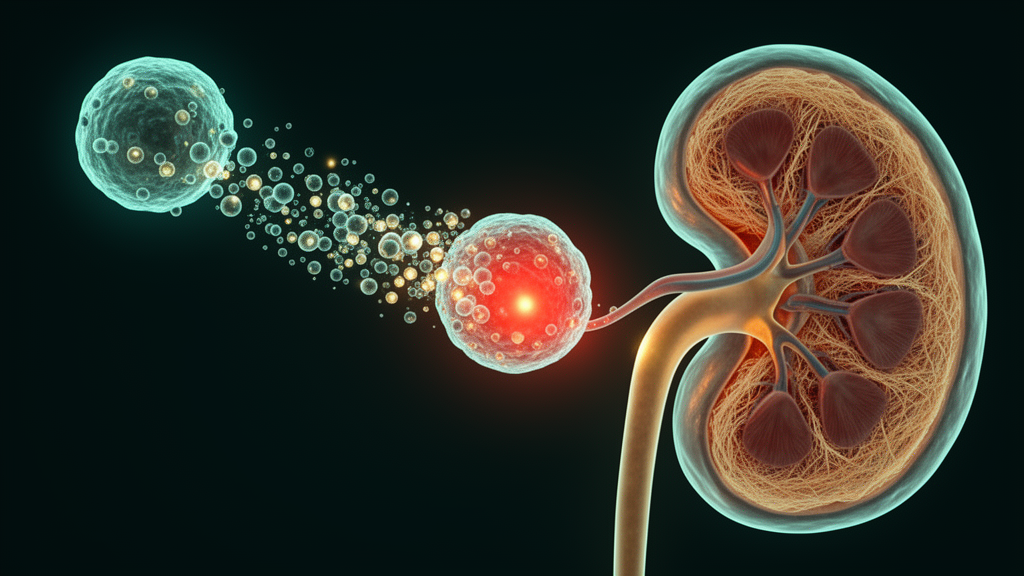
Mesenchymal stem cell-derived exosomes can ease renal interstitial fibrosis by delivering the von Hippel-Lindau tumor suppressor protein (pVHL) into kidney cells, where it tags hypoxia-inducible factor-1α (HIF-1α) for destruction, according to a study published in BMC Biology.

Chronic kidney disease is a global health burden that frequently progresses to renal interstitial fibrosis, the scarring process that erodes kidney function. Mesenchymal stem cell-derived exosomes, membrane-bound vesicles released by stem cells, have previously shown therapeutic potential in kidney repair, but their role in hypoxia-driven fibrosis had remained undefined. The research team, led by Chen Qi, Bei Li, Wei Wu, Linru Shi, Xianbin Xia and Cheng Ji, set out to test whether exosomes from human umbilical cord mesenchymal stem cells (hucMSC-Ex) attenuate fibrosis by destabilizing HIF-1α.

In the experimental model, hypoxia combined with mechanical stress increased nuclear HIF-1α levels in tubules of kidneys subjected to unilateral ureteral obstruction (UUO) and triggered fibrosis.

Treatment with hucMSC-Ex markedly reduced renal collagen and α-SMA, two established markers of fibrotic tissue remodeling. The effect points to a measurable dampening of the scarring response in the obstructed kidneys.

The mechanistic explanation lies in the cargo of the vesicles. The hucMSC-Ex were enriched in pVHL, and after uptake they increased pVHL abundance in recipient renal cells, promoting ubiquitination of HIF-1α and marking the protein for proteasome-dependent degradation. By lowering HIF-1α levels even under hypoxic stress, the exosomes appear to interrupt the signaling that sustains fibrosis.

The authors conclude that hucMSC-Ex alleviate renal interstitial fibrosis by delivering pVHL to facilitate HIF-1α ubiquitination and degradation, offering what they describe as a cell-free anti-fibrotic strategy.

Subject of Research: Stem cell-derived exosomes as a cell-free approach to renal interstitial fibrosis via pVHL-mediated HIF-1α degradation

Article Title: Mesenchymal stem cell-derived exosomes alleviate renal interstitial fibrosis via pVHL-mediated HIF-1α ubiquitination and degradation

Article References: Qi, C., Li, B., Wu, W., Shi, L., Xia, X., & Ji, C. (2026). Mesenchymal stem cell-derived exosomes alleviate renal interstitial fibrosis via pVHL-mediated HIF-1α ubiquitination and degradation. BMC Biology. https://doi.org/10.1186/s12915-026-02766-6

Image Credits: AI Generated

DOI: 10.1186/s12915-026-02766-6

Keywords: mesenchymal stem cells, exosomes, renal fibrosis, chronic kidney disease, HIF-1α, pVHL, ubiquitination, proteasomal degradation, hypoxia, UUO model, human umbilical cord, cell-free therapy

News Source: Drew Townsend. (October 28, 2026). Stem Cell Exosomes Deliver pVHL to Degrade HIF-1α and Ease Kidney Scarring. Scienmag.


Tags: cell-free therapyChronic Kidney DiseaseExosomesHIF-1αhuman umbilical cordhypoxiamesenchymal stem cellsproteasomal degradationpVHLRenal fibrosisUbiquitinationUUO model
Share12Tweet7Share2ShareShareShare1

Related Posts

Microbial Sources and Stress Shape the Hidden Endophytes of an Invasive Plant

Microbial Sources and Stress Shape the Hidden Endophytes of an Invasive Plant

October 30, 2026
Firebreaks Leave Lasting Scars in Grasslands While Wildfire Heals Fast

Firebreaks Leave Lasting Scars in Grasslands While Wildfire Heals Fast

October 30, 2026

Hidden Peptides in Non-Coding RNAs Reshape Cardiovascular Biology

October 30, 2026

Phage K Holin’s C-Terminal Region Shapes Antibacterial Activity, Study Finds

October 30, 2026

POPULAR NEWS

  • Microbial Sources and Stress Shape the Hidden Endophytes of an Invasive Plant

    Microbial Sources and Stress Shape the Hidden Endophytes of an Invasive Plant

    29 shares
    Share 12 Tweet 7
  • Firebreaks Leave Lasting Scars in Grasslands While Wildfire Heals Fast

    29 shares
    Share 12 Tweet 7
  • ZNF207 shields glutamine transporter ASCT2 from degradation to fuel liver cancer growth

    29 shares
    Share 12 Tweet 7
  • Systematic review maps sustainability tensions in offshore wind development

    29 shares
    Share 12 Tweet 7

About

We bring you the latest biotechnology news from best research centers and universities around the world. Check our website.

Follow us

Recent News

Microbial Sources and Stress Shape the Hidden Endophytes of an Invasive Plant

Firebreaks Leave Lasting Scars in Grasslands While Wildfire Heals Fast

ZNF207 shields glutamine transporter ASCT2 from degradation to fuel liver cancer growth

Subscribe to Blog via Email

Enter your email address to subscribe to this blog and receive notifications of new posts by email.

Join 86 other subscribers
  • Contact Us

Bioengineer.org © Copyright 2023 All Rights Reserved.

Welcome Back!

Login to your account below

Forgotten Password?

Retrieve your password

Please enter your username or email address to reset your password.

Log In
No Result
View All Result
  • Homepages
    • Home Page 1
    • Home Page 2
  • News
  • National
  • Business
  • Health
  • Lifestyle
  • Science

Bioengineer.org © Copyright 2023 All Rights Reserved.
