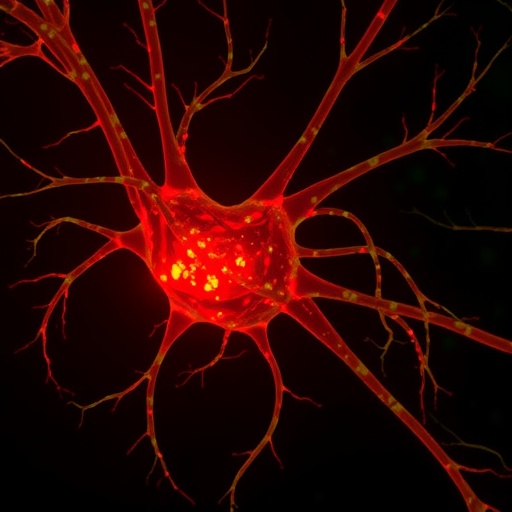
Texas A&M researchers have shown that water treatment has the potential to remove nearly all viruses that have an “outer fortress” from drinking water.
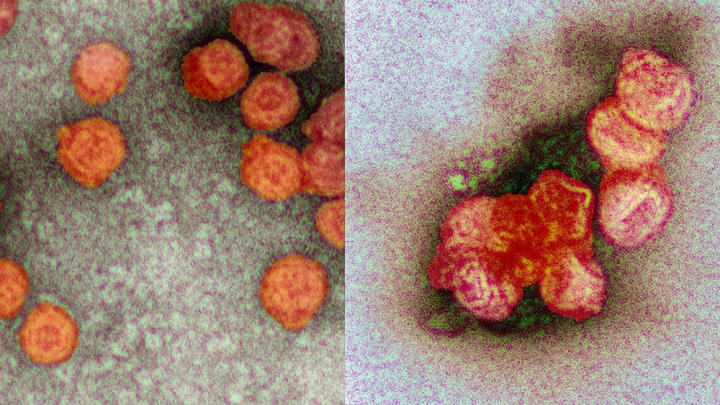
Credit: Dr. Shankar Chellam/Texas A&M Engineering
Among the many avenues that viruses can use to infect humans, drinking water may pose only a tiny risk for spreading certain viruses like the novel coronavirus. However, in cases where there is unauthorized wastewater disposal or other events of inadvertent mixing of wastewater with water sources, the possibility of transmission through drinking water remains unknown.
Using a surrogate of the coronavirus that only infects bacteria, researchers at Texas A&M University have now presented strong evidence that existing water purification plants can easily reduce vast quantities of the virus thereby protecting our household water from such contagions. In particular, the researchers showed that the water purification step called coagulation could alone get rid of 99.999% of the virus, markedly decontaminating water for consumption.
“We did not want to wait till drinking water became a potential cause for concern for coronavirus transmission,” said Shankar Chellam, professor in the Zachry Department of Civil and Environmental Engineering. “This study shows that decontamination technologies that are already in place in water treatment facilities can remove or inactivate the coronavirus and other viruses that are structurally similar.”
Details of their study were published in the American Chemical Society journal Environmental Science and Technology.
Viruses can be categorized between two structural types: those that have an outer fortress, called an envelope, and those that do not. This envelope, consisting of a lipid bilayer and attached proteins, has multiple functions, including aiding the virus in entering host cells. Several infamous viruses have a protective envelope, including coronaviruses and the Ebola virus.
Studies have found both enveloped and nonenveloped viruses in wastewater. However, most research has solely focused on the survival of nonenveloped viruses after wastewater and water treatment.
“It is well known that wastewater mixes with drinking water supplies. In fact, in many countries, including the United States, wastewater is purified and used as drinking water,” Chellam said. “If enveloped viruses persist in wastewater, there could be a minuscule chance that these viruses make it into our drinking water supplies. We just don’t know for sure.”
At treatment facilities, raw water generally undergoes a three-step purification process: coagulation, followed by filtration and disinfection. In the coagulation step, certain metallic salts are added to initiate particles suspended in water to join together into millimeter-sized clumps. These clumps then settle down as sediment and are easily separated from the water. Chellam and his collaborators tested to see if enveloped viruses also assembled into bundles during coagulation.
For their experiments, they added a surrogate of the coronavirus that specifically infects bacteria to clean water. Next, they separately tested the action of a coagulant commonly used in water treatment plants. After coagulation, they studied small samples of the virus-infused water under an electron microscope and found that the virus strain assembled on the coagulants, forming clusters. They then checked the presence of infectious viruses in the water after removing the clumps and they found there was a 100,000 reduction.
“The U.S. Environmental Protection Agency mandates 99.99% of the viruses must be removed or inactivated from drinking water, and we found that even without filtration and chlorination, we were getting rid of 99.999% of the viruses,” Chellam said.
The researchers noted that although they used the coronavirus surrogate for their study, the results are readily generalizable to other viruses that have similar surface characteristics, notably a lipid bilayer envelope and similar spike proteins. However, Chellam said that in the real world, wastewater contains a whole slew of viruses, unlike their experiments that included just a single strain of virus. In their next set of experiments, they plan to investigate if coagulation is still as effective at decontamination in these scenarios.
“Our work suggests that surface water treatment plants might be already well equipped to meet virus regulations for drinking water,” Chellam said. “And coagulation is just the first step in the water purification pipeline. This is very encouraging since additional purification steps will only attenuate enveloped viruses further, alleviating associated health risks even more.”
###
Other Texas A&M contributors to this research include doctoral student Kyungho Kim and Anindito Sen. This research is funded by the National Science Foundation.
Media Contact
Amy Halbert
[email protected]
Original Source
https:/
Related Journal Article
http://dx.